What Will The World Be Like After The Rapture? 12 Points

Stephen Nielsen's avatarStudying Bible Prophecy

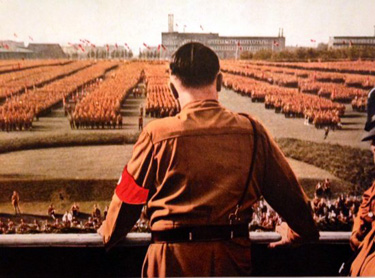
hitler antichrist

When Christ comes and removes all true Christians from the earth, what will this world be like?  Since the restraining power of the Holy Spirit in believers will be removed (2 Thess. 2:6-8), what evil powers will be allowed to come into the world? what will happen as a result of this evil? and what will God do about it?  Here are 12 points I gathered from my bible study on this topic.

1. The antichrist and false prophet will appear (Rev. 13). Shortly after the rapture a man will arise who will be a brilliant military leader, and all will worship him because of his political and war victories. Surprisingly, he will exalt himself as God (2 Thess. 2:4), he will blaspheme the true God, and he will make war with true Christians to kill them. (The Christians at this time are those who will be newly saved, primarily…

View original post 1,519 more words

Posted in Reblogs | Leave a comment

Jesus Delivers Us from the Wrath to Come (1Thess. 1:10) — 4 Possible Meanings

Stephen Nielsen's avatarStudying Bible Prophecy

013

We can see, from the book of 1 Thessalonians, that the Thessalonian Christians were some of Paul’s most faithful converts. Paul, Silvanus, and Timothy were so thankful to God for them, for how they “received the word in much tribulation,” and how they “sounded forth” the gospel everywhere. But the main point I will make about them is in verses 9 and 10. They were a people that were so dynamically changed from being idol worshippers to being true disciples of Christ; and that they lived their lives every day waiting for Him and wishing that He would come soon.


1 Thessalonians 1:9-10

For they themselves report about us what kind of a reception we had with you, and how you turned to God from idols to serve a living and true God, 10 and to wait for His Son from heaven, whom He raised from the dead, that…

View original post 398 more words

Posted in Reblogs | Leave a comment

Paul Prays For the Thessalonians with Much Thanks

010


1 Thessalonians 1:2-3

We give thanks to God always for you all, making mention of you in our prayers, 3 remembering without ceasing your work of faith, labor of love, and patience of hope in our Lord Jesus Christ in the sight of our God and Father…


This is the first prayer, Paul and his companions (Silvanus and Timothy) offered thanks to God for their work of faith, labor of love, and patience of hope. Perhaps more clearly stated, his prayer of thanks for them was for these three things: for their works that God produced in them by faith, for their labor of love that God produced in them from His own love that He first gave them, and for their patience in trials, showing that they had a hope of future blessedness.


1 Thessalonians 3: 9-13

For what thanks can we render to God for you, for all the joy with which we rejoice for your sake before our God, 10 night and day praying exceedingly that we may see your face and perfect what is lacking in your faith?

11 Now may our God and Father Himself, and our Lord Jesus Christ, direct our way to you. 12 And may the Lord make you increase and abound in love to one another and to all, just as we do to you, 13 so that He may establish your hearts blameless in holiness before our God and Father at the coming of our Lord Jesus Christ with all His saints.


Here, Paul (with Silvanus and Timothy) prays that they would soon be able to see the Thessalonians in order to teach them and perfect what was lacking in their faith. Paul prayed that God would direct their way to them and would make them increase and abound in love; that they might feel the same love for each other as he and his comrades felt for them.  Last, Paul’s prayer is that by their love God would establish their hearts blameless in holiness.  Apparently, Paul was saying that the way to establish a holy life is to first have a heart that is filled with love.  Barnes writes in his commentary, “The idea is, that if charity were diffused through their hearts, they would abound in every virtue, and would be at length found blameless.”


Posted in Part 5, Ezra to John, Photography, Prayer A to Z Excerpts, Survey of Prayer | Tagged , , , , | Leave a comment

The Dynamics of Our Transformation — in 6 Steps

Stephen Nielsen's avatarStudying Bible Prophecy

006


Colossians 3:3-4 very simply sets forth the method and the dynamics of our transformation.

For you have died and your life is hidden with Christ in God. 4 When Christ, who is our life, is revealed, then you also will be revealed with Him in glory. (Colossians 3:3-4, NASB)

It, of course, centers on Christ. When He, who is our life, comes to us and is revealed to us, then we also will be revealed with Him in glory.  To flesh this out, it will help if we look at two other references, 1 John 3:2 and Philippians 3:21.

In 1 John 3:2, John suggests that our transformation will happen when we look at Jesus and see Him. We will be like Him when we see Him just as He is. Then in Philippians 3:21, Paul gives us the dynamics of our transformation.  He says that God will transform…

View original post 419 more words

Posted in Reblogs | Leave a comment

Be Watchful In Prayer and Resist the Devil

good3


Resisting means to stand against and to fight against. In James 4:7 we are commanded to submit to God and resist the devil.  In Ephesians 6:12 and 14 we are commanded to be strong in the Lord and to stand against and to wrestle against principalities and powers and the rulers of the darkness of this age, against spiritual hosts of wickedness in the heavenly places.

When we pray, we are to pray without ceasing, being ever watchful, resisting the enemy at every turn (2 Thess. 5:16; Matt. 26:41); for the devil and his demons are always lurking around, waiting to devour us; and sin and this evil world are also tempting us. There is never a time of prayer when we can relax.  We must always be watchful, always ready.  Or as they say in sports, we must always have our game face on.  The moment we relax in prayer that is the moment that the devil will attack us and we will fall into temptation and sin.

But when we are persistent to resist sin and Satan and submit to God, Satan will back down and flee as if he is defeated (Ja. 4:7), and the temptations you face will dry up and disappear.

And why will this happen? The answer is simple.  When we resist the devil and the temptations he brings us, and we choose instead to submit to God, we at that moment are making ourselves incredibly strong in the Lord and we are putting Satan in an impossible position.  For any time we submit to God, at that moment He puts His protective shield around us so that nothing can hurt us.  The Psalmist wrote, “He is a shield to all who trust in Him” (Ps. 18:30).

And though Satan is tough, he is no match for the Lord and he knows it. He will always back down when we put him to a fight.  For when we are on the Lord’s team, with the Lord’s shield around us, we are invincible; and Satan might as well start running—because he can never win against us.  In fact, Jesus has already defeated Satan by His blood on the cross.  He can harass us and cause us to sin if we let him, but he can never ultimately win against us by taking our salvation away from us.  He is a defeated foe and will always run from us when we come against him in the Lord (Col. 2:15).


Posted in Part 3, Principles of Prayer, Photography, Prayer A to Z Excerpts, Zenith of Prayer | Tagged , , , , | 1 Comment

Paul’s Beautiful and Graceful Prayer for the Colossian Church

good (2)

I saw this beautiful grey heron on my nature walk today. I’ve never seen one like it.


While being imprisoned in Rome, Paul told the Colossians, in his letter to them, that whenever he prayed for them he was always thankful to God. For just as with the Ephesians and the Philippians, they were his partners in the gospel and he was overjoyed that they had a love for all the saints just as he had.


We give thanks to the God and Father of our Lord Jesus Christ, praying always for you, 4 since we heard of your faith in Christ Jesus and of your love for all the saints  (Colossians 1:3-4).


It is apparent by this letter that Paul did not have a direct part in the conversion of the Colossians. His comrade Epaphras led them to Christ, and he brought news to him of how they were growing in the Lord and in love for the saints. For this reason, Paul declared that he has not stopped praying for them.


good4Now listen to this beautiful prayer. It flows so logically and gracefully from Paul’s heart—a heart full of the knowledge and grace of God.

For this reason we also, since the day we heard it, do not cease to pray for you, and to ask that you may be filled with the knowledge of His will in all wisdom and spiritual understanding; 10 that you may walk worthy of the Lord, fully pleasing Him, being fruitful in every good work and increasing in the knowledge of God; 11 strengthened with all might, according to His glorious power, for all patience and longsuffering with joy; 12 giving thanks to the Father who has qualified us to be partakers of the inheritance of the saints in the light  (Colossians 1:9-13).


We may observe that He prayed, first of all, that God would fill them with the knowledge of His will through all spiritual wisdom and understanding—that the Holy Spirit in them would teach them the will of God.

Secondly, he prayed that with this spiritual understanding they might live a life worthy of the Lord, pleasing Him in every way.

Here are some of the ways Paul points out in his prayer (above) that they would please the Lord: (1) by their good works, (2) by growing in the knowledge of God, (3) by being strong in endurance and patience (strengthened by the power of the Lord), and (4) by having an attitude of joyful thanks to God, who has qualified them for eternal life.


Posted in Part 5, Ezra to John, Photography, Survey of Prayer | Tagged , , , , , | 2 Comments

3 Big Hindrances to Prayer

026


I originally came up with a list of about forty things that could hinder prayer. Upon review of all those things I saw that there was a common thread running through them—pride.  Pride and selfishness I believe is at the root of our inability to pray and have God hear us.  Why?  Because God resists the proud.  He refuses to hear the prayers of the proud, but He gives grace to the humble—those who submit to Him (Ja. 4:6-7).

Well, out of those forty things, I have managed to narrow the list down to just three basic things that are hindrances to prayer, each of which have a root in the sin of pride. I pray that you would take a close look at these things, and if you find that they are present with you, please take steps to root them out; for if you continue in them they will make havoc with your heart and will destroy your ability to pray.


1. Worldliness

The kind of worldliness we are speaking of here is not the idea of being sophisticated or worldly wise.   It is just plain being sinful, those who use the things of this world to satisfy their sinful desires.

James 4:1-6 gives us a good description of worldliness and how it affects our prayers. Verse four indicates that worldliness is being emotionally attached to the world as to a friend.  In this verse, God says to those who are worldly, “Adulterers and adulteresses! Do you not know that friendship with the world is enmity with God? Whoever therefore wants to be a friend of the world makes himself an enemy of God.”

When we are worldly we give ourselves not only to the world but also to the devil (v. 7), because the devil is the leader and the promoter of the evil things of this world (which includes lusting after material things, having worldly values and beliefs, and having a worldly or sinful lifestyle).

The cause of worldliness is set forth for us in verses 1 and 2: it is discontentment, which comes from sinful desires that are produced in the heart when one is tempted (Ja. 1:14-15).   Therefore, worldliness feeds on sinful, greedy desires.  But worldliness never satisfies.  Those who are worldly always desire more and more, and they never get enough.

I would say that some of those who are worldly sometimes pray, but only for the things they want and think they need. Their prayers are quite selfish.  But others probably don’t even think about praying for what they need.  They have desires and needs, but God is far from their mind.  Verse two says, “You lust and do not have. You murder and covet and cannot obtain. You fight and war. Yet you do not have because you do not ask.”

And those few (worldly ones) that sometimes pray: we know that God will not give them what they pray for, because they ask with wrong motives. They ask only for their own pleasure.  Verse three says, “You ask and do not receive, because you ask amiss, that you may spend it on your pleasures.”

Now the reason why God won’t answer the prayers of worldly people is not because He doesn’t want them to be happy and to have pleasure. It is rather because they are sinful and proud and against Him.  Remember, they are a friend of the evil world and the devil; hence, God resists them.  Verse six says, “God resists the proud, but gives grace to the humble.”  This I believe is the key reason why the prayers of the worldly will never be answered.


2. Unconfessed sin

This second point may have a connection to the first point, but not necessarily. Those who are worldly are always in sin and so they have unconfessed sin (accept for the times when they repent of them). But even those who are not worldly, who are good and godly Christians may have unconfessed sin from time to time—because we all sin (Rom. 3:23). Thus even the godliest can have their prayers hindered.

Consider David. He was a man after God’s own heart; and usually, when he prayed, God answered Him.  But, at one point in his life, he was caught off guard and lusted after a woman named Bathsheba.   Thereafter, for a period of time, he decided not to confess that sin, but instead plotted how he could get away with it (Read 2 Sam. 11:1-27).

We don’t have a lot recorded for us on David’s relationship with the Lord during that time, but in Psalms 32 we get a clue. In verses three and four David said, “When I kept silent, my bones grew old through my groaning all the day long.  For day and night Your hand was heavy upon me; my vitality was turned into the drought of summer.”

Also in Psalms 51:10 we get the idea that he felt dirty and could sense that God had departed from him. He prayed, “Create in me a clean heart, O God, and renew a steadfast spirit within me.”

In Psalms 32:6 we may get the idea that David may have tried to pray but that God could not be found by him, that God was angry with him. So he prays, “Therefore let everyone who is godly pray to you while you may be found” (NIV).

In Psalms 66:18 we have a clear teaching: “If I regard iniquity in my heart, the Lord will not hear.

And why is this? Why does God not hear the prayers of those who sin and do not confess that sin?  It is simply because when we do not confess our sins we are in a state of rebellion and pride.  And during that state of rebellion we make ourselves an enemy of God, and therefore we give ourselves over to the devil (Ja. 4:4-7).

But if we repent of our sin, as David did, God will forgive us and cleanse us (1 Jn. 1:9). And He will again come near us and hear our prayers.  After David confessed his sin with Bathsheba (and the sins that followed) he prayed,


I acknowledged my sin to You,

And my iniquity I have not hidden.

I said, “I will confess my transgressions to the Lord,”

And You forgave the iniquity of my sin.

Selah


6 For this cause everyone who is godly shall pray to You

In a time when You may be found;

Surely in a flood of great waters

They shall not come near him.

7 You are my hiding place;

You shall preserve me from trouble;

You shall surround me with songs of deliverance.

(Psalms 32:5-7)


3. Not forgiving others

This third point is probably the deadliest of all prayer hindrances and the one Jesus talked about the most. God does not take this sin lightly, and neither should we. If you have something against someone and will not forgive them for it, God is against you! If you do not forgive them, God will not forgive you and will not regard your prayers.  I urge you to read the following passages on this point and take heed to what Jesus is saying to you: Matthew 5:23-24; 6:12,14,15; 18:21-35; and Mark 11:25-26


Posted in Part 3, Principles of Prayer, Prayer A to Z Excerpts, Zenith of Prayer | Tagged , , , , , , , | 1 Comment

Paul’s Prayer for the Philippians from a Roman Prison

apostle-paul-in-prison-edit


Paul wrote to the Philippians from a Roman prison. He wanted them to know how thankful he was to God for them and for their fellowship (partnership) in the gospel.  He also told them that he was praying and making specific requests to God for them with great joy.


Philippians 1:3-5

I thank my God upon every remembrance of you, 4 always in every prayer of mine making request for you all with joy, 5 for your fellowship in the gospel from the first day until now.


Here, in verses 9 through 11, Paul prayed for the Philippians that their love—for God, for one another, and for all the good and excellent things in the world—would abound (or would be abundant) according to their knowledge.


Philippians 1:9-11

And this I pray, that your love may abound still more and more in knowledge and all discernment, 10 that you may approve the things that are excellent, that you may be sincere and without offense till the day of Christ, 11 being filled with the fruits of righteousness which are by Jesus Christ, to the glory and praise of God.


It seems here that what he is really praying is that they would be filled with the fullness of God and with the love of Christ (Eph. 3:9) to the extent that they would love as Christ loved. Thus, Paul prayed that they would approve things that are excellent; that is, that they would be discerning in their love, placing their affections on only those things that are of real value (Phil. 4:8); hence, that they would be sincere (having a pure heart) and without offense (having pleased God).  Last, he prayed that they would be filled with the fruits of righteousness; that is, that they would be so full of Christ and therefore filled with His righteous fruits.


Posted in Part 5, Ezra to John, Prayer A to Z Excerpts, Survey of Prayer | Tagged , , , , , | Leave a comment

3 Ways to Make Our Prayers More Transparent

006


When we pray we should know that God sees us just as we are and that we cannot hide from His sight. Hebrews 4:13 says, “And there is no creature hidden from His sight, but all things are naked and open to the eyes of Him to whom we must give account.”

Also in Psalms 139:1-4 it says,

O Lord, You have searched me and known me.

2 You know my sitting down and my rising up;

You understand my thought afar off.

3 You comprehend my path and my lying down,

And are acquainted with all my ways.

4 For there is not a word on my tongue,

But behold, O Lord, You know it altogether.


Transparent prayer also implies that we are in favor of His knowledge of us. We do not try to hide ourselves from Him. We let ourselves be seen by Him. Thus we do all we can to open ourselves up to His probing, searching eyes.

So what can we do to make our prayers more transparent—more honest, genuine, and truthful? Here are three ideas that I think will be helpful.


 1. Use various prayer positions

God has given us natural inclinations to pray in different positions. When we are obedient (to the Holy Spirit) to follow those inclinations, we find that our soul is more open to God—and prayer and worship comes easier. But when we resist those inclinations, we cut off the true Spirit of prayer within us, and transparent prayer is blocked.

There are many different prayer positions, but I will comment just briefly on three of the most common ones: sitting, standing, and kneeling with bowing.

Sitting. The sitting position is probably the most common position of prayer. It is the position of a learner and of meditation.  When we sit at a desk and study the Bible it is natural to conclude our study time in prayer while we are still sitting.

Standing. Standing is a common prayer position for public prayer and for prayer with worship and singing. When we stand together for prayer and worship we stand in awe of God and in respect of God.

We stand also to allow God to examine us. Hence, we stand willingly before His probing eyes, confessing our sins.

The standing position is a symbol of boldness. When we stand in the house of the Lord lifting our hands in prayer and praise to God we show that we are not ashamed of Him, and that we are not ashamed to reach out to Him and bless Him in front of others (Ps. 134:1-2).

Kneeling and bowing the head. When we bend the knee toward God and bow the head we are acknowledging that He is greater than us and that we need His help. This position aids our desire to humble ourselves probably more than any other position.  And it keeps us in the Spirit of prayer.


2. Read and Meditate on the Psalms

The inspired Psalms, I would say, contain the most transparent prayers and songs we will ever read and hear. If you take the time to read them and study them they will help you to get in touch with your own emotions, so that you will say to yourself, “Yes, that is how I feel; I feel just like the Psalmist.” Therefore, the Psalms are valuable to us because they will help us to form our own prayers, and to pray in the most transparent way possible—as God would want us to pray.

Psalms 8 for example may help you to praise God when you feel led in your spirit to praise Him. Thus you will pray with the Psalmist (from verse 9), “O Lord, our Lord, How excellent is Your name in all the earth…”

When you feel weak and need His help, Psalms 16 may aid you. Verse one says, “Preserve me, O God, for in You I put my trust.”

And when you have sinned and need to confess your sins, Psalms 51 may help you to form your prayers. Verse 3-4 says,


For I acknowledge my transgressions,

And my sin is always before me.

4 Against You, You only, have I sinned,

And done this evil in Your sight —

That You may be found just when You speak,

And blameless when You judge.


3. Follow the prayer examples of Bible Characters

When you examine the prayers of the most holy Bible characters you will see that their prayers were very transparent. Moses for example wasn’t afraid to tell God exactly how he felt or to ask questions. At the Burning Bush he prayed,

Who am I that I should go to Pharaoh, and that I should bring the children of Israel out of Egypt?… suppose they will not believe me or listen to my voice…I am not eloquent, neither before nor since You have spoken to Your servant; but I am slow of speech and slow of tongue (Ex. 3:11; 4:1,10).


Some may think that Moses was impertinent in His bold candor. But I don’t think so.  He was simply speaking to God openly and honestly.  In time God rewarded him for always coming to Him whenever he had a question, a doubt, or a need.  In Exodus 33:11 it says, “So the Lord spoke to Moses face to face, as a man speaks to his friend.”

There are many examples we can follow besides Moses. The one whom I think of most is Jesus.  Though He was God, He was also human and His prayers were very human and very transparent.  Toward the end of His life, He prayed, “Now My soul is troubled, and what shall I say? ‘Father, save Me from this hour’? But for this purpose I came to this hour.  28 Father, glorify Your name” (Jn. 12:27-28).  At another time, in the garden of Gethsemane, He prayed, “O my Father, if it is possible, let this cup pass from Me; nevertheless, not as I will, but as You will” (Matt. 26:39).

It is so obvious that Jesus’ always prayed from His heart. He never prayed to impress anyone, or even to teach anyone.  Rather, He prayed directly and openly to His Father whom He loved.  Likewise, His prayers were never pompous sounding or flowery.  They were always simple, honest, and direct, communicating in a very human and common way His deepest thoughts and feelings.



Posted in Part 3, Principles of Prayer, Prayer A to Z Excerpts, Zenith of Prayer | Tagged , , , , | 1 Comment

Better Pleasures — Now and Forever

Stephen Nielsen's avatarStudying Bible Prophecy

022

It seems that we are always, constantly seeking pleasure. We are seeking to be delighted and satisfied through pleasure—whether it is the pleasure of good, tasty food, the delights of the eye as we look at beauty, or maybe it is the pleasure of sex.

And to be sure, God has created us as pleasure seekers and to enjoy pleasure; and He has created all things for us to enjoy and to get pleasure from. Indeed, God wants us to be happy in life and to enjoy all He gives us: to enjoy our work, our possessions, our marriage, and our life.  Look at these verses from Ecclesiastes.

So I saw that there is nothing better for a man than to enjoy his work… (Eccl. 3:22).

Moreover, when God gives any man wealth and possessions, and enables him to enjoy them, to accept his lot and be happy in his…

View original post 478 more words

Posted in Reblogs | Leave a comment