Prayer Travail: Prayer that Pleads and Wrestles with God

Prayer travail is prayer that proceeds out of a burdened soul and is motivated by great desire and urgency.  It is prayer that pleads with God, wrestles with God, takes hold of Him and won’t let go until He answers.  This wrestling in prayer Bounds says,

 …is not an impulse of energy, not a mere earnestness of soul; it is an inwrought force, a faculty implanted and aroused by the Holy Spirit.  Virtually, it is the intercession of the Spirit of God; it is, moreover, ‘the effectual, fervent prayer, which availeth much.’  The Divine Spirit informing every element within us, with the energy of His own striving, is the essence of the importunity which urges our praying at the mercy-seat, to continue until the fire falls and the blessing descends.

 Wesley Duewel says, “You do not wrestle apart from the Holy Spirit.  Only He can give you the holy boldness that is at the same time submissive to God yet bold to insist on God’s promise, bold in the very face of God.”

We see this boldness in Jacob’s prayer, when he, fearing his brother Esau, claimed God’s promise of prosperity.  He prayed, “Deliver me, I pray, from the hand of my brother, from the hand of Esau; for I fear him, lest he come and attack me and the mother with the children.  For You said, ‘I will surely treat you well, and make your descendants as the sand of the sea, which cannot be numbered for multitude’” (Gen. 32: 11-12).  That night he wrestled with God and would not let go of Him until He blessed him (Gen. 32: 24-29).

We also see this holy boldness in the prayer of Abraham (Gen. 18: 23-32), in which he pleaded with God again and again to spar the people of Sodom and Gomorrah.  He no doubt carried the burden of the Holy Spirit in his soul; for he pleaded not for any selfish reason, but was concerned for what was right and just.

 This post is an excerpt from my book Principles of Prayer.

Posted in Prayer A to Z Excerpts, Travail in Prayer | Tagged , | 1 Comment

Voices

I have a feeling this happens more than we know–we get voices in our head that are not from God, and sometime we think they are from God. This is such a beautiful post!

Heidi Viars's avatarHeidi Viars

vine wrapped tighly around a young tree - Woods near Green Lake

“Your work is trash.”

“Your light is dim.”

“Your words are rash.”

“You cause is grim.”
~

“Your friends you drained.”

“Your kids are pale.”

“Your spouse is faint.”

“Your heart is frail.”
~

Who speaks these words

Which closely stick

To heart and mind

And make me sick?

~

Did God speak them?

No! They’re not love.

They come from Hell,

Not from above.

~

God says I’m His.

I bear His name.

Christ took my sins.

Bore all my shame.

~

He calls me blessed,

Redeemed, adored,

Beautifully dressed,

Calls me restored.

~

2 Corinthians 5;17


View original post

Posted in Reblogs | Leave a comment

Why Prayer Is Such Hard Work

84980015

Prayer is work because it is difficult, especially for those who are not use to it.  It involves communicating with another world—a spiritual realm.  Thus prayer is often neglected because it seems to be too much work.  Our toil in prayer is an effort to break out of our world into God’s world, an effort to reach Him and to submit ourselves to Him.  The effort then is mostly a struggle within us, a battle that is fought against our own sinful flesh.  In this battle we constantly call on God for strength—strength to overcome our troubles and to continue in the hard work of prayer, to persevere in prayer with great pain and intensity.

Since Jesus Himself prayed with loud crying and tears, through much suffering (Heb. 5:7), we can be assured that He understands our difficulties and can help us in our prayers.  Thus in all our troubles and in our travail, let us fix our eyes on Him.  For when He prayed He never grew weary or lost heart (Heb. 12: 3).  And when times were especially tough, as in the garden of Gethsemane (where he was wrestling against all the sins of the world and against all of Satan’s evil forces), He prayed more fervently, to the point where His sweat became like drops of blood (Lu. 22: 44).  Thus, we find here a lesson: the greater the difficulties we have, the more we must travail in prayer to overcome them.

Posted in Prayer A to Z Excerpts, Travail in Prayer | Tagged , | Leave a comment

Working Hard At Prayer

84980013 

The desire to work hard at prayer doesn’t just happen.  We make it happen when we decide to work at it.  As we regularly practice prayer each day, for so many minutes a day, God will birth in us desires to work harder and harder at it.  The more we work at prayer the more we will continue to work at it.  Prayer helps us to pray.

John Calvin once said, “You will never aspire to pray unless you urge and force yourself.”  That is so true isn’t it?  Right from the start, prayer is hard work; and it continues to be hard work.  But if you don’t have much of a desire to pray in the beginning, to even start to work at it, if you just tell yourself , “I must pray and force myself to pray,” you will find that God will come along and help you with the work.  He will give you a desire to work harder and harder at it.  And though you may suffer in the work, you will also glory in it—in as much as you are in Christ.

Posted in Prayer A to Z Excerpts, Travail in Prayer | Tagged | 4 Comments

A Study of the Prayers of the Bible — The Prayer of Abraham’s Servant

     Genesis 24: 12-14 

Then he said, “O LORD God of my master Abraham, please give me success this day, and show kindness to my master Abraham. 13 Behold, I stand here by the well of water, and the daughters of the men of the city are coming out to draw water. 14 Now let it be that the young woman to whom I say, ‘Please let down your pitcher that I may drink,’ and she says, ‘Drink, and I will also give your camels a drink’ — let her be the one You have appointed for Your servant Isaac. And by this I will know that You have shown kindness to my master.


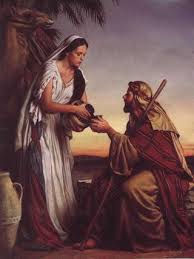
In the events leading up to this prayer, we see that Abraham’s servant had traveled over 500 miles to Abraham’s country and to his relatives to take a wife for Isaac.  Abraham's servantWhen he arrived at his destination, at the city of Nahor, the first thing he did was to park his camels by the well of the city in order to let them drink.  As it happened, it was the time when the women of the city came out to draw water.  And what do you suppose the servant did?  I suppose most of us would have immediately tried to interview as many of the women as possible in order to find that perfect wife.  But that’s not what the servant did.  No, the first thing he did was pray. 

In this prayer the servant first asked for success in his search.  Second, he simply reviewed the situation with the Lord.  He said to God, “Behold, I stand here by the well of water, and the daughters of the men of the city are coming out to draw water.”  The third thing he did in his prayer was to simply offer a request. 

He prayed, “Now let it be that the young woman to whom I say, ‘Please let down your pitcher that I may drink,’ and she says, ‘Drink, and I will also give your camels a drink’—let her be the one You have appointed for Your servant Isaac. And by this I will know that You have shown kindness to my master.”

Now how did the servant think to offer such a request?  Well, the obvious answer is that it wasn’t him at all.  It was God all the time, praying through him.  Yes, the Spirit of God gave the servant the words to pray. He was simply obedient to His leading.  Then as the Spirit led him, he no doubt thought of what kind of a wife Isaac would want—a true servant like himself who would be willing to not only give him a drink, but his camels as well. 

So, as it happened, Rebekah, who was the daughter of Behuel, the son of Nahor, Abraham’s brother came and drew water for him and also for his camels.   Thus Rebekah was the answer to his prayer.

I think the greatest lesson we learn about prayer from this story is that we ought not to be so concerned about what words to pray, but just to pray from our heart and to always commit everything to God—as the servant did.

This post is an excerpt from my book Service of Prayer.

Posted in Part 1, Abraham to Moses, Prayer A to Z Excerpts, Survey of Prayer | Tagged | 3 Comments

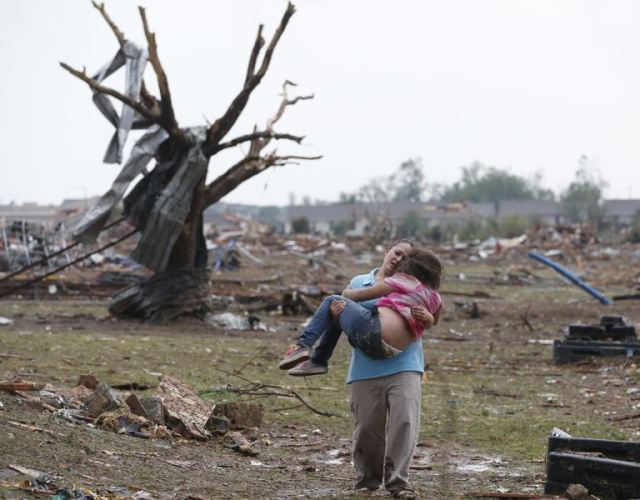
More Prayers for All the Tornado Vicims in the Midwest, USA

As I look out my window here in Minneapolis, Minnesota, into a dark, cloudy, still sky, my mind and heart remains with the victims down south.  God also grieves.  He cries out to them saying, “Just call out to Me. I feel your pain, and I can help. Just call out to me.”

Pray for them.  Pray that they would draw near to Him and call out to Him.  We have all seen the news and the  pictures.  What devistation! What horror! What fear!  Please pray for them that they would know that God is near and cares.

Psalm 34:4-7
I sought the LORD, and He heard me,
And delivered me from all my fears.
5 They looked to Him and were radiant,
And their faces were not ashamed.
6 This poor man cried out, and  the
LORD heard him,
And saved him out of all his troubles.
The angel of the LORD encamps all
around those who fear Him,
And delivers them.
Posted in Understanding the Times, World-Wide Prayer Requests | Tagged , | Leave a comment

Pray for Tornado Vitims in Oklahoma, USA

9eaea01aeaca6e10320f6a7067006872

6930b754eaf16f10320f6a7067009ad8

1. Pray that people will be drawn to the Lord for help. 

James 4:8:  Draw near to God and He will draw near to you.

2. Pray for God’s mercy and comfort for all who will call upon Him. 

Psalm 91:15:  He shall call upon me and I will answer him; I will be with him in trouble; I will deliver him and honor him.

Photographs taken from Yahoo News: Midwest Tornadoes News and Headlines.

Posted in World-Wide Prayer Requests | Tagged , , | 2 Comments

How to Pray More Specifically – Six Steps

1.  Be certain that what you are praying for is God’s will; therefore, find the will of God in the Bible, and then pray specifically according to His will.   As an example, let’s say that you feel a lack of peace and satisfaction in your life, and you want to pray for something that will give you that satisfaction.  For some people, they may determine that if they had a new car or a new house or maybe even a new wife (or husband) they would then begin to experience satisfaction; and so they would pray to that end.  But to pray with a certainty that your prayers are according to God’s will, I suggest that you search the scriptures to see what God says about how to be satisfied. 

What you will find is that our satisfaction does not come from things, or even from human relationships, but from the person of God; for Psalms 16:11 tells us that in His presence is fullness of joy, and in His right hand there are pleasures forever.  Also in Psalms 73:25 David declares rightly, “Whom have I in heaven but Thee?  And besides Thee I desire nothing on earth.” 

2.  If you are not certain of God’s will you can still pray specifically by asking questions.  And when you ask questions try to be as specific as you can.  Obviously, if you don’t have any idea what God wants you to do then all you can pray is, “Lord show me what to do.”  And He will.  But if you have some knowledge of His will then your prayer can be more specific.  Or if you have an idea of what He wants you to do, but you are not sure, then talk to Him about your ideas and ask Him to show you if any of your ideas are His ideas.  A good example of this is in 1 Samuel 23: 1-8. 

3.  Pray according to the leading of the Spirit.  If you want to learn how to pray better—that is, more specifically—you must learn how to walk in the Spirit.  For the Spirit filled man is one who knows the heart and mind of God.

 4.  Be more businesslike in your praying.  After all, prayer is a business.  It is God’s business, and He has entrusted us to run it.  Just as in any business, in the prayer business there are many things to do.  There are people to get to know.  There are people to love and care for.  Then there are prayer requests to find out.  And there are prayer meetings to call.  It is also helpful to keep a record of all the prayer requests, and especially God’s answers.  All these things, and all the work involved in the prayer business will help to motivate you to a greater prayer urgency and desire, and will even help you to be more specific in your prayers.  For when you regard prayer as a business, you will have a more businesslike frame of mind, and you will pay more attention to details; hence, it will follow that your prayers will become more specific.

 5.  Weed out all indefinite prayers.  Narrow your prayer list down to just those requests you are sure to be His will. 

 6.  Establish not only desire but also the will to receive answers.  Prayer is sparked with desire, but to receive the things we desire we must will them. As Andrew Murray has said, “The prayer of faith which Jesus sought to teach His disciples does not simply proclaim its desire and then leave the decision to God… the prayer of faith, finding God’s will in some promise of the Word, pleads for that promise until it comes.” 

This post is an excerpt from Principles of Prayer.

Posted in Prayer A to Z Excerpts, Specific Praying | Tagged , | 3 Comments

A Study of the Prayers of the Bible — Prayers of Abram-Abraham, part 2


Genesis 15:2-3 

But Abram said, “Lord GOD, what will You give me, seeing I go childless, and the heir of my house is Eliezer of Damascus?” 3 Then Abram said, “Look, You have given me no offspring; indeed one born in my house is my heir!”

  After Abram defeated the kings of the east and rescued Lot (Gen. 14), the Word of the Lord came to him in a vision.  And the Lord said to him, “Do not be afraid, Abram, I am your shield, your exceeding great reward” (v. 1). 

In Abram’s prayer (vv. 2-3, above) Abram suggested to God that since He had not given him a child, he be permitted to adopt his servant Eliezer and make him his heir.  But God said, “This one shall not be your heir, but one who will come from your own body shall be your heir” (v. 4).

Then God took Abram outside and told him to look up in the sky and count the stars.  He said, “If you can count them that is how many descendents you will have.”  Then verse six states that Abram believed in the Lord; and He reckoned it to him as righteousness.  This to me, that he believed God, seems so incredible.  After all, Abram was close to one hundred years old and Sarah close to ninety, and they had no children.  Yet God asked him to believe that he would have descendents as many as the stars.  How could Abram possibly believe that?

Well, this is how.  Through his constant obedience and through the practice of prayer he had developed a trusting relationship with God.  Yes, he had experienced God and knew that He would not lie to him.  Though Abram didn’t always understand God’s ways and often questioned Him (this is evident by his prayers), in the end he trusted Him completely because He was his friend and his God.  What a marvelous example Abram gives us.  May it always be our aim to believe as he did.


Genesis 17: 3 

Then Abram fell on his face, and God talked with him, saying…


Genesis 17:17-18

Then Abraham fell on his face and laughed, and said in his heart, “Shall a child be born to a man who is one hundred years old? And shall Sarah, who is ninety years old, bear a child?” 18 And Abraham said to God, “Oh, that Ishmael might live before You!”

 In these verses of prayer you will notice that in both cases Abram fell on his face.  In the first prayer (v. 3) the reason why he fell on his face was because God had appeared to him and he was awe-struck by His presence.  This prayer was a prayer of listening—a silent prayer, where God did all the talking. Not a word is recorded from Abram, and rightly so, for the words of God were important confirmations and instructions to him.  Here God explained in detail the covenant He had made with him, and told him what his part was in it.  Here also was the point at which God changed his name to Abraham, which means father of a multitude.

In verse seventeen, when God confirmed to Abraham that Sarah would bare him a son, he again fell on his face.  But this time he laughed and said in his heart, “Will a child be born to a man one hundred years old?  And will Sarah, who is ninety years old, bear a child?  And Abraham said to God, “Oh that Ishmael might live before You.”   

So Abraham had his doubts, as did Sarah; but at the same time I think he believed, or at least he wanted to believe.  He laughed at the impossibility of the promise, but he also knew God could do the impossible.  It could be that his laughter was not so much a laugh of doubt but more a laugh of praise and jubilation mixed with amazement and wonder at the prospect of the fulfillment of such a glorious promise. 

And just because Abraham wanted Ishmael to have a part in the promise does not mean that he disbelieved that God would give him his own flesh born son.  It may just mean that Abraham loved Ishmael and wanted the best for him as any father would.

This post is an excerpt from my book Service of Prayer.

Posted in Part 1, Abraham to Moses, Prayer A to Z Excerpts, Survey of Prayer | Tagged | Leave a comment

A Study of the Prayers of the Bible — The Prayers of Abram-Abraham

imagesCAWO924T

Some time ago I did a study of all the prayers of the Bible (except the Psalms, which would be a study in itself).  And they are included in my book, Service of Prayer.  I’m going to share a few of those studies with you in this blog.  Here is what I found to be Abraham’s first two prayers—but at that time he was Abram.


Genesis 12:8

 And he moved from there to the mountain east of Bethel, and he pitched his tent with Bethel on the west and Ai on the east; there he built an altar to the LORD and called on the name of the LORD. 

 Here is Abram’s first prayer.  The actual words of his prayer are obviously not recorded.  The verse simply says, “He built an altar to the Lord and called on the name of the LORD.”  I would say that Abram’s main thought was to make contact with God and to cry out to Him for help.  So he built an altar to the Lord and probably sacrificed an animal on it as he called upon His name.

Some altars at that time were used as symbols or as memorials.  Others were built to sacrifice animals for the purpose of propitiation and for prayer.  I would say that Abram’s first altar at Shechem (v. 7) served as a symbol of his possession of the land and to honor God who had given him the land.  The second altar that he built, further along on his journey (v. 8) was to sacrifice animals and for the purpose of prayer.  The first altar was built “to the Lord who had appeared to him.”  The second altar was built to the Lord so that he may contact the Lord again.  Thus, a sacrifice on the altar was needed in an attempt to atone for his sins making prayer possible.


Genesis 13:3-4

 And he went on his journey from the South as far as Bethel, to the place where his tent had been at the beginning, between Bethel and Ai, 4 to the place of the altar which he had made there at first. And there Abram called on the name of the LORD. 

 Sometime after Abram built the altar near bethel and called on the Lord (Genesis 12:8) he journeyed to Egypt because there was a famine in the land.  It is apparent by what happened there that he wasn’t fully trusting in the Lord (Read Genesis 12:9-20).  But after being kicked out of Egypt (Gen. 12:20), he, along with his wife and Lot, came back to that same altar and was ready to go with God again.  There he prepared a sacrifice upon the altar and again called on the name of the Lord.  Apparently, after going so long without God’s guidance in Egypt he was eager to meet with God again and commune with Him. 


Posted in Part 1, Abraham to Moses, Prayer A to Z Excerpts, Survey of Prayer | Tagged | Leave a comment