Three Reasons Why Our Prayers Are Not Specific


Though most of us know that prayers should be specific, quite often they are not.  Why is that?  Here are three reasons why. 


     1. Because we lack authenticity.  The problem with so many of us is that our prayers are not authentic.  We don’t pray for the everyday specific things we need, but rather to impress others or even to bring to ourselves a feeling of accomplishment. Thus our prayers become full of fine words and vague generalities.  Prayers should be real and authentic, that admit sins and needs, and that cry out for mercy and ask for grace to supply each and every need.  But for some that is just too difficult, too revealing. 


2.  Because we don’t know God’s will.  When we don’t know what to pray, our prayers become general and vague and we use terms such as, “Lord, bless them,” and, “Lord, may Your will be done.”  Likewise, when we don’t have a scripture verse or passage that God has given us, we pray without conviction and without burden and desire.  Real, genuine, specific prayers must be with knowledge of His will and directed by His Spirit.  If they are not then there is no confidence in how to pray; thus it becomes impossible to pray specifically.  For how can one pray confidently for any specific thing if he doesn’t really know if it is God’s will for him to be praying for it? 

If you want to pray specifically, with confidence, I think it is best to have a promise to pray, so that when you are praying you can say to yourself, “This is the verse that God has given me; therefore, this is how I know that what I am praying for is His will.”


3.  Because of laziness.  Specific prayers take time and effort: time and effort to investigate the problems people have; time and effort to make an accounting of each request; time and effort to seek God’s will and to form each request according to His will.  But the lazy one makes no investigation of problems and cares not to record prayer requests.  He doesn’t even bring a pencil and note pad with him to the church prayer meeting.  And when he prays there is no real enthusiasm or joy in his tone of voice.  He usually doesn’t offer up any definite or urgent request, but prays for whatever happens to come into his mind.  His prayers may be very good sounding prayers—full of praise and thanksgiving, and with confession—but none of his requests are with any urgency or desire.

Why is that?  Why does he seem to be lazy in his praying?  Well I think it could be many things.  Here are just a few ideas:  (1) He may have a physical problem, and therefore he lacks the energy it takes to pray.  (2) He may not have any real concern for others and he hasn’t learned how to love others in prayer; therefore, he thinks more about his own worries and problems.  (3) He hasn’t experienced the joy of prayer or the joy of the Lord, so prayer to him is a real drag.  (4) It may be that he has no focus or desire or burden for specific prayer requests simply because he doesn’t believe God can or will answer them.  So his recourse is to pray generally—that the world may have peace, etc.  It is his way of appearing religious without making any real, specific prayer commitments. 

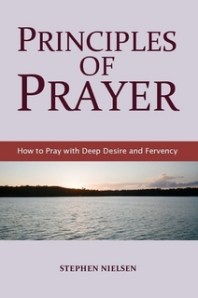
This post is an excerpt from Principles of Prayer.

Posted in Prayer A to Z Excerpts, Specific Praying | Tagged , , | Leave a comment

How We Make Light of Sin – from Ephesians 5:3-14


Impurity
Filthiness
Silly talk
Coarse jesting
 
These words suggest to me that there is a relaxed attitude about sin,
that sin is not taken seriously.
Yes, too often, I think,
even among Christians
sin is made light of and joked about.
I think it is our way of defending ourselves—
our defense mechanism.
 
It is of course the natural way of the world,
a way to block out their doom—
the eventual wrath of God upon them.
But there is no reason for a believer to act this way,
since he is full of light from the Lord and has the promise of hope.
 
Now take the counsel of Paul.  He said,
“Don’t participate in the things these people do” (NLT).
By participate I would say he is saying
not only should we not do the immoral things,
but we ought not even listen to it or watch it.
This makes it hard for a Christian doesn’t it?
Because non-Christians are everywhere in the world—
on the radio, and in the movies,
and on TV.
And they don’t have Christian values as we do.
And we are faced with it all.
 
The Christian is exposed to everything in the world.
And even if he just listens to it
he will pick it up.
 
Oh my, what can we do?
Well, we always have prayer,
and the Holy Spirit,
and wisdom from the Holy Spirit.
And we can chose not to listen to certain things!
 
I need to make better choices, I know that.
Because the more I excuse sin—
from myself or others—
the more I am likely to give into it.
 
Well, here is the truth about sin—from Romans 6:23:
“The wages of sin is death.”
 
And that’s no laughing matter!


Posted in 5 Romans to Philemon, Poems, Prayers, Ramblings, Quiet Time Highlights | Tagged , , | 2 Comments

Four Reasons Why It Is Important To Pray Specifically

1. Because it is the most natural way to pray.  God has designed it, and thus made it natural that in all our communication, especially in our asking of questions, we tend to be direct instead of general or vague.  John R. Rice, in his book, says it this way:  “In any matter of daily living, we make our requests definite.  We never go into a restaurant and say, ‘Bring me some food?  We carefully select from the menu just what we want and think we can pay for.”

Today most of our gas stations are self-serve, but I remember the days when the serviceman would come to the car and would ask you how much gas you wanted.  Now tell me, would you ever say to him, “Just give me a few gallons,” or, “Just give me whatever you think I need?”  No way would any of us do that.  We would tell him to give us exactly what we wanted or according to how much money we had.  We would say to him, “Fill it up,” or, “Give me five dollars worth; and could you also wash my windows.”  Now that is how we should pray—telling God exactly what we want.  It is the natural way, the way God has designed us to pray.


2. Because it teaches us to know our own needs so we can trust God for each of them.  If you believe that God is really God, then you must believe that He knows our needs before we pray about them.  But if that is the case, then why all the fuss about praying specifically?  The answer is obvious: it is not for God’s sake, it is for our sake.  When we take the time to think about exactly what our needs are, write them down, and pray about them one at a time, we become more aware of our needs and more ready to admit that we need the grace of God. 


150px-Andrew_Murray

Andrew Murray

3. Because it is the only kind of prayer that expresses faith and receives answers.  According to Andrew Murray, there is a prayer that is not of faith; this is a prayer of submission that simply proclaims its desire and then leaves the decision to God.  It is the prayer in which case God’s will is not known, so we say, “Whatever your will is Lord let it be done.”  Hence, this is the prayer that has a desire for something but it has no assurance or promise from the Lord of getting it or even knowing that He wants us to have it.

Now it seems to me that I have heard this kind of praying quite often, especially from myself!  And one may say, “There is nothing wrong with it, for I am putting it into God’s hands.”  Well, I agree that we should put all things into God’s hands and wait for His will, but on the other hand, we should not be lazy in our praying.  As we wait for God’s answer we should also work to find His will in scripture.  Then, when we have found His will in a promise we can plead that promise through specific prayer.

General prayers, which are lazy prayers, do not express faith nor receive answers, because the petitioner does not take the time to find God’s will; thus he obviously can not claim His will in a specific request.  Specific prayers, on the other hand, are full of faith because the petitioner takes the time and the effort to find God’s will and then counts on God through prayer to fulfill it.  Thus, the petitioner who expresses faith: seeks for God’s will, prays specifically according to that will, waits for the expected answer, and in God’s time receives that answer. 


4. Because it helps us to have hope for the answer.  Since specific prayer, as we have discovered, is prayer that is full of faith, we may also say that it is full of hope, for faith and hope go together.  Those who have faith to believe God also have hope that He will bring the answer.  So the more we pray specifically the more we are telling God that we believe in Him and have hope for His answer.  Then, as a reward, He gives us even more strength and patience to wait and pray. 

This post is an excerpt from Principles of PrayerPrinciples of Prayer

Posted in Prayer A to Z Excerpts, Specific Praying | Tagged , | 2 Comments

Oh God, Show Me the Riches of Your Glory! — from Ephesians 3:16


08320010


That He would grant you,

according to the riches of His glory,

to be strengthened with power through His Spirit

in the inner man.


Lord, dig down into Your storehouse of splendor

and grant to me,

according to the riches of Your own magnificence

Your strength and power—

so that I might do what is right,

to the praise of Your grace.


Ephesians 1:7 – the riches of His grace

Ephesians 1:18 – the riches of the glory of His inheritance in the saints

Ephesians 3:8 – the riches of Christ

Romans 2:4 – the riches of His kindness

Posted in 5 Romans to Philemon, Poems, Prayers, Ramblings, Quiet Time Highlights | Tagged , | Leave a comment

Oh God, Grant Me Your Strength! – from Ephesians 3:16-19

 86660011


That He would grant you, according to the riches of His glory, to be strengthened with power through His Spirit in the inner man; 17 so that Christ may dwell in your hearts through faith; and that you, being rooted and grounded in love, 18 may be able to comprehend with all the saints what is the breadth and length and height and depth, 19 and to know the love of Christ which surpasses knowledge, that you may be filled up to all the fulness of God.


 Oh God, grant me, please grant me to be strengthened with the power of your Spirit in the depths of my being, so that in this power Christ will dwell comfortably, and I will be rooted and grounded in your love.

Lord without your strength, without your power all my effort at holiness and righteousness is useless.  I fail every time.  But when You empower me I will rise up like a great warrior to do battle; and I will strike down the enemy every time he come at me.

The strength and power of Your love is wonderful. Fill up the depths of my being with it. Never leave me.  Flood my whole being with Your strong Spirit. I stand in the strength of the Lord. I can do all things in Your strength.


Posted in 5 Romans to Philemon, Poems, Prayers, Ramblings, Quiet Time Highlights | Tagged , , | 1 Comment

Principles of Prayer by Stephen Nielsen: Table of Contents and a Short Excerpt

   Principles of Prayer Image            

CONTENTS

 Introduction . . . . . . . . . . . . . . . . . . . . . . . . . . . . . . . .  vii

 1   Prayer in the Holy Spirit . . . . . . . . . . . . . . . . . . . . 9

 2   Prayer with Faith . . . . . . . . . . . . . . . . . . . . . . . . . 28

3   Prayer with Authority . . . . . . . . . . . . . . . . . . . . .  47

4   Jesus’ Teachings on Prayer . . . . . . . . . . . . . . . . . 60

5   Failure in Prayer . . . . . . . . . . . . . . . . . . . . . . . . . . 74

6   Specific Prayer . . . . . . . . . . . . . . . . . . . . . . . . . . . 87

7   Desire in Prayer . . . . . . . . . . . . . . . . . . . . . . . . . .96

 8   Burden in Prayer . . . . . . . . . . . . . . . . . . . . . . . . 110

9   Earnestness in Prayer . . . . . . . . . . . . . . . . . . . . 120

10   Importunity in Prayer . . . . . . . . . . . . . . . . . . .131

11   Travail in Prayer . . . . . . . . . . . . . . . . . . . . . . . 151

Notes . . . . . . . . . . . . . . . . . . . . . . . . . . . . . . . . . . . . 167


Here is a short excerpt from chapter 9:


 CHAPTER 9

 EARNESTNESS IN PRAYER


It is vitally important that all our prayers be with earnestness.  This study will tell you why this is true and how we can develop earnest prayer.


WHAT DOES IT MEAN TO PRAY WITH EARNESTNESS?

Generally speaking, when one prays with earnestness, he prays showing deep sincerity or seriousness; it is fervent and intense prayer, which is stirred up by a great desire to meet a need that is believed only God can satisfy.

 Now let me back up. When you have a longing, a craving, and a yearning to see God meet a need, this is the desire of prayer (which we talked about in a previous chapter). It is something that God puts in you by design—as his prayer warrior.  But if you want that desire to be fulfilled you must follow it up by praying with earnestness.  When you do that, you are in effect putting that desire to work—you are keeping the fire of desire burning.  With every desire God gives you, you must, therefore, pray and seek God earnestly, because desire without earnestness will lie on the ground as a lukewarm ember, and your prayers will be ineffective. 

 But desire with earnestness will keep the desire of prayer hot, and eventually, in God’s time, will bring the answer to your prayers.

 We will turn now to the scriptures to make sure that our understanding of earnestness is correct.  Here are five Greek and Hebrew words, with some examples, that will help us to understand this topic of earnestness in prayer.


Ektenos.  According to Thayer’s Greek Lexicon, this Greek word “[comes] from a verb which means to ‘stretch out the hand,’ thus it means to be stretched out.”  In prayer, it conveys the idea of praying fervently, without ceasing and not relaxing in effort.  This kind of prayer is a continuous prayer of straining and stretching to gain the answer.

 Ektenos is found only twice in the New Testament.  In Acts 12:5, it is used to describe the kind of prayer the church prayed for Peter, who was kept in prison.  In this verse ektenos has been translated at least four different ways.  The NIV and the RSV translate it as “earnestly praying” and “earnest prayer for him was made.”  The KJV translates ektenos as prayer “without ceasing,” the NKJV as “constant prayer,” and the NASB as prayer being made “fervently.”  I’m not sure which one of the translations is the most correct, but I would guess that they are all good translations.  Therefore, if we put them all together, we may conclude that earnest prayer is constant, without ceasing, and fervent. 

Particularly, in this case, we see that earnest prayer was made for Peter by the church.  Certainly there is more power in corporate prayer, especially when it is united in earnestness.  And such was the case here, for, as it happened, Peter was miraculously delivered (Read this amazing story in Acts 12: 5-17).

In the second occurrence, in 1 Peter 1:22, ektenos is used of how we are to love one another:  “Since you have purified your souls in obeying the truth through the Spirit in sincere love of the brethren, love one another fervently with a pure heart” (NKJV). 

Most translations, as it is here in the NKJV, render ektenos, as “fervently,” but the RSV translates it as “earnestly” and the NIV as “deeply.”  So, putting it together, we are to love one another deeply, earnestly and fervently. 

This love then is a love that is stretched out to the limits for others.  It is a special kind of pure, heart-felt love given by the Holy Spirit that only believers possess.  Moreover, I believe that there is a connection of this kind of love to earnest prayer.  For it seems reasonable that when our prayers are earnest they are prayers of love from the heart of God.

This is what Duewel has said about fervency in prayer as it relates to love:

Fervency is born of love…Love is the very nature of God.  His heart is aflame with love for us and for His world.  The flame that burns in the heart of God will set your heart aflame if you will draw close enough to Him.  His love radiates to your heart.  As you pray, His love places on your heart deep concerns for the needs he sees and wants you to see.  His love, as it imbues you, makes your prayer a sweet perfume before Him (Ps. 141:2).  God’s love is dynamic.  It adds love, desire, and zeal to your praying.  


Eklenesteron.  This word has basically the same meaning as ektenos, except with this word the intensity of earnestness is greater.  The word appears in the New Testament only in Luke 22:44, where it describes the way Jesus prayed just before …


Posted in About Principles of Prayer | Tagged , , | 5 Comments

How to Prepare for Revival

     We ought to be always preparing ourselves and others for revival, expecting God to do great things. Then, if there are enough of us who are prepared for it, God will phDavidSpeaking02bring it. The problem is that many of us don’t even think about it, some of us don’t realize the need for it, and some of us don’t even want it—how sad.
     But even if many don’t think about it or want it, God does. As David Bryant has said, “God is gathering a host of people worldwide who are convinced that revival is the only hope for the church as well as for the world.”
     If you believe you are one of those people, or if you want to be, you need to start preparations. Prepare yourself first, and then prepare other believers, and also non-believers.

     Preparing ourselves for revival. The first thing we need to do is to pray into ourselves a meek and holy character. Furthermore, we should regard ourselves as a holy priest of God, which the Bible says we are (1 Pet. 2:5, Rev. 1:6). Accordingly, we must be expectant and ready, not only for Jesus, but also for the Holy Spirit to come in revival. For as Armin Gesswein (Founder and Director of Revival Prayer Fellowship in SanCapistraro, California) has said, “The coming of the Holy Spirit with power…is the best preparation for the coming of the Lord.”

     Preparing fellow believers for revival. Whenever you pray, both privately and in your prayer groups, pray that God would prepare believers for revival. Pray repentance and meekness into their lives. And when you meet with your peers, talk about the need for revival. If you have the opportunity, teach a class on revival, and talk about how to prepare for it. Pass the word on to as many as you can that God will bring revival if we are prepared for it. Convey also the message that not only evangelists are needed, but teachers, counselors, writers, prayers warriors, and most of all those who are willing to help wherever the need arises.

     Preparing non-believers for revival. When God brings revival many non-believers will be saved. But for that to happen we need to do our part. We must work on being loving and compassionate toward them, and open to their questions. Learn also how to share the gospel—in truth and with love. Above all pray steadily for true repentance; for that is the first phase of revival—for non-believers as well as for believers.

This post is an excerpt from my book Purpose of Prayer.

Posted in Prayer A to Z Excerpts, Revival and Prayer | Tagged , | 2 Comments

The History of Revival – A Brief Outline

 It is a historic fact that God has brought redemption to great amounts of people through revival.  Here is just a brief outline of revival in history. 


Revival in the Old Testament.  Revival through the Old Testament was always on-and-off.  In the days of the judges, periods of spiritual decline would be followed by seasons of quickening.  In the days of the kings, revival swept across the land of Israel under David and Solomon.  Then, after the nation was split, no revival at all was seen in northern Israel, but in Judah revival came to some degree under Asa, Jehoshaphat, Hezekiah, and Josiah as they turned the people to the Lord. 

Sadly, Judah again, with Israel, backslid into idolatry and God sent them into judgment by the hand of the Babylonians.  Then once again God sent revival, this time through Nehemiah and Ezra; they led the people back to their land to restore Jerusalem and the Temple, and they taught the people God’s ways (Ezra 7:10).


Revival in the New Testament. The New Testament period is all about Jesus. He brought revival to the people of His day and remains the basis of revival throughout the rest of the history of the world. (Read Isaiah 61:1 ff. and observe the revival Jesus was sent to give us.)


Revival from Pentecost to the present. After several days of faithful and continuous prayer (Acts 1:14), the church was born in revival fire at Pentecost (Acts 2:1-4), which was then, and has continued to be the sole work of the Holy Spirit.   Accordingly, as members of the church have continued throughout history to pray for revival, the Holy Spirit has been at work to bring it.

Revival in the church age has been much like revival in the Old Testament: there is a period of decline followed by a period of revival.  And though there have always been small pockets of revival here and there, we have also seen larger and much more visible waves of revival.  Wesley Duewel has suggested that there have been four such waves.

John Wesley and George Whitefield led the first wave, along with other preachers 220px-Jwesleysittingsuch as Theodore Frelinghuysen of New Jersey, Samuel Davies in Virginia, and Jonathan Edwards.  This movement of about thirty years long, from 1726 to about 1756, brought about 40,000 people to Christ forming 150 new churches in the New England states alone.  Thousands more came to Christ in the southern and middle colonies.

The second large wave of revival was led by Charles Finney, which continued from 1821 till 1840.  This period of revival, though perhaps shorter in length, was more extensive then the first wave probably because, under Finney’s leadership, it was more organized.  For Finney had proven ways of promoting revival; and he, in fact, published a book in 1834 entitled Lectures on Revivals of Religion, which spelled out these proven ways.  Later, in 1846, his 200px-Charles_g_finneyLectures on Systematic Theology was published, presenting a theology of revival.  His many methods of revival soon came to be widely accepted and copied; and he led many followers who successfully put his methods to work.
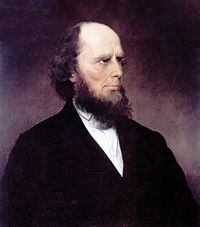
After reading about Charles Finney I can’t tell you how impressed I became with his great leadership and influence.  He would ride into a town, hold a few meetings, and nearly the entire town was saved.  Sometimes after speaking in a church the people would be under such conviction of sin that they would all break down and weep.  Charles Finney was so used by the Holy Spirit that sometimes, by merely passing by, people would see him and be moved to repent. 

From about 1840 to 1858 there was a period of spiritual decline.  Then from 1858 to 1859 a nationwide revival swept into the churches. “Daily prayer meetings, often at unusual hours, and lay leadership were features of this great peak in revival history.”

The fourth wave of revival was from 1904 to 1909.  Says Duewel, “… [This period of revival] was probably preceded by prayer and hunger on a more international scale than any previous revival.  God’s blessing was poured out in more nations than in any previous revival movement.”   It began in Wales under the prayers and leadership of Evan Roberts, where some 100,000 were converted within 6 months.  Eventually the revival fire touched England, Ireland and the United States.  It leaped over to India, had an effect in South Africa, and was preparatory to all missionary work in South America.

Since 1909 there has not been such sweeping revivals as these four just mentioned, however, there have been many smaller evidences of revival forces scattered here and there, which taken together has made up a mighty and effective force for God.

Here are some of the areas where God has been at work to bring revival:

1.  In the last ninety years God has given us several great evangelists such as Billy Graham whom He has used to awaken masses of people to the gospel. The response to the presented gospel has demonstrated that people are definitely hungry for God.

2. The work of the Gideons and of various national Bible Societies in the distribution of Bibles has been accepted enthusiastically all around the world, which gives evidence that people everywhere, are hungry for God’s Word and for revival.

3.  In the last eighty years or so, when the church seemed to be somewhat lacking to bring revival, God went to work and raised up several para-church groups such as The Navigators, Campus Crusade for Christ, Intervarsity, Young Life, Youth for Christ International and Youth With a Mission.  These groups have proven to be a powerful force in evangelism and discipleship, especially among the youth.

4. Some local churches have also in recent years been at work to promote evangelism and revival.  Such efforts as Evangelism Explosion, began in 1967 by D. James Kennedy, have proved to be a great resource to help people witness for Christ.

5. Missionaries are continuing to labor as servants in Bible translation, evangelism, and discipleship.  Without the work of the Christian missionary, revival would simply be nonexistent.  Furthermore, the reason why the world has not seen more revival and the sweeping revivals of the seventeen and eighteen hundreds, is because there has not been as much missionary effort and not as much prayer.  Thus, the more missionary service we bring and the more prayer we offer the more revival God will bring.

6. The Holy Spirit has been at work in many Colleges and Universities.  A recent article I read, in Herald of His Coming, by David T. Perry, tells all about a revival that broke out on February 3, 1970, in a regular chapel service at Asbury College in Wilmore, Kentucky.  On this day, the dean of academics was scheduled to preach, but he felt God directing him to open the time for students to witness for Christ.  Well, as David T. Perry wrote, “When the chapel was about half over, God walked in!”  The chapel service continued, not for its usual fifty-five minutes, but for seven days and seven nights without a break.  People kept coming to the auditorium from all over the state of Kentucky to see what was happening; God touched all who entered and many were saved.

This post is an excerpt from my book Purpose of Prayer.

Posted in Prayer A to Z Excerpts, Revival and Prayer | Tagged , | 6 Comments

Not Home … Yet

Heidi Viars's avatarHeidi Viars

not home

I walk into the dreary day –

I try to see the sun.

For answers and the healing pray.

I walk – keep pressing on.

~

I walk though fog, I walk through rain.

I walk through wind and snow.

I know that I don’t walk in vain,

For Christ knows where I go.

~

I know that this is not my home.

A longing draws inside.

It moves my heart and urges on,

To walk and to abide.

~

Here, as I pray for God to heal,

I trust His ways are right.

Ask Christ to show and to reveal

His ways and His delight.

~

 I trust His precious hand to guide,

When healing doesn’t come,

When tears remain and hurts abide,

For this is not my home.

~

“Precious Father, the world tries to convince us that this is all we have.
Help us to set our…

View original post 92 more words

Posted in Reblogs | Leave a comment

A Lesson in Obedience and Trust from Elijah — from 1 Kings 17:1-24

My thoughts this morning have been on how God provided for and directed Elijah—and on how He will do the same for me if I just trust Him.

For a month or so I have been reading a book about great personal evangelists—how they were always leading people to the Lord.  I have a great heart to do this myself, and I have done it some—but not so much in the last few years.  I want to get back at doing this, but it’s hard, and frankly, I feel rather guilty about not doing it. 

Well this morning as I was reading about Elijah, how God provided for him and directed him, I believe the Lord brought some grace to me.  If there ever was a man who was a man of God it was Elijah, but it seemed that he wasn’t always out winning people to God like some of the evangelists I have been reading about.

Reading from 1 Kings 17:1-24, we find that after Elijah told the wicked 007-elijah-fed-by-ravensking Ahab that there would be no rain for a few years, God led him out to hide in the wilderness near Kerith Brook, where He would take care of Him.  And he stayed there until eventually the brook dried up.  And then God told him to go somewhere else—to a widow’s house.  You may remember the story of how he stayed with the widow and her son, and God provided for them—miraculously.

My thoughts in reading this story was this: though many think that a spirit-filled Christian should always be out evangelizing the world, yet Elijah was for a long time just sitting communing with God and being fed by the ravens.  And then he spends time with one widow and her young son—when he could have been preaching to thousands!

What I believe God has been telling me is that I should just concentrate on obeying Him moment by moment and not worry about whether I am doing enough for Him.  We should just let God do the planning.  He will use us the way He wants to, and He will put us where He wants us to be.  We may not always be on the front lines or do the things that we think are most important.  The most important thing that we should do is just be near Him and keep ourselves pure—so we will be fit and ready to do the things He wants us to do and tells us to do.

Posted in 1 Genesis to Nehemiah, Quiet Time Highlights | Tagged , , | 3 Comments