God’s Sevenfold Pattern of Revival—from 2 Chronicles 7:14

From 2 Chronicles 7:14, we see that repentance expresses itself in four ways, which are followed by a three-fold result or promise of God.  We will call it… 


God’s Seven–Fold Pattern of Revival—from 2 Chronicles 7:14


1. Humble yourself – “If my people who are called by My name will humble themselves…”  This humbling of one’s self may also be called brokenness.  For when we come to God in humility we are declaring our brokenness before Him.  And I think we are also saying to God, “If I am not broken enough Lord, break me more. I come to be broken before you.”

Ted Rendall speaks of this brokenness, in his book, Fire in the Church.  He says, “Brokenness is the soul…empty of its own confidence and resources.” 

In the context of 2 Chronicles 7:13-14, this is what God requires of His people—namely, that they may know that only God can deliver from drought or from a locust infestation (which comes by His hand).  Therefore, just as God shuts up the heavens so there is no rain, and commands the locust to come and destroy, the humble are those who believe that God also will heal and deliver if they pray and seek His face and turn from their wicked ways.  Yes, they are those who patiently wait on the Lord to deliver, because they know they are without strength to save themselves. Therefore, they trust in God and cast all their cares on Him (1 Peter 5:6-7); because they know that God cares for them even more than they care for themselves. 

This humility or this brokenness comes when the heart is overwhelmed with the love and mercy of God in contrast to our own ungodliness and sin. (Read Luke 5:1-8.  Note Peter’s brokenness as he realized who Jesus was in contrast to his own sinfulness.)


2.  Pray – “and pray…”  As we humbly confess sin and get into the Word, seeking to be broken, and as God indeed break our heart, prayer will naturally follow.  It will be the prayer of praise and thanks to God for His mercy and grace.  It will also be prayer that articulates all the needs of the soul. 

This kind of prayer will not just be the exercise of prayer, as in “saying our prayers”.  It will be more accurately termed prayerfulness, or having the spirit of prayer.  Moreover, it will be transparent prayer—that which gives expression to our innermost desires; not selfish desires, but for all the desires that God Himself has places in our heart.  Thus it will be prayer not just for self and by ourselves, but for others and with others. 


3.  Seek His face – “and seek my face…”  This seeking of God’s face may be considered the more earnest part of our praying.  It is the fervency, and the persistence of our prayers.  It may also be considered as the strength of our prayers.  Likewise, this seeking of His face is what makes prayer real; it is in fact the essence of true prayer.  Thus when we truly repent and come to Him with a broken heart our prayers may be correctly termed a crying out to Him or a seeking of His face.


4.  Turn from your sinful ways – “and turn from their wicked ways…”  When we are touched by God’s purity and love, hence, when He has gotten a hold of our heart, we will turn from our sinful ways and follow Him.  This I think is the climax of revival.  It is that expression of repentance that really gives evidence that there is a revival going on in the heart.  We can humble ourselves, pray, and seek His face, but if we don’t turn from our wicked ways it proves that we are not truly repentant, and consequently, there will be no revival.  Therefore, this fourth step is crucial and absolutely necessary in order to see the following blessings of God.  


5.  God will hear from heaven – “then I will hear from heaven…”  If we humble ourselves before Him, pray, seek His face, and turn from our wicked ways, then God will hear us when we pray to Him.  This is the first of three promises, which are based on the condition of true repentance.

This hearing is more than just a hearing in the ear.  It is a compassionate hearing of the heart, a hearing with attention and concern, bringing with it forgiveness and healing.  Accordingly, it is a hearing by God in which He steps down from His lofty place of glory in heaven, gets down to our level on earth, and looks compassionately into our eyes.  Moreover, it is a divine visitation by which we hear Him and feel Him coming down to us in love.


6. He will forgive our sins – “will forgive their sins…” Those who have experienced true repentance and revival will always have two things in their life: they will have learned how to forgive others, and they will have experienced God’s forgiveness.  These two things are inseparable, because unless we forgive others God will not forgive us.  Remember Jesus words?  “If you do not forgive men their transgressions, neither will your Father forgive your trespasses” (Matt. 6:15). 

Furthermore, as Stephen Olford has said, “It is not enough to say, ‘My brother, I forgive you.’ There must be true brokenness, repentance, and then forgiveness.”  As a result, God will come to us with a wonderful forgiving and cleansing love. 

This personal experience of the poured out love of God upon us (which we experience when we repent and trust Him), is the key to the beginning of continued revival.  For when we feel God’s love at work in us, it is then that we are awakened to a new interest in humbling ourselves and in doing the will of God in obedience. Thus we can say, “We love because He first loved us” (1 Jn. 4:19).


7.  He will heal our land – “and will heal their land.”  Healing, the third promise of revival is always followed by and is a result of the second promise, God’s forgiveness.  This healing is not only of our land, but of all kinds: physical, mental, emotional, and spiritual.  It is a healing by which He cleanses us, restores us, rebuilds us, and brings us back to health (Jer. 33:6-8). 

This last blessing of revival I believe is positive proof that there has been revival.  Therefore, we know that revival has taken place when a country and a people have been healed and restored.  God wants to heal all of us.  He is waiting for our humble repentance so that He can heal our wounds and restore our broken bones.  Truly He loves us and wants to see us in good health and rejoicing always in Him.

Here is God’s seven-fold pattern of Revival.  If we humble ourselves, pray, seek his face, and turn from our wicked ways, then He will hear from heaven, forgive our sins, and bring healing to our land (as well as to our bodies and souls).

 This post is an excerpt from my book Purpose of Prayer.

Posted in Prayer A to Z Excerpts, Revival and Prayer | Tagged , | 1 Comment

Four Areas Where Revival Is Needed

The following is an excerpt from my book Purpose of Prayer

Rejection of God is not only found in the world among nonbelievers, it is found among Christians, and in our churches, and among many of our ministers. We will examine these four groups.

     Our ministers. According to R. A. Torrey, “Our future ministers oftentimes are being educated under infidel professors, and being immature boys when they enter 220px-RATorreythe college or seminary, they naturally came out infidels in many cases, and then go forth to poison the church.”
     If this was true in Torrey’s time, I believe it is even truer today, because our seminaries have gotten worse. Many of our ministers, sad to say, are not men of prayer, have no love for souls, and have little love for the Word of God. They have not learned the art of sound expository preaching, and they do not very often preach repentance; they preach a soft diluted message—things they think their congregation would want to hear. With this sad state of many of our pastors, it is clear that there is a great need of revival.

     Our churches. I think it is true to say that many of our churches do not uphold the whole Bible as true. Likewise, many do not uphold the resurrection or the virgin birth or the deity of Christ. I would say that most of our churches—even our evangelical churches—are prayerless; for they have given very little priority to prayer meetings, and have not emphasized or taught prayer from the pulpit. Many of our churches can no longer be called Houses of God, because they are now used as centers for gambling and for gossip. The church, for many church leaders, is not a place to serve God, it is a place of big business, where filling the pew and the collection plate is more important than teaching such things as humility, purity, and faith. And for these reasons we don’t have revival. For these reasons also, we need revival.

     Christians. I would have to say that most of us who call ourselves Christians these days are sadly lacking in Christian virtue and Godly character. Thus we find ourselves in a sad state. The statistics show that the divorce rate for Christians is even higher than for pagans. How can this be? I will tell you how. We have swallowed everything that the world has offered us: all the games, and all the entertainment— including all the sin that goes along with it. It almost seems that most Christians these days act and think no differently than pagans. Some whom I have observed say they are Christians, but they have no quiet time in the morning, they don’t care to join a Bible Study group, and they almost seem afraid to go to a prayer meeting. But then, on the other hand, there are some that are in the Word and faithfully have their quiet times every morning, but they are grossly and sadly built up with spiritual pride—probably the greatest sin of all. We need revival!

     Non-Christians. Well, what can we say about this group? As I see it, this country has not seen revival in a while—so not very many are being saved, just a few here and there. With X-rated videos and the ever-growing Internet usage, gross immorality is on the rise, making it almost impossible for pagans to get a glimpse at the light of truth. There is a general lack of conviction of sin in this world, and any supposed standard of Christian virtue and character is lost, and replaced with Hollywood glamour and computer games and such. Yes, there is plenty of evidence that shows our great need of revival.

Posted in Prayer A to Z Excerpts, Revival and Prayer | Tagged , | 1 Comment

Five Definitions of Revival

     Revival is a strange concept to many. Some see it as just another religious service. Some see it as a way-out religious experience. Others know exactly what it is and that we need it, but are without hope that it will come.

          Here are five good definitions of revival—from my book Purpose of Prayer.
     1. Revival is an awakened interest in doing what is right. Generally speaking, revival is “an awakened interest in religion” (American Heritage Dictionary). It is having a sudden change of heart, a desire to do what is right—to go to church, to start being kind to our neighbors, to do what is good for the community, and to do all the will of God. This awakened interest is always preceded with a deep conviction and grieving over sin, and with an understanding that no good work can be done without God’s work of forgiveness, cleansing, and renewal.

     2. Revival is a restoring by God. The Hebrew word for revival, Chayah, means to be quickened, or to be restored—from sickness to health, from discouragement to joy, from faintness to strength, or even from death to life.
The word Chayah in Psalms 85:6 brings us the idea of a restoring to joy—as the Psalmist prays that God would quicken the people of Israel from discouragement, and restore them to joy: “Wilt Thou not restore us again, that Thy people may rejoice in Thee?”
     In Jeremiah 33:6-8 a promise of God is made to the people of Israel through the prophet Jeremiah. It is a beautiful picture of God’s promise of revival: “Behold I will bring to it [Jerusalem] health and healing, and I will heal them; and I will reveal to them and abundance of peace and truth. And I will restore the fortunes of Judah and the fortunes of Israel, and I will rebuild them as they were at first. And I will cleanse them from all their iniquities by which they have sinned against me…”
     So we see here the principle that revival comes to us from God and brings to us forgiveness, cleansing, and healing.

     3. Revival is the stirring up of the Holy Spirit in us. The Greek word anazopureo, means to stir up or kindle up as a fire, and is sometimes translated as revive. This word is seen in 2 Timothy 1:6, where Paul said to Timothy, “Kindle afresh the gift of God which is in you…” In this verse I believe we see the secret of revival. It is to kindle or to stir up the gift of God—which is the Holy Spirit. Yes, the Holy Spirit who dwells in the believer and is waiting to enter the heart of the nonbeliever, waits and expects to be stirred up. That is, He is waiting for us to fan the fire of His power by our prayers and diligent service.

     4. Revival is God loving us. Wesley Duewel has said, “Revival is God holding out His arms of love to us and refusing to give up on us.” That, I would say, is only the beginning of revival. To carry it out we must receive His love and love Him in return. We must run to Him and climb into His arms of love. This receiving, this running to Him is what we could call the igniting or the stirring up of revival, which sets aflame the love of God and the power of the Holy Spirit in our heart.

     5. Revival is God pouring forth His Spirit, filling His people, as on the day of Pentecost. No one will doubt that the best example of revival was at Pentecost, when the Holy Spirit came and filled new believers who were gathered in Jerusalem (Acts 2:1-4). If this is true, then to get a clear understanding of what revival is we must pay attention to every detail of that historic moment. But surprisingly, there are only two basic details to record: 1) that they were all gathered together with one accord, and 2) that they were all filled with the Holy Spirit. This I believe, in its simplest form is revival.

purpose of prayer image

Posted in Prayer A to Z Excerpts, Revival and Prayer | Tagged , | 2 Comments

Purpose of Prayer by Stephen Nielsen: Table of Contents, Introduction and a short excerpt

                                    purpose of prayer image


CONTENTS

Introduction . . . . . . . . . . . . . . . . . . . . . . . . . . . . . . . . . vii

1  Prayer is God’s Idea . . . . . . . . . . . . . . . . . . . . . . . . .  9

2  The Lord’s Prayer . . . . . . . . . . . . . . . . . . . . . . . . . . 18

3  Answers to Prayer . . . . . . . . . . . . . . . . . . . . . . . . . . 47

4  Prayer in Jesus’ Name . . . . . . . . . . . . . . . . . . . . . .  74

5  Prayer Warfare – Part 1 . . . . . . . . . . . . . . . . . . . .  84

6  Prayer Warfare – Part 2 . . . . . . . . . . . . . . . . . . . 100

7  The Sin of Prayerlessness . . . . . . . . . . . . . . . . . .  116

8  How Long Should We Pray? . . . . . . . . . . . . . . . . 130

9  Revival . . . . . . . . . . . . . . . . . . . . . . . . . . . . . . . . .  140

Notes . . . . . . . . . . . . . . . . . . . . . . . . . . . . . . . . . . . .  157


                                                    INTRODUCTION

What is the purpose of prayer? What is the reason for it? Man’s ideas of prayer are sometimes very different then God’s. If a man or woman has little regard for what God desires, their prayers will naturally be quite selfish; they will pray just to acquire things that please them. But when we submit our will to God and seek the things He desires, He will work in our heart to change our prayer purpose.
The chapters of this book have to do with learning how to pray according to God’s purpose for prayer. I sincerely desire and pray that you will find that purpose.


Here is a short excerpt from chapter one:


CHAPTER 1

PRAYER IS GOD’S IDEA


I think it is natural to assume that prayer is God’s idea. For true prayer is always according to the Word of God—according to His promises and according to how He has taught us to pray.
     Some people, however,—those who don’t believe that the Bible is the inspired Word of God, that God is a personal God, and that He has given us personal promises—have arguments that prayer is not really God’s idea. They believe prayer is their own idea.


ARGUMENTS THAT PRAYER IS NOT GOD’S IDEA

Here are three different arguments that some people may use:

1. Prayer is man’s own thought-up way of expressing his need to what he hopes is God. Here the argument is that God doesn’t tell man what to pray or draw him in any away to prayer; it is his own idea. In this view, man is believed to be separate from God and not sustained by God. Thus he believes that most of the time he doesn’t need God, only sometimes. At those times he may pray to God for help, but his prayers are his own idea and in his own words. Note also, in this argument that this person doesn’t have a real, solid belief in God. He just hopes that something or somebody is out there bigger than himself that will offer him some help when he decides that he needs it.

2. Prayer is talking to yourself. Since some believe that they themselves are God (or god), prayer for them is simply talking to self. And I suppose they would say that the more you talk to yourself the more you will be able to form the god within you and thus to see clearly (to be more convinced) that you really are God (or a god), and that you can do anything when you put your mind to it. Thus, in this view, prayer is not the idea of communicating to God in Heaven; it is the idea of talking to the god within.

3. Prayer is man’s way of letting off steam. In this view God may exist, but man doesn’t really pray to Him. Prayers are mainly man’s way of letting off steam, and a way to unburden self. It is really like point two, a self-talk. In this view, however, man doesn’t really think he is a god, he just talks to himself as a form of meditation. I suppose in this view it is believed that the more effort is put into trying to help yourself, the more God will come along beside you and help you to feel good about yourself. Here again, prayer is not God’s idea; it is man’s idea.
        Now I want to tell you that these arguments are not documented, compiled from any survey; I just made them up. But since I thought of them, I’m sure someone else did too. And so I’m convinced that these are some of the arguments that some people use, along with many others.
       I want to tell you, however, that true prayer is most definitely God’s idea. As a matter of fact, He chose us and appointed us as His fruit bearing servants with the unique privilege of being able to ask for whatever we want and to receive it (Jn. 15:16). Prayer then is not only our privilege but also our appointed calling from the Lord. Yes, prayer is definitely God’s idea, and there is proof…


PROOF THAT PRAYER IS GOD’S IDEA

There is ample proof, through the life of Jesus, that prayer is God’s idea. For Jesus, who is really God come to us in the flesh, commanded us to pray, taught us to pray, and demonstrated prayer to us. 

     He commanded us to pray. Jesus would not have commanded us to pray unless prayer was His idea and His Father’s idea. All that He commands the believer is part of His plan. When He commands us to “watch and pray,” when he says “ask, seek, and knock,” and when He says “men ought to pray and not to faint,” that indicates to me that prayer is His idea and that He is trying to relay that idea to us. He wants us to know that it will work if we will do it as He says.

     He taught us to pray. Jesus would not have taken such great pains to teach us to pray if prayer was not His idea and His Father’s idea. E.M. Bounds has said, “Prayer is one of the great truths which He [Jesus] came into the world to teach and illustrate. It was worth a trip from Heaven to earth to teach men this great lesson of prayer.”

     He demonstrated prayer to us. In His teachings on prayer, Jesus used many stories and illustrations, but the best illustration of all was His own prayer life.

     One day His disciples came to Him as He was finishing His prayer, and they said, “Lord, teach us to pray…” And so He gave them an outline of how to pray. We call it The Lord’s Prayer (Lu. 11:1-4). The disciples used this simple prayer as a model prayer; and I’m sure it helped them learn how to pray. But I want to emphasis that, if they had not been observing Jesus while He was praying, they would not be so curious about prayer and so eager to learn how to pray.
     Jesus prayer life was different, unlike anybody’s they had ever seen. He seemed to be always praying, and in all kinds of places. They could tell that He had a special relationship with God whom He called His Father. Yes, prayer is God’s idea. It is how His Son Jesus communicated with Him, and it is how He has designed that we also are to communicate with Him.
     Now then, let me tell you what God’s great idea of prayer is. Here are ten of His ideas—or purposes—for prayer, which He has in mind for us.


GOD’S TEN IDEAS FOR PRAYER

     1. Prayer is God’s idea as the way to acquire salvation. Whether it is a verbal prayer or a silent prayer of the heart, God has designed that salvation will come to us when we cry out to Him in prayer. He has said in His Word (in Romans 10:13), “Whoever will call upon the name of the Lord will be saved.” Therefore, God has made prayer a tool that gives expression to our faith—as we ask Jesus into our heart and He comes in and redeems us from our sins.
     But prayer is not only for personal salvation. We can use prayer for the salvation of others; for God says to us, “Ask of me, and I will surely give the nations as thine inheritance…” (Ps. 2:8).

Posted in About Purpose of Prayer | Tagged | Leave a comment

Discussing the Post-Resurrection Appearances of Jesus – 6 points

empty tomb

1. If you want to get all the post resurrection appearances of Jesus in chronological order and to get a true and clear picture of what happened in each case you really need to look at all the gospels. Some gospels give more detail than others. Also, 1 Corinthians 15:5-7 is also helpful, as it actually give us the order of some of them.

2. In the first two appearances to Mary Magdalene and to the other two women, it is difficult to tell who Jesus appeared to first. But here is the way I see that it happened: 1) all three women got to the tomb together and were told by an angel that Jesus had risen and to go and give the news to His disciples (Mark 16:6-7). 2) I think Mary M. out ran the other two women. She gave the message to Peter and John, returned with them to the tomb, and Mary saw Jesus as a gardener, while the other women were still going (probably walking) to give the message to the disciples. 3) After Mary M. had seen Jesus she left to give this good news to the disciples, and as she was going, this I think is when Jesus appeared to the other two women. So, in effect, Mary M. had run the distance (to give the message to the disciples)—there, back, and there again—before the other two women had gone the distance even once. I’m guessing that Mary Magdalene was younger and certainly a faster runner. (Mark 16:1-11; John 20:11-18; Matthew 28:9-10)

3. Acts 1:3 tells us that there were forty days from Jesus’ crucifixion to His ascension. That means that there were thirty eight days from His resurrection to the ascension (from Friday to Saturday is one day, and from Saturday to Sunday is two days).

4. It seems that during the 38 days Jesus met mostly with His disciples (to teach them and prepare them for the new church era to come). But He also met with a few others: like certain faithful women, the two from Emmaus, and the group of over 500; and I’m sure there were many others that we don’t know about.

5. Jesus sometimes disguised His appearance—they didn’t always recognize Him. For example, when Mary Magdalene first saw Him, she thought he was a gardener; the two on the road to Emmaus didn’t know who He was all the time they were walking together; and even His closest disciples didn’t recognize Him standing on the shore when they were fishing.

Why do you suppose He was not recognized? Here are a couple possible reasons: 1) His resurrection body may have appeared a little different; 2) maybe He didn’t want to be recognized, so people could talk to Him more openly without getting all freaked out. Remember that when the two on the road suddenly recognized Him, He disappeared. Perhaps Jesus knew that the two men would not be able to handle the emotional strain on them when they realized who they were in the presence of.

6. Act 1:3 tells us that He appeared to His disciple from time to time and proved to them in many ways that he was actually alive (NLT). We know that He encouraged His disciple to touch Him, and He ate food in from of them. I wonder what else He did to prove that He was not a ghost.

Posted in 4 Matthew to Acts, Quiet Time Highlights | Tagged , | 1 Comment

13 Post-Resurrection Appearances of Jesus (with pictures)

Jesus was alive on this earth for thirty-eight days after His resurrection.  During that time I’m sure hundreds of people saw Him.  Here are thirteen of His appearances that are recorded for us in the Bible in chronological order.


1. He appeared to Mary Magdalene as a gardener (Mark 16:9-11; John 20:11-18). How fitting that this woman was chosen as the first to see Jesus.  For she Mary looks inwas one of the most grateful to Him for what He had done for her—He delivered seven demons out of her; and from that time on she became one of those who stayed close to Him and ministered to Him of her substance (Lu. 8:2).  The third day after Jesus’ death, early Sunday morning she and two other women came to the tomb where He was lying to put spices on His body.  But they found that the tomb was empty!

So Mary and the other women ran to tell the disciples.  When Peter and John heard the news they ran to the tomb to see for themselves.  Sure enough, the body of Jesus was gone!  I’m sure they were confused and wondered what happened to it.  They went home.

Meanwhile, Mary stood outside the tomb and was crying.  And two white robed men asked her what was wrong.  “Someone has taken my Lord away,” she said, “and I don’t know where He is.”

Just then she glanced over her shoulder and saw someone she thought was a gardener.  “Why are you crying?” He asked her.  “Who are you looking for?”

“Sir,” Mary said, “Do you know where Jesus is?  Have you taken Him away?”

“Mary!” Jesus said. 

Mary then recognized Him, and she ran and told the other disciples the good news that He was alive!


2.  He appeared to the other two women who were with Mary Magdalene—Salome and Mary the mother of James (Matthew 28:9-10). At first all three women were together, but apparently Mary Magdalene broke off from the other two.  I suppose she was younger and a faster runner.  Anyway, as these two women were going to tell the disciples that the body of Jesus was missing, Jesus suddenly appeared to them and greeted them.  Unlike Mary Magdalene, they knew Him right away—I suppose by His usual greeting.  They ran to Him, held His feet and worshiped Him!


3.  He appeared to Peter (Luke 24:34).  We don’t know the details of this appearance, only that when the two on the road to Emmaus came back to Jerusalem the disciples gave them the news that Jesus appeared to Peter.  So I am guessing that Peter is the third on the list to see Him.


4.  He appeared to two men on the road to Emmaus (Luke 24:13-32).  Since Jesus resurrection at sunrise, about four or five hours had passed by when He two on the  roadappeared to two men  traveling eastward to the village of Emmaus.  We are not told how He appeared to them, but I suppose He just suddenly appeared out of thin air.  The scripture doesn’t say that the men were startled, so I suppose they thought He just sort of snuck up on them as they were talking.  Anyway, Jesus joined into their conversation, but the men didn’t recognize Him. God kept it from them.  They were talking about how sad and disappointed they were in Jesus death and how they thought for sure He was their Messiah.

Well, still being unrecognized, Jesus reminded them from the scriptures about how Jesus would have to suffer before entering into His time of glory.  And He explained to them from Moses and the prophets about who Jesus was. When they sat down to eat, as soon as Jesus took a loaf of bread and asked God’s blessing on it, suddenly they recognized Him!  And at that moment He disappeared!

Within the hour they returned to Jerusalem and were happily greeted with the repot that Jesus had risen and appeared to Peter.  But they had similar news to tell of their own!


5.  He appeared to the apostles, except for Thomas (Luke 24:36-43; John 20:19-25).  When the two men from Emmaus arrived in Jerusalem where the apostles were staying, it was Sunday evening.  They probably immediately began to tell their story.  But just as they were getting into it, Jesus appeared and said to them, “Peace be with you.”  As you can imagine, they were terrified and thought He was a ghost.  But Jesus tried to convince them that He was not.  He said to them, “Look at my hands and feet and side and touch me.”  And He asked them to give Him something to eat, and He ate a piece of fish in front of them. (This indicates to me that in our resurrected bodies we will be able to eat food and enjoy it.)


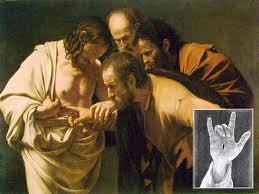
6.  He appeared to the apostles with Thomas (John 20:26-29). Thomas was not with the disciples when Jesus appeared to them on Sunday evening, and to  Thomaswhen he heard that Jesus had appeared to them, he didn’t believe it.  He told them that he wouldn’t believe it unless he saw the nail wounds in His hands and wound in His side. Well, eight days later, on a Monday, Jesus appeared to them again, this time with Thomas present.  Jesus again greeted them with, “Peace be with you.”  And He gave Thomas a great opportunity to believe.  He said to him, “Put your fingers here on the wounds in my hands and touch the wound here in my side.”  Then Thomas believed and said, “My Lord and my God!”


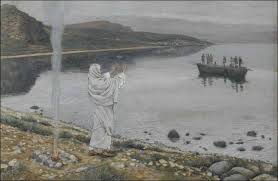
7.  He appeared to seven of His disciples on the shores of the Sea of Galilee (John 21:1-25).  Sometime after Jesus appeared to His disciples in Jerusalem, a few days later Jesus appeared to seven of His disciples beside the Sea of Galilee—Peter, Thomas, Nathaniel, the two sons of Zebedee, and two others.  As it happened, they were fishing in a boat not far from shore, and they fished all night fishing on the sea of Galileewithout a catch.  The next morning Jesus appeared on the shore.  They saw Him but they didn’t recognize that it was Him. 

He said to them, “Have you caught any fish?” 

They said no.

Then Jesus said, “Throw your nets on the other side of the boat and you will catch plenty.”

Well, I think you know the rest of the story.  They indeed caught fish—153 of them; big ones!  Peter was the first to recognize Jesus, and he was so excited to see Him that he jumped out of the boat and swam to shore to meet Him.  There on the shore they all had fish for breakfast. And Jesus was the cook!   


8. He appeared to the apostles on a mountain in Galilee (Matthew 28:16-20; Mark 16:15-18).  This appearance was not unexpected like the others. It was a pre-arranged meeting, and a very important one.  I think it was the meeting that was spoken about by the angels and by Jesus on the very first day of His resurrection (Matt. 28:10); He also told them about this meeting at the last supper (Matt. 26:32).  We call the contents of this meeting the Great Commission.  There on the mountain, overlooking miles of country, Jesus commissioned them to go out into all nations and make disciples.


9.  He appeared to over 500 brethren (1 Corinthians 15:6). Paul tells us that Jesus           was seen by Cephas, then by the twelve, then by over 500 brethren at once.  Thus it seems logical that this group would have seen Him sometime after the meeting on the mountain with the eleven (I don’t know why Paul refers to the apostles as the twelve, because at this time there were eleven).


10.  He appeared to His brother James (1 Corinthians 15:7).  We don’t know where this appearance was, but if James still lived in Nazareth perhaps it was there.  I wonder if Jesus popped in to visit His entire family!


11.  He appeared to the apostles and ate a meal with them (Acts 1:3-8; Luke 245:44-49).  Acts 1:3 tells us that during the forty days after His crucifixion Jesus appeared to the apostles from time to time to prove to them in many ways that He was alive.  On this particular day—I think it was the very day of His ascension—He was eating a meal with them in Jerusalem. And He opened their minds to understand the scriptures about Him.  He told them that after He left He would send to them the Holy Spirit and that they should stay in Jerusalem and wait until He came to them and filled them.


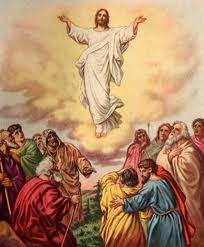
12.  His ascension (Acts 1:9-12; Mark 16:19-20; Luke 24:50-53).  After the meal He had with His apostles in Jerusalem, he led them to the place where He ascensionwould ascend—which was in Bethany, on the Mount of Olives.  As far as I can tell from looking at a map, it was about a two mile walk.  I wonder what they discussed as they were walking.  I wonder if they were aware of what was actually going to happen.  When they arrived at the place it seems from the text that very little was said, except a final blessing.  He lifted His hands and blessed them. And while He did this He was taken up to heaven.  Wow! I’m thinking that the Father was saying to Himself and to Jesus, “The time has come; come on Home!”


13.  He appeared to Paul (1 Corinthians 15:8; Acts 9:1-6; 18:9-10; 23:11).  As far as I can understand from the text, Jesus appeared to Paul three different times: 1) On the road to Damascus he saw His presence as a very bright light that temporarily blinded Him, and he heard His voice; 2) he saw Him in a vision; and 3) the night before he was taken to Rome, Jesus stood by him and encouraged him.

Posted in 4 Matthew to Acts, Bible Studies, Quiet Time Highlights | Tagged , | 31 Comments

Five ways to Recognize a Prayer Burden

The type of burden we are interested in here is the burden that God carries upon His own heart, which He offers to us so that we may be moved in our spirit to join His Son in prayer. Here are five terms that will help you recognize this burden that God is giving you.

1. It is a peculiar compassion. First of all, most importantly, when God gives you a burden, He will place on your heart a compassion for a person or a need. The compassion He gives you will not be general, vague, or indefinite; rather, the Holy Spirit will draw you to take a peculiar interest in a certain thing or individual. According to Charles Finney, “When the Spirit of God leads an individual to take a peculiar interest, feel peculiar compassion and drawing of heart in prayer and labor for particular individuals, this influence may be safely trusted…let such an influence be yielded to [as being from the Lord].”

2. It is an unselfish concern. Out of our heart of compassion we will feel an unselfish concern. It is a concern for the Lord’s will and for the interest of another (Phil. 2:4), and it weighs us down until we are compelled to pray with tears.
But through the tears, with a heavy weight upon our heart, we may at the same time be filled with a deep seated joy—because we know that God has given us unselfish tears for another, and thus we become certain that He will answer our prayers (1 Jn. 5:14-15).

3. It is an inner voice or impression. A prayer burden may be felt as an inner voice or impression that I should pray for a particular need or person. Since the Bible says we have the mind of Christ (1 Cor. 2:16), it makes sense that this voice or impression will come to us in our mind or thoughts. But if we at first reject God’s call to pray, we may also feel something in our stomach—a tightness or an uneasy feeling.

It is important also to be careful that the voice or impression we sense is from the Lord. We have the mind of Christ (if we are Christians), but we will hear His voice in our mind only when we are trusting Him, otherwise it will be the voice of human reasoning or of the devil.

4. It is personal. The burden you get from the Lord will always be very personal. It a special assignment designed especially for you. He gives you the gifts and talents to carry out this task like no one else can. It is like a personal summons or like a sacred trust from God to you, in which you are made responsible to intercede for a person or a need.

Have you ever felt a burden like this, which you believe no one else has but you? I have a personal burden to pray for my children—that they stand perfect and complete in all the will of God (Col. 4:12). Perhaps you do too. It’s a special feeling isn’t it? It’s a feeling that God has put upon you—that He is holding you responsible to pray for them. But it’s also a feeling of trust, that He trusts you to do this task—because He has given you a special interest in them. This task is a lot of work, a lot of responsibility; but because it is so important to Him He will give you all the strength you need to carry it out.

5. It is intense and urgent. The burden you feel will have a certain level of intensity and urgency, depending on the urgency of the need. This God-given intensity is strengthened by your own discipline in regular prayer and fasting, and will create in you a holy determination to keep praying until God answers your request. According to Wesley Duewel,

You will notice that the more deeply the burden moves you, the more powerfully it involves your whole being. When you are almost totally absorbed and possessed by a burden that continues for a matter of hours or days, you may lose your desire for food and sleep. You may be moved to very sincere and expressive tears (Ps. 42:3), which can be a very powerful plea to God (Ps. 56:8). God is moved by the depth of desire manifested in sincere tears (2 Kin. 20:5; Ps. 126:5).

The above is an excerpt from my book Principles of Prayer.

Posted in Burden in Prayer, Prayer A to Z Excerpts | Tagged , | 14 Comments

Prayer Burdens: 6 ways to Prepare for them

One of the roles of the Holy Spirit is to bring us His own prayer burden. But in order to receive that Holy Spirit burden—so that we can pray for the world with the burden of the Spirit—our heart must be prepared.

According to Wesley Duewel, “We must feel before we can heal. We must see before we can prevail.” Thus if we expect the Holy Spirit to send us His prayer burden we must prepare our heart to see and feel the needs of others. Here are six ways that we can prepare ourselves to bear burdens in prayer:

1. Regularly go to quiet places to pray. God knows the hearts and feelings of all people more than anyone does. He has more compassion for people than they have for themselves. Therefore, in order to know the hearts of others and to take on the compassion of Christ for them, it is imperative that we go to places where we can hear God’s voice and feel His heart. Quiet place of solitude will help us to keep focused on God and His love. It also helps us remember our friends—to love them and bear them up in prayer.

2. Regularly renew Your Heart. Each day meditate on the Word and confess your sins. Then wait on the Holy Spirit to fill you and lead you. Ask Him daily to be your guide and to teach you burden bearing.

3. Obey God’s voice moment by moment. Obedience I would say is the key to preparation for burden bearing, for when we love Him by our obedience, He in turn loves us and discloses Himself to us (Jn. 14:21). In effect, He opens our eyes so that we see Him as He is. And in seeing Him He helps us to love others—He fills us with compassion for them.

4. Be disciplined in prayer with fasting. God will not give a prayer burden to you unless you make yourself available to pray and fast—unless you are willing to get up early to pray and stay up late to meditate. This type of prayer is definitely a higher level of prayer. It is a special gift of God for those who are unceasingly living and praying in the Spirit for others.

5. Expose yourself to needs. E.M. Bounds wrote, “He who has no eyes to see the exceeding sinfulness of sin, the wants and woes of humanity, will never have compassion for humanity.” Bounds also said, “That which excites and develops compassion and puts it to work, is the sight of multitudes in want and distress, and helpless to relieve themselves.” Thus, when Jesus saw the multitudes that were scattered, as sheep without a shepherd, He was moved with compassion for them.

I suggest that in order to be prepared for bearing the burdens of others, and to receive prayer burdens from the Lord, we must exercise our compassionate eyes by exposing ourselves to the needs of as many people as we can. This implies that we must go where people are and find out their needs.

If you have the means to travel…go! If God is calling you…go visit the sick and those in prison. And if you can read…read periodicals about people and their needs.

And pray. Pray for as many people as you can, lifting up all their needs to God. The more you see the needs of people and obediently pray for them, the more God will give you His compassion for them; He will share with you His burden for them.

6. Serve one another. Seeing needs is only the first step to developing true compassion. Our compassion must also be watered by our service. So let us not just read about them, but let us go visit them and serve them. Then the more we serve those whom we see as needy, the more we will feel their pain and be compelled to serve them more, and pray for them more.

The above is an except from my book Principles of Prayer.

Posted in Burden in Prayer, Prayer A to Z Excerpts | Tagged , , , | 3 Comments

Our Relationship with our Heavenly Father – from Luke 15:11-32

86660021

What should our relationship with our heavenly Father be like? Too often I think it is like the relationship the younger son had with his father in the parable in Luke 15:11-32 (included at the end of this post). That is, He is to us as our provider, but no more. We want things from Him, but we don’t want Him; and we could care less what He desires from us.

And so we pray to Him saying, “Father,” when we need something or when we are in trouble and desire Him to bail us out. We don’t very often think that He loves us and desires our fellowship; we only think about what we can get from Him.

The end of the parable shows us well the Father’s heart. It teaches us how He truly loves us and has compassion for us. In the parable, when the younger son returned home after having been in sin and rebellion, the father never thought to scold or lecture the son, only to express his love for him and that He was so glad to have him back.

I think the relationship that God most desires to have with us is a relationship of love. Yes, He is also our provider and protector and guide and teacher, but I think these aspects of God should be secondary to our love relationship with Him. In fact, our love relationship with Him should undergird and direct all the other aspects of our relationship with Him—so that we say of Him…

He is our loving provider.
He is our loving protector.
He is our loving guide.
And He is our loving teacher.

He loves to be near us, and He wants us to desire His nearness as much as He desires ours.

David did. In Psalm 73:28 he said,

But as for me, the nearness of God is my good;
I have made the Lord God my refuge,
That I may tell of all Thy works
NASB

I also like verse 25. He said,

Whom have I in heaven but Thee?
And besides Thee, I desire nothing on earth.
NASB

God our Father desires to be near us and to fellowship with us. If you don’t have that kind of a relationship with Him, listen closely to His heart calling to you. He is saying,

Behold, I stand at the door and knock; if anyone hears My voice and opens the door, I will come in to him, and will dine with him, and he with Me.
NASB


Luke 15:11-32 (in the NIV)
Jesus continued: “There was a man who had two sons.
12 The younger one said to his father, ‘Father, give me my share of the estate.’ So he divided his property between them.
13 “Not long after that, the younger son got together all he had, set off for a distant country and there squandered his wealth in wild living.
14 After he had spent everything, there was a severe famine in that whole country, and he began to be in need.
15 So he went and hired himself out to a citizen of that country, who sent him to his fields to feed pigs.
16 He longed to fill his stomach with the pods that the pigs were eating, but no one gave him anything.
17 “When he came to his senses, he said, ‘How many of my father’s hired men have food to spare, and here I am starving to death!
18 I will set out and go back to my father and say to him: Father, I have sinned against heaven and against you.
19 I am no longer worthy to be called your son; make me like one of your hired men.’
20 So he got up and went to his father. “But while he was still a long way off, his father saw him and was filled with compassion for him; he ran to his son, threw his arms around him and kissed him.
21 “The son said to him, ‘Father, I have sinned against heaven and against you. I am no longer worthy to be called your son.’
22 “But the father said to his servants, ‘Quick! Bring the best robe and put it on him. Put a ring on his finger and sandals on his feet.
23 Bring the fattened calf and kill it. Let’s have a feast and celebrate.
24 For this son of mine was dead and is alive again; he was lost and is found.’ So they began to celebrate.
25 “Meanwhile, the older son was in the field. When he came near the house, he heard music and dancing.
26 So he called one of the servants and asked him what was going on.
27 ‘Your brother has come,’ he replied, ‘and your father has killed the fattened calf because he has him back safe and sound.’
28 “The older brother became angry and refused to go in. So his father went out and pleaded with him.
29 But he answered his father, ‘Look! All these years I’ve been slaving for you and never disobeyed your orders. Yet you never gave me even a young goat so I could celebrate with my friends.
30 But when this son of yours who has squandered your property with prostitutes comes home, you kill the fattened calf for him!’
31 “‘My son,’ the father said, ‘you are always with me, and everything I have is yours.
32 But we had to celebrate and be glad, because this brother of yours was dead and is alive again; he was lost and is found.'”

Posted in Bible Studies, From My Pastor's Sermons | Tagged , , | Leave a comment

Two Uses of Our Authority in Prayer

This is an excerpt from my book Principles of Prayer.

1. Authority to pray for the lost. Since God desires all people to be saved (1 Tim. 2:4) He must also want us to pray for their salvation. Here are three things that God desires us to pray for the lost: (1) that their hostility or indifference for the gospel would be broken down and that God would grant them repentance (2 Tim. 2:25); (2) that the soil of their hearts would be prepared for the seed of the Word of God so that His Word would not return void, but would accomplish what He desires (Is. 55:11); and (3) that they may be liberated from the power of Satan—delivered out of darkness and into God’s marvelous light (2 Tim 2:26).

These are just a few things we could pray for the lost. I would encourage you to claim in prayer all of the verses you can find concerning salvation for the lost. There are tons of them. Pray especially those verses that God seems to lay on your heart. Remember that without the Word you really can’t pray with authority. The Word and your trust in the Word is the foundation for your authority in prayer.

2. Authority to witness with power and boldness. Before you make plans to witness, that is, before you leave your house in the morning intending to witness to someone, I think it is always a good idea to pray over the three points that we just mentioned. Then, as you go, you can be confident that He will lead you to those people you have prayed for—those people He has chosen to save. Most of the people we witness to will not be ready to receive Christ. Our witness to them will be primarily to break down their indifference to the gospel. But to some, maybe just a few, God will have worked to prepare their heart, and they will be ready to hear and receive the gospel.

After we have prayed, our second responsibility is to share the gospel, and to do it with authority, power, and boldness. Can we do it? Yes we can if we trust God to help us. He has already put His Holy Spirit in us to give us power. As Jesus gave His disciples power to witness He also has given us power. And He says to us, “But you shall receive power when the Holy Spirit has come upon you; and you shall be witnesses to Me in Jerusalem, and in all Judea and Samaria, and to the end of the earth” (Acts 1:8).

But note that our power and authority is not to save, not to convert; just to witness, and to preach—to have boldness to preach the Word of God clearly. God saves the souls of the lost when He draws them to Himself (Jn. 6:44) and when they decide to believe in Him. Thus, as the Bible says, “He who believes … will be saved; but he who does not believe will be condemned” (Mk. 16:16). And so, we do not have authority to save, only to preach. As Jesus said to His disciples He also says to us: “Go into all the world and preach the gospel to every creature” (Mk. 16:15).

Another passage I like is in Matthew 28:18-20. Here I believe it is clear that on the basis of the authority of Christ (because He has been given authority in heaven and earth), we, just as the disciples, are sent out to witness and make disciples. That is, because Jesus dwells in us, and because we (the church) are His body, we have the authority and the power to witness and make disciples.

I think it is true that our authority in Christ is energized in all areas of life when we are obedient in all areas, especially in this area of making disciples. I would guess that the reason many believers are stagnate and just don’t have much joy and much of the power of the life of Christ in them is because they have disobeyed God in this area of making disciples. It is something He calls us all to do.

Therefore we must step out in faith and just go—go and share the gospel! And we should also make it our intention to make disciples of those we share with, that is, to teach them all the things that we ourselves have learned from Him. That is our goal in witnessing. And we have the promise from Jesus that, as we go and witness and make disciples, He will be with us always, to comfort us and empower us with boldness (Matt. 28:20).

Remember that besides giving us power in witnessing, God also gives us power in prayer over the devil and to live righteous and holy lives. For in Christ we have authority over all the power of the enemy.

You may remember that when Jesus sent out His seventy disciples, two by two, to go and witness with authority (Lu. 10:1), “[they] returned with joy saying, ‘Lord even the demons are subject to us in your name’” (Lu. 10:17).

“And He said to them, ‘I saw Satan fall like lightning from heaven. Behold, I give you the authority to trample on serpents and scorpions, and over all the power of the enemy, and nothing shall by any means hurt you…’” (Lu. 10:17-19).

Friends, has not Jesus given us this same authority if we abide in Him? Go, therefore, and pray and witness and make disciples in His name.

Posted in Authority in Prayer, Prayer A to Z Excerpts, Reblogs | Tagged , , , | 2 Comments