Harmon Killebrew–I wanna be like Harmon!


I’ve been listening to all the nice words about Harmon Killebrew today.  Everybody says he was such a nice man.  Those who got to the opportunity to meet him, even in these last months when he was sick, he would always try to encourage you.  What I get from what was said about him is that he was a humble, selfless person.  Though he was great, he didn’t talk about himself; he always had your interest in mind.  He wanted to know what was going on with you.  I’m not very often like that, but I want to be.   I want to be like Harmon Killebrew. 

My prayers are with his family.

Posted in Poems, Prayers, Ramblings, Sports | Tagged , , , | Leave a comment

How to Know God

 A Study of Knowledge (epignosis): from Colossians 1:9-12

Part 5

We have been studying this word epignosis as it applies to God, which is a heightened, deeper, intimate knowledge of God.  We have said that we gain it by diligent Bible study, prayer, and obedience.  So far we have studied it as it appears in Ephesians 1:17; 4:13; and in 2 Peter 1:2-9.  Now we will take a look at epignosis in Colossians 1:9 and again in verse 10.  Notice these words (in bold) in the following prayer (Colossians 1:9-12):

For this reason also, since the day we heard of it, we have not ceased to pray for you and to ask that you may be filled with the knowledge of His will in all spiritual wisdom and understanding, 10 so that you will walk in a manner worthy of the Lord, to please Him in all respects, bearing fruit in every good work and increasing in the knowledge of God; 11 strengthened with all power, according to His glorious might, for the attaining of all steadfastness and patience; joyously 12 giving thanks to the Father, who has qualified us to share in the inheritance of the saints in Light.

NASU

 In verse 9, knowledge isn’t the knowledge of God, but the knowledge of His will.  This makes it more specific.  The prayer is that they (the Colossians) would know what He desires and what His plans are.  And the next phrase, “in all spiritual wisdom and understanding,” tells us how God has planned for us to have this knowledge.  That is, the knowledge of His will comes to us through His supernatural wisdom and understanding.  And so this is how we should pray for it: that God would give us His spiritual wisdom and understanding to know His will.

But what is our part in knowing His will besides prayer?  Is there anything God expects us to do?  Yes there is!  First of all, since we know that His will is completely revealed in the Word of God (2 Tim. 3:16), we should be diligent to study it to find His will (2 Tim. 2:15).  Secondly, the words Paul uses, “wisdom” and “understanding” gives us a clue as to what we are to do as we study the Word.  According to MacArthur’s notes, wisdom is “the ability to accumulate and organize principles from scripture;” and understanding suggests “the application of those principles to daily living.”  Therefore, when we study the Word we should make effort to organize the principles we find, and then make application to those principles.  

And so, this gives us more to pray about than just, “Lord, help me to know Your will.” And it should also move us to action.  We should be seeking His will in the Word; we should be endeavoring to do His will in application to His Word; and our prayer ought to reflect all of this: “Lord, help me as I study Your Word to find Your will; help me to see the principles in Your Word that You want me to see; and help me to do them.”

In verse 10, Paul gives us the reason God wants us to know and do His will.  In my words, it is so that we would please Him and so that we would grow in our knowledge of Him.  So we see that when we get to know His will it benefits Him—He is pleased; and it benefits us, as we grow close to Him. 

Now I want to say something more about this epignosis in verse 10.  Look at this phrase: “Bearing fruit in every good work and increasing in the knowledge of God.” That phrase stands out to me because it is the same as what we saw in 2 Peter 1:5-8.  There we saw that if we were diligent to apply the previous seven virtues (good works, in verses 5-7) that we would not be unfruitful in our knowledge of our Lord Jesus Christ.  Here in Colossians 1:10 we see the very same thing: that when we bear fruit in every good work, we will increase in the knowledge of God.

Are you increasing in the knowledge of God?  Are you getting to know His will?  I am asking myself that question and am considering what I will do about it. 


Posted in Bible Studies | Tagged , , , | Leave a comment

How to Keep a Strong Intimate Relationship with God

 A Study of Knowledge (epignosis): from 2 Peter 1:2-9

Part 4

 We have been studying the word knowledge (epignosis), which appears 20 times in the New Testament.  It is a strengthened form of the word gnosis.  It is a deeper, more intimate knowledge of God, which we gain by prayer and by our regular time in the Word.  In this post we will look at this word as it appears in 2 Peter 1:2, 3 and 8.  

In verse 2, Peter says to his recipients, “Grace and peace be multiplied to you in the knowledge of God and of Jesus our Lord.”  I love this salutation.  It suggests to us that the more we get to know God and His Son, the more of His grace and peace we will get.  It will just keep coming and coming to us.  What a challenge, and what an incentive for us to pray and study the Word to build our relationship with Him. 

Now, as to further expand on this grace and truth that we get from God, verse 3 tells us that His divine power has given to us all things that pertain to life and godliness; and it comes to us through the knowledge of Him.  I think what Peter is saying here is that when we take time to get to know Him, His power is put to work in us and allows us to receive all that He wants to give us in our new life; mainly to help us live godly.  

Hence, through a deep knowledge of God and Christ, we are assured from Him through “exceedingly great and precious promises” (v. 4) that we have eternal life and that we are “partakers of the divine nature” (v. 4). Then through these promises and by His power in us we are able to live godly, which Peter also describes as “having escaped the corruption that is in the world through lust.  Notice that it is in the past tense—“having escaped.”  We already have escaped the world’s corruption.  We escaped it at the time of our salvation.  But now through our knowledge of Him, when we get to know Him, He gives us an assurance of these things through His promises.  Hence, as we get to know Him He tells us in our heart that we are really His and that He will give us the power to live godly lives.

The next time knowledge (epignosis) appears is in verse 8.  But we must look at it in the context of verses 5-9.  After Peter explains to us our wonderful blessings of salvation through our knowledge of God in verses 2-4, now, in verses 5-9, he tells us further how we can go on to remain fruitful in our knowledge of Him.  We do this, he says, by diligently adding to our faith all that is needed to live righteously.  I like to think of it as putting our faith to work, because in James it says that without works our faith is dead (Ja. 2:26).  Peter gives us seven virtues that we are to attach to our faith: (1) goodness (or moral excellence), (2) self control, (4) perseverance, (5) godliness, (6) brotherly kindness, and (7) love. 

So, as I have mentioned above, by putting our faith to work by these virtues, we remain fruitful in our knowledge of Him.  Actually, it says it this way: “If these things [virtues] are yours and abound, you will be neither barren nor unfruitful in the knowledge of our Lord Jesus Christ.”  What does this mean?  Well, it means of course that if we continue in these good works, that is, if we continue to put our faith to work with works, our relationship of love for the Lord Jesus will grow; our relationship will not grow stale; it will continue to blossom and will continue to nourish us.

But, as we see in verse 9, the person who is not diligent to add to his faith works (as in the seven recommended virtues), is “nearsighted and blind, and has forgotten that he has been cleansed from his past sins.”  How tragic!  I have seen this too often in my counseling with people.  They say they have at one point in their life received Christ, but now they doubt their salvation; and they no longer feel that they are a Christian.  What went wrong?  This right here in this verse is what went wrong.  Their faith went dead because they were not diligent to put it to work.  And so their relationship with God did not grow and they forgot about Him and what He did for them.  

Our next study will be from Colossians—another good study.

Posted in Bible Studies | Tagged , , , , , , , , | Leave a comment

Knowing God

A Study of Knowledge (epignosis): from Ephesians 4:12-15

Part 3

We have been studying the word knowledge (epignosis), which is a deep, more intimate and personal knowledge of God than the regular knowledge (gnosis).  Here in Ephesians 4:13, MacArthur notes that this knowledge “does not refer to salvation knowledge but to the deep knowledge of Christ that a believer comes to have through prayer, faithful study of His Word, and obedience to His commands.”

Backing up to verse 12, we see that God has given some believers certain gifts: as apostles, prophets and teachers.  And we (the body of Christ) can also regard theses special gifted people as our gifts from God, because, as verse 12 indicates, they are for our equipping so that we may be equipped to do the work of ministry, and so that we (the whole body of Christ) may be edified.  

Now in verse 13 we see that when we are edified we will come to unity in faith and to having knowledge of the Son of God.  Hence, if we want to have this knowledge of Christ that we have been studying, this epignosis, it is up to us to take advantage of the teaching provided to us by those pastors and teachers given to us by God.  For they are our gifts from God, in order that we might, together as a body, come to know Him. 

Then, as a result of this knowledge of God, verse 13 says that we will become a “perfect man” and come “to the measure of the stature of the fullness of Christ.”  This does not mean that we will become sinless; rather it means that we will be more mature, more like Christ.  Verses 14-15 indicate that we won’t be any longer deceived and taken in by false teachers.  Also, in our maturity, we will become more able to speak out against false teaching in a spirit of love.  Therefore, to put it simply, when we come to know Christ, as we faithfully study His Word, pray and are obedient to Him, we will “grow up in all things into Him;”  that is, in all areas of life we will be like Him.


Posted in Bible Studies | Tagged , , , | Leave a comment

Knowledge of God

A Study of Knowledge (epignosis): from Ephesians 1:17-19

Part 2

 In part one of this study, we found out that this particular knowledge of God (epignosis) is a knowledge that is more intimate and personal and suggests a personal relationship.  In this post we will examine knowledge from Ephesian 1:17-19.

Paul’s Prayer for this Knowledge of God

 That the God of our Lord Jesus Christ, the Father of glory, may give to you the spirit of wisdom and revelation in the knowledge [epignosis] of Him, 18 the eyes of your understanding being enlightened; that you may know what is the hope of His calling, what are the riches of the glory of His inheritance in the saints, 19 and what is the exceeding greatness of His power toward us who believe, according to the working of His mighty power.

NKJV

Here we see that Paul prayed for the Ephesians that God would open their mind and reveal to them the deep things about God (that they would have this epignosis of Him). Then in the preceding verses (vv. 18-19), Paul prays for three more things: (1) to know the hope of His calling, (2) to know “what are the riches of His inheritance in the saints,” and (3) to know the greatness of His power toward us. 

I suggest that these three things will be a result of our getting to know God.  Let’s take a closer look at them.  When we get to know God… 

(1) We will grow to understand that we have a great hope in Christ.   

(2) We will come to know that we have a very rich inheritance.  In 1 Peter 1:3-4 our inheritance is described as incorruptible, undefiled, does not fade away, and is reserved in heaven for us.  I want to suggest that there is also another possible meaning here.  According to Warren Wiersbe in his Be Rich, “His inheritance in the saints” means that we (all believers) are Christ’s inheritance; that He regards us as His wealth and great possession.  Hence, when we get to know God we will understand more and more that we exist to please Him, to glorify Him; and we will get to know how important we are to God.  I think there may actually be a double meaning to this verse; that we are His possession, and also that He is our possession.

(3) We will come to know His great power—a power that is within us. The more we abide in Him the more we will experience this power and have use of it in our life and prayers.

In the next post we will look at this knowledge from Ephesians 4:13.  We will discover both how to get this knowledge and what benefits it brings us.


Posted in Bible Studies | Tagged , , | 2 Comments

Osama bin Laden–A Biblical Perspective

No one can honestly say that Bin Laden was not evil and that he will not be judged for his evil deeds.  The whole drive and passion of his life was to do evil, to terrorize innocent people.  And the Bible has laid out harsh consequences for such people.

 Psalms 34:16

The face of the Lord is against those who do evil,

to cut off the memory of them from the earth.

NIV


Galatians 6:7-8

Do not be deceived: God cannot be mocked. A man reaps what he sows. 8 The one who sows to please his sinful nature, from that nature will reap destruction.

NIV


Revelation 21:8

But the cowardly, the unbelieving, the vile, the murderers, the sexually immoral, those who practice magic arts, the idolaters and all liars — their place will be in the fiery lake of burning sulfur.

NIV


But I think all of us are careful not to point the finger at him with too much force and self-righteousness, less we become hypocrites.  For all of us feel the tendency to do evil; all of us have those sinful inclinations.  

And lest we begin to compare ourselves with Bin Laden and say, “Okay, I have sins, but I would never be as evil as him,” take a look at Romans 3:10-18, which describes everyone’s natural tendency, and the way we would be without God’s intervention in our lives. 

Romans 3:10-18

10 as it is written,

“THERE IS NONE RIGHTEOUS, NOT EVEN ONE;

11 THERE IS NONE WHO UNDERSTANDS,

THERE IS NONE WHO SEEKS FOR GOD;

12 ALL HAVE TURNED ASIDE, TOGETHER THEY HAVE BECOME USELESS;

THERE IS NONE WHO DOES GOOD, THERE IS NOT EVEN ONE.”

13 “THEIR THROAT IS AN OPEN GRAVE, WITH THEIR TONGUES THEY KEEP DECEIVING,”

“THE POISON OF ASPS IS UNDER THEIR LIPS”;

14 “WHOSE MOUTH IS FULL OF CURSING AND BITTERNESS”;

15 “THEIR FEET ARE SWIFT TO SHED BLOOD,

16 DESTRUCTION AND MISERY ARE IN THEIR PATHS,

17 AND THE PATH OF PEACE THEY HAVE NOT KNOWN.”

18 “THERE IS NO FEAR OF GOD BEFORE THEIR EYES.”

NASU


If this sounds like what you think Bin Laden is like, take another look.  This passage is a description of all people and the way we naturally are without Jesus. 

So I suppose we could say that none of us are really any different, any better than Bin Laden as far as our original (birthed) nature is concerned.  If left to ourselves without Christ, we would all be just as evil, just as sinful.  

And though we all try to do well and to hold back our sin, we can’t really do it without God’s help.  Our evil nature will ultimately bring us all down to the pit of hell, where we will suffer forever the consequences of our sin.  For Romans 3:23 says, “For all have sinned and fall short of the glory of God.”  And in Romans 6: 23, “For the wages of sin is death…”  Because of our sins we are forever separated from God and doomed to pay the just penalty forever, which is hell (Revelation 20:15).  

There is really only one way anyone can escape the inevitable consequences of his sin: it is if, and only if those sins were to be forgiven by God.  And in fact God has provided for us His forgiveness for anyone who will accept this gift.  But that is the whole problem; many do not choose to accept His forgiveness and so they remain in their sins, separated from God and doomed to judgment. 

This is a huge tragedy.  For God saw our predicament and He sent His son to die a cruel death for our sins;  He paid the penalty for our sins with His own bloods that we could be forgiven and free from sin (1 Peter 2:24)—but for many, his death in love for us has been wasted!!  Because they resist His love, their sins go unpaid for and they are left to pay the wages for their own sin (Romans 6:23).

And so the conclusion is this: if you have not received Christ, have not accepted His love and forgiveness for your sins, you are facing the same judgment as Bin Laden.  Yes, you will be found in the same place—without God, without hope…forever.

Posted in Bible Studies, Understanding the Times | Tagged , , , , , , , , , , , | 1 Comment

A Study of epignosis

In my daily Bible reading, reading now in 2 Peter, I came across this word—knowledge (epignosis).  In the first chapter, the word appears 3 times: in v. 2, v. 3, and in v. 8.  Each time it is used, there is a special blessing attached to it.  In verse 2, knowledge of God brings grace and peace; in verse 3 it brings life and godliness; and in verse 8 we are promised fruitfulness in knowledge if we practice 7 virtues (in verses 3-7). 

I have read this chapter many times before, but never has this word popped out to me as it has now.  So, I have decided to study it more thoroughly.  This will be the first of a few posts on the study of this word…


A Study of Knowledge (epignosis)

Part 1

 Strong’s number of the word is 1922.

 According to Thayer’s Greek Lexicon, the word means “Precise and correct knowledge.”

 Vine’s Expository Dictionary of New Testament Words gives a much broader meaning:

 Denotes “exact or full knowledge, discernment, recognition,” and is a strengthened form of No. 1 [gnosis], expressing a fuller or a full “knowledge,” a greater participation by the “knower” in the object “known,” thus more powerfully influencing him.

 According to MacArthur in his MacArthur Study Bible, this word “Is a strengthened form of ‘knowledge’ implying a larger, more thorough, and intimate knowledge.”

 William Barclay, in his The Letters of James and Peter, says quite a bit about the meaning of this word.  I will try to give you the highlights of what he said.  He said there are two possible meanings: (1) Increasing knowledge.

Gnosis, the normal Greek word for knowledge, is here preceded by the preposition epi which means towards, in the direction of. Epignosis then could be interpreted as knowledge which is always moving further in the direction of that which it seeks to know. 

 (2) A full knowledge, which Barclay suggests is a personal knowledge of Jesus Christ.  He says,

Christian knowledge of Christ is personal acquaintance with him; it is knowing him as a person and entering day by day into a more intimate relationship with him.

 There are 20 occurrences of this word in the New Testament.  We will look at 15 of them and will put them in three different groupings: used in reference to God and Christ, in reference to the will of God, and in reference to the truth (mainly the truth of the gospel).

 In the next post, knowledge (epignosis)—part 2, we will look at the first group of verses: as they apply to our knowledge of God and Christ.


Posted in Bible Studies | Tagged , , , | Leave a comment

Guidelines for Fasting

GUIDELINES FOR FASTING


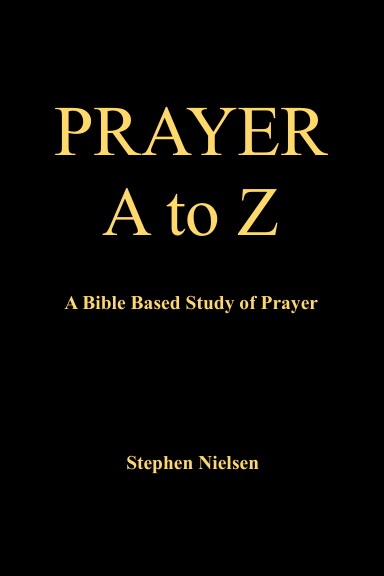
Here are 16 guidelines for fasting taken from my book Prayer A to Z.  This list is very brief.  For more information you can get my e-book by clicking on Prayer A to Z.


1.  Most importantly, your fast must be a fast that God chooses.  If it is a fast that God chooses then He will lead you and give you the right motives.  You will be fasting for Him and not for any selfish reason (Is. 58:3-5).


2.  Pray about your fast and set objectives.  Before you start, make it clear in your mind how you believe God wants you to fast.  Then determine that you will fast that way.


3.  Be flexible in your fasting plans.  If you have planned to fast on a certain day, and, because of circumstances, it will not work out, move your fast to another day.


4.  As you make your plans to fast, if, for medical reasons, you can’t fast normally (no food, just water), consider a partial fast.


5.  If you are not use to fasting, start small.  Perhaps you may want to fast by just skipping one meal.  The next time, skip two meals, and so on.  Before long you will be fasting for days.  But make sure that God is leading you.  Always pray over every fast.


6.  Eat fresh fruits before and after a fast.  The last day before fasting, fresh fruit is best because it is less putrefactive than other food residues.  On the first day after a fast, fresh fruit (or vegetables) is best because it is easier on the stomach and the digestive system.


7.  During a normal fast drink plenty of pure water.  I would say, whenever you feel thirsty drink water.  But drink only bottled water; never drink tap water.


8.  If it seems too hard for you to drink only water, try a fresh juice fast.  Dilute fresh juices with pure water (steam distilled water is best)—one part water, three parts juice.  But don’t drink orange or tomato juice (The health books I have read say that these juices are not good for fasting).


9.  As you begin to fast, expect the worst.  Satan knows your weak condition and he will attack you and discourage you.  But take heart; often when you feel the worst, the best is happening.  You have entered into a time of heavenly warfare, and though you feel weak, God has given you the weapons to win the battle (2 Cor. 10:4-5).


10.  Make sure your fast is from the heart.  The heart as well as the head must be engaged, or else you are not being true to yourself.  Before and during your fast seek God in prayer from your heart.


11.  Check your motives.  Before your fast, and periodically during your fast, check to see if your motives are right.  Read Isaiah 58:1-12 and Matthew 6: 16-18 to see if you are fasting correctly.  Your fast must be a fast of His choosing, of His leading, and for His purpose—not for yourself, but for Him.


12.  Keep your fast between you and God.  Don’t broadcast your fasting and boast about it, as to draw attention to yourself.  As much as you can, keep it a secret; then your reward will be greater (Matt. 6:19).


13.  When you fast shut out the world as much as possible.  Give God all your attention.  That means keep the TV and radio off.  It means also to refrain from going to the movies, or shopping.  If you can, get out into the country—away from distractions.


14.  Feed on the Word.  Put away the newspaper, magazines, and other books. Read only the Bible.  Let only the words of the Bible be in your thoughts.


15.  Pray much.  Since you are not going to watch TV or go out on the town, you will have more time to read the Word and pray.  But use your time wisely.  Use it not just to catch up on all your prayer requests; but rather, seek to spend more quality time with God.  Therefore, use the extra time to seek Him more deeply and fervently; and praise Him more expressively and with greater passion.


16.  Make your fasting time a time to confess your sins and change your habits.  In your prayers and time in the Word, try to be sensitive to what God is telling you to do.  Spend a lot of time in the Psalms.  Seek God with your whole heart.  Tell Him how much you love Him and want to please Him.  Make plans and be determined to obey Him always.

Posted in Fasting and Prayer, Prayer A to Z Excerpts | Tagged , , , , , , , | 1 Comment

Twelve Reasons to Fast

Twelve Reasons to Fast


1.  To humble self so God can use me.  In fasting we attempt to bring ourselves to a humble state so God can make us holy, so we will be willing to seek Him, able to minister to Him, honor Him, and do His will (e.g. Ezra 8:21).


2.  To express grief and repentance for sin, and for deliverance.  If we fast to express repentance, it will also be for deliverance.  When Ninevah fasted they did turn from their evil way, but their main purpose was to avert God’s wrath.  And that is just what happened.  “…God saw their works, that they turned from their evil way; and God relented from the disaster that He had said He would bring upon them…” (Jonah 3:10).          

We in America also need to repent with fasting because of our evil (e. g. materialism, sensuality, pornography, and abortion), in order to avert God’s wrath.  It may soon be coming!          

Fasting may also be to deliver us from harm, not because of our own sin but because of those around us who have sinned and who want to harm us.  Such was the case with Israel under Jehoshaphat, and also under Queen Esther.  Both times Israel was faced with annihilation, and both times, as they fasted, God delivered them (2 Chron. 20; Esther 4:3, 16; 9:5)            

For whatever kind of deliverance you seek, for yourself or for another, you may obtain it through repentance and with prayer and fasting.  As Arthur Wallis writes in his book, God’s Chosen Fast,  “Fasting is a powerful auxiliary weapon, appointed by God, to break the enemy’s hold…a fast undertaken at God’s direction will strengthen the intercessor to maintain pressure until the enemy is compelled to loosen his grasp of the captive.”


3.  To meet the needs of others and to make your ministry effective.  God tells us in Isaiah 58:5-12 that the fast He has chosen for us is to help the hungry and the afflicted (vv. 6, 10), to loose those with bonds of wickedness, and to undo their heavy burdens (v. 6).  Hence fasting is not just to help us; it is to help others and to empower our prayers for them.           

And if God has called you to a certain ministry, consider if He wants you to fast over it—to consecrate it in order to make your work effective.  Such was the case with Jesus’ ministry (Matt. 4:2) and also with the missionary journeys of Paul and Barnabas (Acts 13:2).


4. To make me spiritually stronger and able to overcome sexual temptation.  Those who are in bondage to the taste of food and have not disciplined their bodies (e. g. with regular fasting) will have little power over temptation.  Wallis writes, “The connection between overeating and the stimulation of sex desires is common knowledge.  The sin of Sodom…was linked with ‘surfeit of food.’”  But fasting can help us to overcome temptation.  For as we detach ourselves from food and other earthly things we gain heavenly things, especially the power of the Holy Spirit to overcome temptation.


5. For guidance, help, and safety.  Ezra is a good example here.  For prior to leading a large group of people (over 8,000) back from Babylon to the land of Israel, realizing that they certainly would be under attack from bandits along the roadside, Ezra gathered them together beside the river of Ahava and proclaimed a fast.  There they prayed for protection; and, as it happened, God did protect them (Ezra 8:21-31).          

Likewise, God also delivered all of Israel out of certain destruction when their King, King Jehoshaphat led them to fast.  And they cried out to God saying “…We have no power against this great multitude that is coming against us; nor do we know what to do, but our eyes are upon You” (2 Chron. 20:12). 

Let us also turn to God in fasting when we are in any trouble; and let us be confident that He will guide us, help us, and protect us.


6.  To receive spiritual revelation.  Certainly one of the greatest in the Old Testament to receive visions from God was Daniel—the one who was then probably the most known for fasting.  In the New Testament we can look at Paul as probably our best example of one who fasted.  And He also received revelations.  Therefore, by these two great examples, and also by the records of many other prophets, we can be certain that fasting heightens our spiritual understanding and helps us know the deep things of God.


7.  To express love and devotion to God.  When prayer becomes so precious, so important, that we are willing to skip our meals, then we can say that the reason we fast is because we have fallen in love with God and are devoted to Him.  Moreover, when we discover that fasting helps us to focus our attention on God in prayer and that it makes prayer more precious, we will continue in fasting all the more.  Such I suppose was the case with Anna, who served God with fasting night and day (Lu. 2:37).


8.  To help me pray with more earnestness and zeal.  If fasting helps prayers to be more precious, certainly it will also help me to pray with more earnestness and zeal.  Duewel, in his book, Mighty Prevailing Prayer writes: “As fasting feeds our faith, solidifies our determination, and opens us to the Spirit’s inner working, it fires us with increased earnestness and zeal.  Shortly after Jesus’ forty-day fast we see Him burning with zeal for God’s will in God’s house (Jn. 2:17).  Fasting kindles all kinds of holy earnestness and zeal—to give oneself totally to and for God, to pray until we prevail…”


9.  To obtain answers to prayer.  God speaks to us from Jeremiah 29:13, saying, “You will seek Me and find Me when you search for me with all your heart.”  When we fast we are demonstrating to God (and we are assuring ourselves) that we are seeking Him with all our heart.  Hence our fasting becomes the means of obtaining the promise—that we will find Him; also that He will give us what we ask for (Matt. 7:7).  


10.  To make the body my servant so that God can use me.  God can’t use you in His service if you are in bondage to food, that is, if you can’t seem to ever say no to a second helping of your favorite dish.  For if you are in bondage to food, you are no doubt in bondage to other things.  If this is the case with you, you really don’t care for the things of God; you care more about satisfying your own bodily cravings.  But if you can discipline your food lust—and that we must do, for we are not to be enslaved to anything (1 Cor. 6:12)—then you are well on your way to controlling your whole body.  Fasting will help you to control all your bodily appetites.  Then God can use you mightily for His service.  The type of fast I suggest for disciplining the body is a regular-partial fast. 


11.  For health and healing so God can use me.  God can’t use you for His service if you are sick and in poor health.  Fasting will naturally rid the body of toxins, cleanse the blood, rebuild the immune system, and help to fight off illness.  For health and healing I suggest a juice fast.  But use only fresh juices (I suggest making your own juice.  A juicer will be a good investment).  Fresh lemon, apple, beet, cabbage, carrot, celery, grape, and green vegetable juices are all good.  Stay away from orange or tomato juice when you are fasting, and always dilute your juices with steam-distilled water, one part water to three parts juice.


12.  To Prepare for Jesus’ return.  Jesus is our bridegroom and we are His bride.  Soon He will be coming to get us.  We need to be ready for Him.  Fasting will help us to remain pure and to keep our eyes focused on Him.

 

Posted in Fasting and Prayer, Prayer A to Z Excerpts | Tagged , , , , , , , , | 3 Comments

Eight Descriptions of Fasting

The following is an excrept from my e-book Prayer A to Z.  

 Eight Descriptions of Fasting

1.  It is abstaining from food for spiritual purposes.  The Hebrew word for fast (tsuwn) means “to cover the mouth.”  The Greek word (nesteia) means “not to eat.”  Therefore fasting means primarily to abstain from food.  As for the second part of our description, “for spiritual reasons,” that comes from the Biblical context and from the purpose the Bible gives for fasting.  Accordingly, it was for spiritual reasons that Jesus fasted, and why Moses, David, Elijah, and all the others fasted.  And it is why the Bible teaches us to fast (Is. 58:6-9).  We can certainly fast for other reasons, but, as I can see, the main reason why God has called us to fast is for spiritual reasons—to improve our relationship with God.  Some would argue that our physical health is important to maintain our spiritual health.  To some degree, I suppose that is true.  If you are keeping your body healthy in order to please and serve God, then good health becomes for you a spiritual reason to fast. 

2.  It is abstaining from anything that hinders us spiritually.  We should not restrict fasting to just food, because the whole purpose of fasting is to deny the body in order to be more spiritually minded.  Therefore, when we fast for food, we should also abstain from other things like recreation, social relations, and even sleep—anything that may get in the way of our spiritual goal. 

3.  It is detaching ourselves from earthly things in order to gain heavenly things.  I like what Andrew Murray said, quoted from Wesley Duewel’s book, Mighty Prevailing Prayer: “Prayer is the one hand with which we grasp the Invisible; fasting the other, with which we let loose and cast away the visible.” 

4.  It is afflicting and humbling self in order to bring the physical appetites under control so that the spiritual life will be strengthened.  Dunn, in his book, Don’t Just Stand There Pray Something, writes: “When the physical appetites are brought under control, the spiritual life is strengthened and reinforced.”  God will help us to do this when we fast.  And the process is painful.  Hence, the Bible describes this process of fasting as “afflicting” and “chastising” the soul (Lev. 23:27, Ps. 69:10), also as a way to humble self.  As David wrote in Psalms 35:13, “…I humbled myself with fasting…” 

5.  It is mourning and grieving over sin and over any feeling of God’s absence.  As we have already discussed, we fast because our bridegroom has been taken away, and because we feel His absence.  When we sin we also feel His absence—because in effect we separate ourselves from His life in us (the wages of sin is death, Rom. 6:23).  And God also feels the separation; and He grieves.  Accordingly, as Derek Prince writes, from his book Shaping History through Prayer and Fasting, “…Fasting is a form of mourning…it is a response to the prompting of the Holy Spirit through which the believer shares in some small measure God’s own grief over the sin and folly of humanity.” 

6.  It is demonstrating our sincerity and repentance before God.  It is very possible to mourn and grieve over sin not because we are repentant, but rather because of sins consequences.  Let that not be so in your fasting.  Let your fasting be true, as Dunn writes, “…[as] an outward expression of our inner repentance.”

7.  It is a way to prepare me so that the Holy Spirit’s power can flow and be effective in me.  According to Prince, “Fasting breaks down the barriers in man’s carnal nature that stand in the way of the Holy Spirit’s omnipotence.  Therefore, with these carnal barriers removed, the Holy Spirit can work unhindered in His fullness through our prayers.” Commenting on Ephesians 3:40, Prince writes, “The power that works in and through our prayers is the Holy Spirit.  By removing the carnal barriers, fasting makes a way for the Holy Spirit’s omnipotence to work the ‘exceeding abundantly above’ of God’s promises.”  Prince also points out that when Jesus began His fast He was full of the Holy Spirit (Lu. 4:1), but when He finished His fast he had the power of the Holy Spirit (Lu. 4:14).  Hence, we can be full of the Holy Spirit but not empowered until we fast.  Fasting is a way to make His power flow and be effective in us. 

8.  It is a way to express my earnestness as I plead and seek God in prayer.  When David fasted over his dying child scripture says, “…[He] pleaded with God for the child…”  When Daniel fasted as he prayed for his people, he said of himself, “Then I set my face toward the Lord…with fasting…” (Dan. 9:3).  Again, in Joel 2:12, the Lord said to Israel, “Turn to Me with all your heart, with fasting…”  These expressions—“pleaded with God,” “set my face,” and “turn to me” are all expressions of earnestness in prayer. They are important because they express to God, and also assure us, of the sincerity of our heart, which in turn will bring to pass the answer to our prayers.


Posted in Fasting and Prayer, Prayer A to Z Excerpts | Tagged , , , , , , , , , , , , , | 2 Comments