Progress of the Third Temple — Part One

Stephen Nielsen's avatarStudying Bible Prophecy


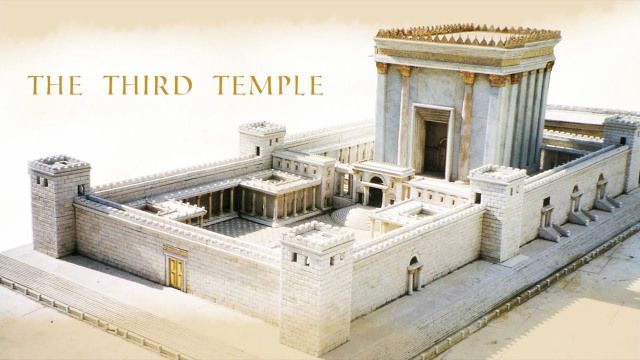
Both of the major organizations that are now dedicated to building the Temple (the Temple Institute and the Temple Mount Faith Movement) have only been in operation for thirty-two years (since 1987), yet, as you will see, they have made tremendous strides. According to them, they have the direct command of God to build the Temple and to make the Temple vessels. And they also have been guided by ancient, Jewish Torah scholars known as the Maimonides.9

The building of the Temple really can’t be compared to any other building project. There is so much that goes into it, and so much detail that has to be followed according to biblical specifications. Eventually, we will discuss the progress of the Temple in the following six parts; in this blog we will cover the first three parts

Temple Research and Restoration

These departments are of primary importance for the…

View original post 658 more words

Posted in Reblogs | Leave a comment

Importunity in Prayer–From Two Biblical Stories


Generally speaking importune prayer is persistent prayer and demanding prayer. Read these two biblical stories and then please check out my brief findings.


The healing of a Canaanite woman’s daughter—Matthew 15:21-28

  Then Jesus went out from there and departed to the region of Tyre and Sidon. 22 And behold, a woman of Canaan came from that region and cried out to Him, saying, “Have mercy on me, O Lord, Son of David! My daughter is severely demon-possessed.” 23 But He answered her not a word. And His disciples came and urged Him, saying, “Send her away, for she cries out after us.” 24 But He answered and said, “I was not sent except to the lost sheep of the house of Israel.” 25 Then she came and worshiped Him, saying, “Lord, help me!” 26 But He answered and said, “It is not good to take the children’s bread and throw it to the little dogs.” 27 And she said, “Yes, Lord, yet even the little dogs eat the crumbs which fall from their masters’ table.” 28 Then Jesus answered and said to her, “O woman, great is your faith! Let it be to you as you desire.” And her daughter was healed from that very hour.


The healing of a blind man—Luke 18:35-43

 Then it happened, as He was coming near Jericho, that a certain blind man sat by the road begging. 36 And hearing a multitude passing by, he asked what it meant. 37 So they told him that Jesus of Nazareth was passing by. 38 And he cried out, saying, “Jesus, Son of David, have mercy on me!” 39 Then those who went before warned him that he should be quiet; but he cried out all the more, “Son of David, have mercy on me!” 40 So Jesus stood still and commanded him to be brought to Him. And when he had come near, He asked him, 41 saying, “What do you want Me to do for you?” And he said, “Lord, that I may receive my sight.” 42 Then Jesus said to him, “Receive your sight; your faith has made you well.” 43 And immediately he received his sight, and followed Him, glorifying God. And all the people, when they saw it, gave praise to God.


Here are three things I found in both of these stories that demonstrate to us what importunity in prayer is:

1. Importune prayer is prayer that cries out in desperation for an urgent need. In these two accounts, both the woman and the blind man cried out “Son of David, have mercy on me.” If you desire to pray with importunity you also must have this kind of urgency in your prayers.

2. Importune prayer persists in asking even when God seems distant. In both of the accounts when Jesus ignored them as they cried out for mercy, and when others tried to shut them up, they kept crying out all the more. That is the attitude of importunity.

3. Importune prayer is always with great faith. The fact that both of these characters kept crying out, even when they were rejected, was evidence of their great faith. Accordingly, in both stories, Jesus complimented them on their faith and healed the one who was sick.


Posted in Importune Prayer | Tagged , , , , , | 1 Comment

The Christian View of the Third Temple

Stephen Nielsen's avatarStudying Bible Prophecy


The Old Testament Tabernacle and the following two Temples were definitely ordered by God to be a sanctuary for God, in order that He would dwell with His people the Jews (Ex. 25:8-9). Likewise, all of the articles in the Temple, and the garments of the priests, and the sacrifices, were typical of Christ and His work as Priest and of the coming Redeemer (Ex. 25:10-31:18). Yes, everything in the Tabernacle and the Temples pointed to Christ.

So looking back on it, as a Christian, everything about the former Tabernacle and the Temples were good and appropriate. However, now, since we know that Christ has come and has lived a sinless life and has died on the cross for our sins, there is no longer a need for the Temple as it was originally ordered by God. For Christ has come and He has fulfilled in His life and…

View original post 392 more words

Posted in Reblogs | Leave a comment

Christ Fulfilling the Law and the Prophets — Matthew 5:17


In reading D. Martyn Lloyd-Jones’ book, Studies in the Sermon on the Mount, I am continually struck by the fact that the Old and New Testament are so well connected. In fact, Lloyd-Jones has pointed out that “there are many senses in which the New Testament cannot be understood except in light of the Old Testament.”

In this blog we will look at how Christ is the fulfillment of both the law and the prophets.


Christ Fulfills the Old Testament Prophecies

In the Old Testament we find clear accounts of His birth, His person, His miracles, His works, His teachings, His death, His resurrection and His future kingdom.


Christ Fulfills the Old Testament Law

Galatians 4:4 says that He was made “under the law.” What does that mean? It means that God placed Him under the law—as one who had to carry it out. Thus He was always careful to observe the law, and He also taught others to observe it; and He explained the law to them. No one could bring any charge against Him, because He obeyed the law perfectly.

But Christ not only obeyed the law for His own person, He obeyed it in terms of what He was required to do because of the sins of the world, according to the justice of God. For the holy law of God required a death penalty for all sin (Rom. 6:23). Thus Jesus on the cross endured in His body the penalty prescribed by the law of God for the sin of man. Therefore, the death penalty for our sins was fulfilled in Christ on the cross.


Christ Fulfills the Law in Us

You may be pleased to know that because we are in Christ (Christians) we play a part in fulfilling the law. Yes, the righteousness of the law is fulfilled in us because we walk after the Holy Spirit. For He has given us the Holy Spirit and He gives us a love for the law and the power to live by it. Moreover, He has written the law on our heart and mind. It is part of our relationship with God, and it will be so until we are perfected in Him.

But those who have not believed, sadly, are under condemnation of the law (Jn. 3:36). For the law states that the wages of sin is death (Rom 6:23).


The Relationship of the Christian to the Law

The Christian is not under the law in the sense of works. His salvation does not depend on keeping the law. He has been delivered from that curse. The law was never meant to save us. It was given to us to show us the true character of God and His demands. And it will bring us closer to God and lead me to Christ. But from then on it is grace that takes over.

By grace, given to us through Christ, we are able to be saved and keep the law. But when we do not keep the law we should never blame Christ or His grace. For it was grace that saved us, and from then, His grace is always available to help us. But if we don’t continually ask for it in faith, and depend on it, we can only blame ourselves.

Similarly, grace is not an escape from the law of God, or is in any sense a license to sin (Rom 6:1). It is the opposite. God gives us grace to help us keep the law—or to fulfill the law.

For the holy law of God is good, and if we keep it, by His grace, it will always bring us a blessing (Ps. 119:1-2).


Posted in Notes on Books I'm Reading | Tagged , , , , | 2 Comments

The Lord’s Prayer: What it Teaches us about Prayer


It brings to us the way we ought to regard God when we pray.  Thus when we pray “Our Father” we understand that we ought to regard Him as our father.  Likewise, when we pray “Hallowed be Thy name” we see Him as holy.  When we pray “Your kingdom come” we see Him as a king, our king.  When we pray “Thy will be done” we see Him as our master and teacher.  When we pray for daily bread we see Him as our provider.  When we pray for forgiveness we see Him as our savior.  And when we pray for leading and guidance we see Him as our shepherd and protector, the one who goes before us.

It shows us the spirit of true prayer.  At each junction in the prayer Jesus conveys to us what the spirit of true prayer is.  First of all, the word “our” in “Our Father” gives us the spirit of fellowship, and unity, and intercession, because we see that we are not praying alone but we pray with all believers who are one in Christ and in the Spirit.  The two words together, “Our Father,” brings to us the spirit of fatherhood and sonship; it takes us, in our spirit, into the family of God.

“Hallowed be Your name” shows us the Holy Spirit, and also the spirit of reverence and holiness.  “Your kingdom come” brings to our spirit the sense that we are to be ready for His kingdom and His rule; it also reveals to us a spirit of home and happiness, of love and peace and contentment, because where He dwells in His kingdom we will always be happy. The words “Thy will be done” conveys to us a spirit of submission and obedience; for they are the often-prayed words of Jesus to His Father.  He is our best example of one who was obedient.

When we pray for daily bread, this brings us a spirit of dependent, and also a grateful and thankful spirit, because we know that He always gives us all we need.  Prayer for forgiveness, likewise, brings with it the spirit peace, because we know that this prayer will bring us back into His fellowship.  Last, our prayers for leading and guidance, gives us the spirit of humility.  For we know that without Him we are weak and powerless, and we so easily fall into sin.

It shows us the rightful place of God.   It shows us that He is our Father and King who rules in heaven and on earth.  It also shows us that we are dependent on Him for everything.

It shows us the purpose of prayer: to hallow His name, to bring in His kingdom, and to do His will.

Posted in About Principles of Prayer, How To Pray, Prayer A to Z Excerpts, The Lord's Prayer | Tagged , , , , , | 2 Comments

Purpose and Goal of Building the Third Temple among the Jews

Stephen Nielsen's avatarStudying Bible Prophecy


Since there are so many Jewish religious denominations and beliefs, the Jews in Israel are not at all in agreement on the purpose and goal of the Temple. We will take a look at four different Jewish denominations, beginning with the most traditional, to briefly examine how they view the rebuilding of the temple

Orthodox Judaism

Orthodox Judaism is the most traditional and contemporary branch of Judaism because it regards the Torah as literally revealed by God, and it advocates a strict observance of the Jewish Law.1  Not all of its branches, however, are conservative. The two groups that are perhaps the most well-known are what may be called Modern or Mainstream Orthodox Judaism, and Ultra-Orthodox Judaism.

In Mainstream Orthodox Judaism its scholars reject any attempt to build the Temple, mainly because they believe that it should be left to the coming Messiah to build it, so…

View original post 761 more words

Posted in Reblogs | Leave a comment

Down by the river: feel the energy

Stephen Nielsen's avatarSeeing God in Nature

Walking down by the Mississippi river is one of my favorite things to do. I love the feel of the energy in the flowing water.

And I’m always reminded of what Jesus said about Himself: that if we believe in Him, from our innermost being will flow rivers of living water.

He is that living water. And if we believe in Him and drink deeply of His Spirit, He will be in us like a well of water springing up forever. John 4:14.

A view through  the trees. The water is high and powerful.

View original post

Posted in Reblogs | Leave a comment

The Lord’s Prayer: Its Form


The prayer is arranged in three main parts: the address—“Our Father who is in heaven,” six petitions, and the doxology. We will focus, in this blog, on the six petitions.


The Six Petitions

As for the six petitions, the first three are directed toward God and His purposes, and the second three are directed toward man and his needs.

The first three petitions are:

1 That the name of God will be revered—“Hallowed be Your name,”

2 That the role of God would be established—“Your kingdom come,” and

3 That the will of God be done—“Your will be done on earth as it is in heaven.”

Notice how each of these petitions is dependent on and related to each other. The hallowing of His name is dependent on the coming of His kingdom, and the coming of His kingdom requires the doing of His will.  Each is a separate petition but they all are closely tied together.

As to the function or purpose of these petitions, though they obviously serve to bring glory to God, when we faithfully pray these petitions we are also benefited. For when we pray “hallowed be Thy name” we see who He is in all of His holiness.  When we pray “Thy kingdom come” His kingdom captivates us.  In a sense, we enter into His house and we see all of His glory.  Last, when we pray “Thy will be done” He invites us into His mind, where He shares with us His great plans and purposes for us.

The second three petitions are as follows:

4 For daily provision—“Give us this day our daily bread,”

5 For daily pardon—“And forgive us our debts, as we forgive our debtors,” and

6 For daily guidance and protection—“And lead us not into temptation, but deliver us from the evil one.”

Notice, first of all, the relationship of this second set of petitions with the first set; again they are dependent on each other.  In order for His will to be done and His kingdom to be established through us, we must have sustenance, forgiveness, and guidance.  On the other hand, we would not know to pray for our daily needs, we would not see the significance of it, unless first we pray for His will to be done on earth as it is in heaven.

Secondly, you will notice that the three petitions for daily needs cover all the aspects of our being: our body, soul and spirit.  Daily bread I think primarily refers to the body or to physical things; forgiveness refers to the soul or the mind; and the prayer for our guidance and protection corresponds to the spirit.

These three petitions also cover all aspects of time: forgiveness covers the past; daily bread covers the present needs; and “lead us not into temptation” speaks of the future.

So here is briefly how the prayer is structured.  Now the question is this: why is it structured as it is?


The Purpose Of Its Form 

 Here are three possible reasons why Jesus composed this prayer as He did:

1. As to its short outline form, I think the main objective Jesus had in mind was that it would be a teaching tool or a mind jogger, but not a prayer to recite. He wanted this prayer outline to be a starter prayer for us. Once we get started in prayer, I think He wants most of our words of prayer to be our own.

2. Jesus wanted to show us the order and priority in prayer. He wants us to learn that the things of God always come first before our own needs. Therefore, with this prayer in the back of our mind as we pray, we will be more aware of praying for His desires first: things that concern His name, His kingdom and His will.  Then after we pray for those things it will be natural for us to cry out to God for the things we need—things we lack to do His will: our daily bread, forgiveness and guidance.

3. Jesus wanted to show us the primary purpose of prayer: to hallow His name, and to bring in His kingdom and will. He also wanted to teach us that we are dependent on Him for all our daily needs: for daily sustenance, daily pardon, and daily guidance and protection.

Now let me conclude this section by adding that it was not Jesus intention that we follow this form exactly every time we pray.  Jesus Himself, when He prayed, did not follow this form exactly (e.g., Jn. 17); and if you look at other prayers in the Bible, they do not follow the form exactly either.  When Jesus told His disciple that they should pray “in this manner” He was not referring to the form.  Manner, I believe, has to do with the principles of prayer, not to the form and words of prayer.

The form and words of this prayer were meant to be an example of prayer and to express the substance of our petitions; however, He never meant that we were to follow that example exactly.  The manner of prayer means, mainly, that our prayers are to correspond to Christian principles—to His kingdom principles.  We are to pray not as hypocrites and pagans, but as those who follow God and Christ, and who are led by the Holy Spirit.  Yes, we are to pray in this manner of prayer—according to God’s principles of prayer, but never are we expected to follow any exact form of prayer.

Posted in How To Pray, Prayer A to Z Excerpts, The Lord's Prayer | Tagged , , , , , , , | 1 Comment

Honoring Veteran’s Day with the President: Video’s

Stephen Nielsen's avatarPrayer for Trump and Country

Today I will copy a few short speeches from our President to honor Veteran’s day.

https://twitter.com/realDonaldTrump/status/1193973876654583809

I heard someone say on the radio this morning that people have been talking about Veteran’s day more than any other year. And he was wondering why. I think I know. It is because we have a…

View original post 48 more words

Posted in Reblogs | Leave a comment

The Lord’s Prayer: Its Sources


Someone once said to me, “None of us really has any original thoughts.  Whatever we think and say and write, we have heard from someone else, or have read it somewhere.”  If we look at Jesus in His humanity that is also true of Him and of this prayer He has composed.  He got it from other sources—basically from two sources: from Jewish prayers, and from the Old Testament Scriptures.

We could also look at Jesus from the perspective of His divinity. In this light, we would say that all things originated from Him, including this prayer. It would be good for us to keep this in mind.

I would like to look at this prayer, however, from the perspective of His humanity, that having laid aside His divinity (Phil. 2:7), He had to study and learn like any other man.  Therefore, we will consider now the two sources of this prayer mentioned above.


From Jewish Prayers

There is clear evidence in The Lord’s Prayer that Jesus was quite familiar with the Jewish prayers of His time. According to the Interpreters Bible, “Nearly every phrase is paralleled in the Kaddish and the Eighteen Benedictions3 (which are Jewish prayers).

In Barnes Notes, Barnes gives us some of those parallels.  For example, corresponding to the phrase, “Give us this day our daily bread,” the Jews had a prayer like this: “The necessities of thy people are many, and their knowledge small, so that they do not know how to make known their wants: let it be thy good pleasure to give to each one what is necessary for his sustenance.”4

Likewise, in relation to the phrase, “And deliver us from evil,” the Jews prayed, “Be it thy good pleasure to free us from an evil man, and an evil event, from evil affections, from an evil companion and neighbor, from Satan.”5

As you can see, the phrases are similar; and since Jesus, being Jewish, no doubt was familiar with these prayers, His composition had to be influenced by them.  The difference obviously is that the Jewish prayers are much longer.

Perhaps Jesus’ intention in composing a short prayer was so that anyone could memorize it and learn it quickly.  Also, I think He meant it to be just an outline—so that each one praying by this prayer could fill it in with his own words.  I don’t think Jesus wanted His disciples to be restricted in prayer as to always have to pray the same words.  He wanted them to pray in their own words, so He gave them this short prayer outline as a guide.


 From the Old Testament Scriptures

Besides learning from Jewish prayers, Jesus studied and became quite familiar with the Old Testament scriptures. His prayer shows this, for if you examine it you will see that each part can be cross-referenced to numerous Old Testament passages (I will bring this out later in our study).  Therefore, we know that this prayer of His was not something strange or different from the scriptures.  It supported the scriptures.  In fact, it came from the scriptures.  Jesus said in His Sermon on the Mount just before He gave the Lord’s Prayer, “Do not think that I came to destroy the Law or the Prophets.  I did not come to destroy but to fulfill” (Matt. 5:17).  Therefore, this Lord’s Prayer helps to fulfill the Old Testament scriptures.

So we see clearly from Jesus’ own words that He didn’t mean to compose something different, but He meant to reaffirm what was already written about prayer in the scriptures.  He also meant to reaffirm the Old Testament traditions and prayers, which were based on the scriptures.  John MacArthur points out in His book, Jesus Pattern of Prayer that “The Jews had a great heritage of genuine prayer.”6   Sadly, however, something went wrong along the way: Jewish prayer was corrupted and it became hypocritical (Matt. 6:2).  Therefore in this prayer Jesus seeks to bring the Jews back to the scriptures and to the way they use to pray.  And the prayer also points us back to the scriptures.  It gives us a sound scriptural basis for our prayers.


3 George A. Buttrich, Editor. The Interpreters Bible (Abingdon Press, 1952), p. 309.

4 Barnes’ Notes, Electronic Database. Copyright (c) 1997 by Biblesoft.

5 Ibid.

6 John MacArthur, Jr., Jesus’ Pattern of Prayer, p. 18.

Posted in How To Pray, Prayer A to Z Excerpts, The Lord's Prayer | Tagged , , , , , | Leave a comment