The Spirit of the Law


We have been looking at the Sermon on the Mount, from the teaching of D. Martyn Lloyd-Jones. I have been summarizing his sermons from his book, Studies in the Sermon on the Mount. Last time we talked about the righteousness of the Scribes and the Pharisees, the fact that Jesus told us that our righteousness must exceed their righteousness. This time we will continue with that thought—how their teaching on the law was quite inaccurate.


Jesus Points Out That the Law Taught By the Scribes and Pharisees Was Not Completely Accurate

Throughout His sermon He gives us six statements of theirs—things that they taught, which He would correct (from Matthew 5:21-43).

  • 21 “You have heard that it was said to those of old, ‘You shall not murder, and whoever murders will be in danger of the judgment.’
  • 27 “You have heard that it was said to those of old, ‘You shall not commit adultery.’
  • 31 “Furthermore it has been said, ‘Whoever divorces his wife, let him give her a certificate of divorce.’
  • 33 “Again you have heard that it was said to those of old, ‘You shall not swear falsely, but shall perform your oaths to the Lord.’
  • 38 “You have heard that it was said, ‘An eye for an eye and a tooth for a tooth.’
  • 43 “You have heard that it was said, ‘You shall love your neighbor and hate your enemy.’

In these six statement notice how each began the same way: “You have heard.” The idea here is that the people were taught by the Scribes and Pharisees what Moses said in the law. But in each case they weren’t taught correctly. They left things out. They didn’t explain everything. Mainly they didn’t teach the Spirit of the law—what it really meant. And sadly, in that day they were dependent on the Scribes and Pharisees teaching, because they could not read it for themselves. In the same way the Catholic teaching before the Protestant Reformation was also false, but the people didn’t know it and they couldn’t do anything about it because they did not have the scriptures.


Jesus Corrects the Teaching

Jesus set out to correct the teaching. He said, “I say unto you…”

Now Jesus was not correcting the Law of Moses. He was correcting the wrong teaching of the Law of Moses. He did not come to correct, or change, or do away with the law. He came to explain it, to teach it the correct way and to fulfill it.


Jesus Revealed the Spirit of the Law

The law was not meant to be a code of ethics or a list of things not to do. The law was meant rather to be certain principles for life. The Lord was showing the meaning and intent of the law—the Spirit of the Law. Here are five principles:

  1. It is the Spirit of the law that matters. And the Spirit of the law gives us life. We must interpret the letter of the law according to the Spirit.
  2. Conformity to the law must not be thought of as actions only. Thoughts and motives and desires are equally important.
  3. The law must be thought of not only negatively but also positively. But not only to do what is right but to love it.
  4. The purpose of the law is not to keep us in a state of obedience to rules but to promote the development of our spiritual character.
  5. The laws of God must not be regarded as an end in themselves. Their purpose is so that we come to know God better. If all we do is learn to keep the law then the law becomes our death. The letter kills, but the Spirit gives life!


Posted in Bible Studies, Notes on Books I'm Reading | Tagged , , , , | Leave a comment

The Great Demand for Importune Prayer


From what I have discovered from my study, there seems to be two main aspects of importune prayer: it is urgent, and it has a dogged persistence.  Each of these has their own demands.  Urgency is demanded because of great needs.  Persistence is demanded because of the time factor—the fact that it takes time for prayer to be answered.


The Demand for Urgency

In every importune prayer there is a demand for urgency.  In the parables and stories we saw that there was always a great need, which required urgency.  The man who went to his friend for bread (Lu. 11:5-10) had a great need for bread.  The woman in the parable in Luke 18 had a great need for justice.  The Canaanite woman had a daughter who had an urgent need to be healed (Matt. 15:21-28).  And the blind man had a great need to see (Lu. 18:35-43).

Likewise, in all your praying, if the holy Spirit has truly called and urged you to pray with importunity, you can be sure that the object He has put on your heart to pray about is a thing of great importance, a thing that demands urgent prayer.

“But why,” you may ask, “are there such great demands for urgent prayer?”  Here is why: because trouble is so constant, sin is so rampant, and because the devil is so entrenched.  Therefore, our prayers should always be against these things and for the righteousness of God. Ultimately, all our prayers should be as Jesus taught us to pray, “Thy kingdom come, Thy will be done on earthy as it is in heaven.”

The more we are concerned for His kingdom and will, and the more we detest sin, the devil, and all his works, the more we will see the demand for urgency in prayer; hence, the more we will pray with importunity.


The Demand for Persistence

In all importune prayer, there is not only a demand for urgency, but also for persistence.  This is because it almost always takes time for prayers to be answered; therefore, prayers need to continue with persistence.  But why is that true?  Why can’t God answer prayers immediately?

Well, He can, and He sometimes does if He wants to perform a miracle.  However, God has chosen to put us, and all His creation, under the law of gradual growth.  Just as the grass, the flowers, and the trees grow slowly and gradually, animals and people also grow slowly and gradually.  Our prayers should be that that process would continue as it was designed, therefore, that God would give us the proper sunshine and rain that we need in order to grow and develop properly.  Furthermore, let us pray that He would send His messengers to pull the evil weeds out that hinder our growth.

Now I am not saying that we can’t pray for a miracle, or that God can’t speed up the growth process.  He can, and He has—like the time He caused the sun to stand still for a whole day (Josh. 10:12-13).  But if we pray for that kind of a miracle we shouldn’t be surprised if God doesn’t answer that prayer; because His normal way is the way of gradual growth—even in our spiritual lives.

Yes, our spiritual life is under that law of gradual growth too.  For just as our body takes time to grow and develop, our spirit and our relationship with God takes time too.  Consequently, as our faith grows to maturity and as we grow in His knowledge, we will see more and more answers to prayer.

Posted in Importune Prayer, Prayer A to Z Excerpts | Tagged , , , | 4 Comments

World-Wide Socialism Is Coming

Stephen Nielsen's avatarPrayer for Trump and Country

 I have read the book of Revelation many times, and as I have read through the seven seals (in chapter 6) I was always struck with the devastation that would be upon the earth in the future. However, recently, as I have again begun to read this mysterious book, I noticed something about the first four seals that I had not seen before. I saw a distinct pattern of socialism.

First Seal: Rev. 6:1-2

I watched as the Lamb opened the first of the seven seals. Then I heard one of the four living creatures say in a voice like thunder, “Come!” 2 I looked, and there before me was a white horse! Its rider held a bow, and he was given a crown, and he rode out as a conqueror bent on conquest.

Here we see that a rider on a white horse has a bow and he…

View original post 848 more words

Posted in Reblogs | Leave a comment

Third Temple Obstacles: Unbelievers

Stephen Nielsen's avatarStudying Bible Prophecy

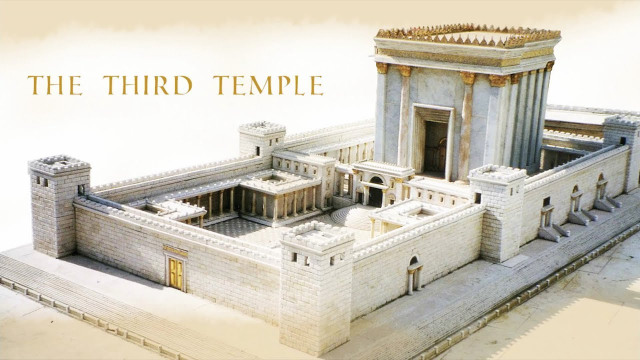
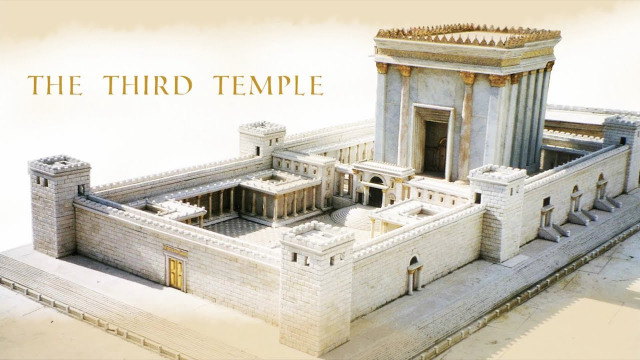
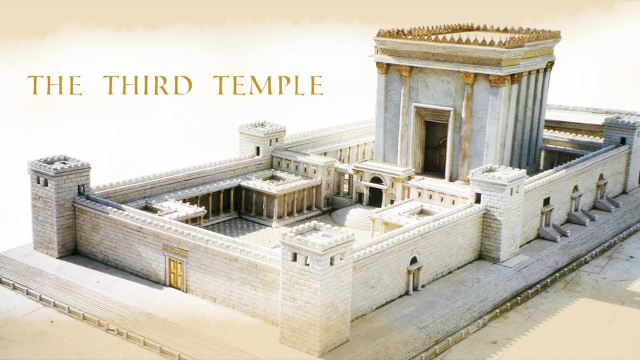
In addition to the Muslims and their dome structures on the Temple Mount, here are two more obstacles that are preventing the construction of the Third Temple.


Third Temple Unbelievers

In some respects, an even greater obstacle than Muslims are Third Temple unbelievers—those who have no desire for the Temple and don’t believe that a Temple is necessary. Generally speaking, we can probably divide Temple unbelievers into two groups: secular Jews and religious or spiritualized Jews. According to more Orthodox leaders, the secular Jew is not living on a spiritual level and he blames it on the absence of “the Shekinah,” which of course would be remedied by the Temple.

The religious Jew has another problem. He is over-spiritual, and he tends to spiritualize everything. So he has no hope or need for a Temple. In fact, he is just fine with everything the way it is, Muslims and…

View original post 477 more words

Posted in Reblogs | Leave a comment

The Importune Prayers of Elijah and Daniel


We will continue our study of Importunity in prayer with two more holy men, Elijah and Daniel.


Elijah’s Prayer, 1 Kings 18:41- 45

 Now Elijah said to Ahab, “Go up, eat and drink; for there is the sound of the roar of a heavy shower.” 42 So Ahab went up to eat and drink. But Elijah went up to the top of Carmel; and he crouched down on the earth, and put his face between his knees. 43 And he said to his servant, “Go up now, look toward the sea.” So he went up and looked and said, “There is nothing.” And he said, “Go back” seven times. 44 And it came about at the seventh time, that he said, “Behold, a cloud as small as a man’s hand is coming up from the sea.” And he said, “Go up, say to Ahab, ‘Prepare your chariot and go down, so that the heavy shower does not stop you.'” 45 So it came about in a little while, that the sky grew black with clouds and wind, and there was a heavy shower. And Ahab rode and went to Jezreel. (1 Kings 18:41-45)

 In this account, even before Elijah began to pray for rain, God gave him an assurance that it would rain.  He caused him to hear the sound of a heavy downpour.  With that assurance Elijah went to the top of Mount Carmel, bowed his head down on the ground, put his face between his knees and began to pray for rain.  But even before he started praying, he asked his servant to go and look toward the sea, to see if rain was coming.  Then six more times, while he prayed, he asked his servant again and again to go and look for rain, until rain finally came.

Here is how I see importune prayer defined from this story:

Importune prayer is prayer that has an assurance of the answer.  Elijah prayed for rain with importunity because God had already revealed to him that it would rain.  Therefore, if God gives us a positive assurance for the answer to our prayer we will be extra motivated to pray persistently for it.  I suppose it is like a runner; if he keeps his eyes on the finish line and knows that he will cross it soon, he will run with a greater energy and endurance because he knows his prize is at hand.

Importune prayer is prayer that anticipates the answer and is eager for the answer to come.  When I was younger I remember going to Grandma and Grandpa’s house. It was at least an hour-long drive, yet I remember being so excited about getting there that I kept saying to my Mom and Dad about every fifteen minutes, “Are we almost there?”  That, I think, is the same type of anticipation that Elijah experienced.  He kept sending out his servant to look for rain because he knew it was coming and was excited about it.  This is how importune prayers are.  We anticipate the answer, and we will often question others to see if our prayers have been answered yet.


Daniel’s Prayer, Daniel 10:2-3

In those days I, Daniel, had been mourning for three entire weeks. 3 I did not eat any tasty food, nor did meat or wine enter my mouth, nor did I use any ointment at all, until the entire three weeks were completed. (Dan. 10:2-4)

 Daniel was a great, holy man of prayer.  On this occasion he fasted in prayer for three weeks; he was fasting and praying to gain an understanding of what would happen to Israel in the last days (Dan. 10:14).  Now the length of this fast gives us enough evidence that he prayed with importunity.  But what was the reason for his importunity?  What motivated him to pray and fast for so long?  I believe it was because he had such a heart for his people and an earnest desire to understand what God was telling him concerning his people.  Here then is our last point of definition…

Those who pray with importunity have such a great desire for the object of their prayer and for understanding the will of God concerning that object that they are willing to commit to pray and fast for great lengths of time until God gives the answer. 


Posted in Importune Prayer, Prayer A to Z Excerpts | Tagged , , , , , , | 4 Comments

We should rejoice that the evil Soleimani is dead

Stephen Nielsen's avatarPrayer for Trump and Country

Here we see the Iraqis dancing in the Streets of Baghdad over the death of Soleimani.  And rightly they should. The evil man is dead and they are more safe. And even America is safer. He should have been killed long ago. He is responsible for the death of Millions of good people.

I read in my Saint Paul paper today how for Iran he was a great commander and “a cultural icon who represented national pride and resilience while facing US sanctions.” Well, maybe for some he was. But I think for the good people of Iran he was EVIL. And they are glad to be rid of him. Let all the world REJOICE!

I praise God and thank President Trump for the the just action he took in killing him. And just government has the authority of God to bring this action against evil doers. In Romans 13:4…

View original post 286 more words

Posted in Reblogs | Leave a comment

Third Temple Obstacles: The Muslims

Stephen Nielsen's avatarStudying Bible Prophecy


Though there has been great progress with the Temple and its vessels in the last few decades, there are still many obstacles that need to be solved or overcome before the Temple can be completed and before Temple worship can be resumed. In the next three post we will  consider six Third Temple obstacles. In this post we will focus on the Muslims.

By far the greatest obstacle in constructing the Third Temple is the Muslims. And the most visible indication of this is the fact that there are two historic Muslim domes, the Al Aqsa Mosque and the Dome of the Rock, sitting on top of the Temple Mount, the very place where the Third Temple must be built. So how will the Jews remedy this? Here are three possibilities:

  • Those Islamic structures will be destroyed in God’s time by an act of God: an earthquake, or…

View original post 260 more words

Posted in Reblogs | 2 Comments

Righteousness that Exceeds the Righteousness of the Scribes and Pharisees


Jesus, in His Sermon on the Mount, was teaching His disciple about the law and the importance of keeping the law. Then he said something that probably shocked everyone (from Matt. 5:20):

For I say to you that unless your righteousness exceeds that of the Scribes and Pharisees, you will not enter the kingdom of heaven.

I am taking (summarizing) this teaching from the book, Studies in the Sermon of the Mount, by D. Martyn Lloyd-Jones. We will look at the following points.

Jesus Was Uniquely Different Than the Scribes and Pharisees

Jesus was unusual. He was a teacher of the Law, but He didn’t belong to the order of the Scribes and Pharisees—who were the recognized teachers of the people. Yes, Jesus taught the law with authority, and at the same time He didn’t hesitate to boldly criticize the Scribes and Pharisees. Jesus told His disciple to listen to their teachings but not to follow their example. In effect, he was telling them that they were phonies, hypocrites.


The Law

Jesus taught His disciple (and us) that all the commandments of God, the Laws of God, are very important. He said that His purpose in coming to us was to enable us to keep the Law, not to abrogate it.

What is the Law? It is the biblical doctrine of holiness—of being holy. Thus holiness is keeping and fulfilling the Law of God.

The Scribes and Pharisees appeared to be the most holy people. But Jesus knew better. They were lacking in holiness because they did not understand the Law and misinterpreted it. So Jesus tells us that our righteousness must exceed that of the Scribes and Pharisees if we are to enter heaven.


The Scribes and Pharisees and Jesus’ Charges against Them

The Scribes and Pharisees set themselves apart. They had codes and rules and regulations for life and conduct that went beyond what Moses demanded. They fasted twice a week while the Old Testament asked for only one fast a year. Everybody looked up to them as holy—and they loved it!

But Jesus says we must exceed their righteousness! He presented the hollowness of their teaching, and then presented the true teaching. He criticized their whole attitude toward God and toward religion. From Matthew 23:

  • They don’t do what they preach (v. 3)
  • They do works to be seen by men (v. 5)
  • They take the best seats in the synagogues (v. 6)
  • They love to be called “Rabbi, Rabbi” (v. 7)
  • They make long prayers to be heard by everyone (v. 14)
  • They clean the outside, but inside they are unclean (v. 25-28)

They were hypocrites but didn’t realize it. Their religion was all external instead of being of the heart. In contrast, Jesus was full of love and holiness. And it is part of holy love to unmask the false, which He always did. Jesus charged that the Scribes and Pharisees…

  1. Neglected the inside—the heart
  2. Were concerned more with the ceremonial acts of the Law then the moral Law
  3. Rationalized their sins and would explain them away
  4. Had a self-righteousness not a righteousness toward God
  5. Did not have a proper attitude toward others. They failed to love God and others.

Our holiness, true holiness should not be merely to avoid certain things, or even to avoid thinking certain things. It should also include love toward others and God.


How Is the Christian to Live?

  1. We must show our faith by our works.
  2. We must demonstrate that Christ is in us and that I am a partaker of the divine nature.
  3. We should know that the biggest thing in our life is to glorify God no matter what the cost to us.
  4. We are to live our life for Him, to love Him and others for His glory and not for our own.
Posted in Bible Studies, Notes on Books I'm Reading | Tagged , , , , | 1 Comment

Progress of the Third Temple — Part Two

Stephen Nielsen's avatarStudying Bible Prophecy


In my last blog post on this subject we covered the administration aspects of the Temple. In this post we will talk about the progress of the Temple itself: the building, the vessels, and the ministry.

Planning the Temple Structure

In my research I was not able to find anything complete, but, apparently, as one source wrote, there is somewhere stored away…

a complete and highly detailed architectural plan which has been prepared for the immediate construction of the Holy Temple. The plan includes all of components that will be used in building: marble, stone, concrete, wood, flooring materials, overlay of gold, etc.16

This detailed plan apparently was made according to both former temples. There is an on-line 3D animation of the Temple sanctuary, however, it looks rather bland. But, according to the video description, “[The plan] includes room for further innovation by professionals and craftsmen, including decoration…”

View original post 797 more words

Posted in Reblogs | 1 Comment

The Importune Prayers of Two Holy Men, Abraham and Moses


In this blog post we will take a look at the importune prayers of two holy men—Abraham and Moses.


Abraham’s prayer, from Genesis 18:22-33

 Then the men turned away from there and went toward Sodom, while Abraham was still standing before the Lord. 23 And Abraham came near and said, “Wilt Thou indeed sweep away the righteous with the wicked? 24 “Suppose there are fifty righteous within the city; wilt Thou indeed sweep it away and not spare the place for the sake of the fifty righteous who are in it? 25 “Far be it from Thee to do such a thing, to slay the righteous with the wicked, so that the righteous and the wicked are treated alike. Far be it from Thee! Shall not the Judge of all the earth deal justly?” 26 So the Lord said, “If I find in Sodom fifty righteous within the city, then I will spare the whole place on their account.” 27 And Abraham answered and said, “Now behold, I have ventured to speak to the Lord, although I am but dust and ashes. 28 Suppose the fifty righteous are lacking five, wilt Thou destroy the whole city because of five?” And He said, “I will not destroy it if I find forty-five there.” 29 And he spoke to Him yet again and said, “Suppose forty are found there?” And He said, “I will not do it on account of the forty.” 30 Then he said, “Oh may the Lord not be angry, and I shall speak; suppose thirty are found there?” And He said, “I will not do it if I find thirty there.” 31 And he said, “Now behold, I have ventured to speak to the Lord; suppose twenty are found there?” And He said, “I will not destroy it on account of the twenty.” 32 Then he said, “Oh may the Lord not be angry, and I shall speak only this once; suppose ten are found there?” And He said, “I will not destroy it on account of the ten.” 33 And as soon as He had finished speaking to Abraham the Lord departed; and Abraham returned to his place.


In this prayer of intercession for Sodom and Gomorrah, Abraham prevailed upon God six times, pleading for the lives of the people.  In the end only Lot and his two daughters were spared—for they were the only righteous ones left.  According to Abraham’s prayer, here are three ways that we may describe importunity in prayer.

Importune prayers for people are prayers that are made out of a genuine concern for them. Abraham had a genuine, heart felt concern for the people of Sodom and Gomorrah.  His nephew Lot and his family lived there.  And he no doubt had other friends who lived there too.  When God told Abraham that he intended to destroy the two cities, Abraham must have been devastated.  And this deep concern was what drove him to pray with importunity.

 Those who pray with importunity have a concern for righteousness and for God’s reputation. Abraham proved that he had a concern for righteousness and for God’s reputation when he repeatedly questioned God about whether He would destroy the righteous with the wicked.  “Shall not the Judge of all the earth do right?” he asked.  Those who pray with concern for God and for righteousness, as Abraham did, pray on a higher level and definitely are praying in the Spirit and with God’s own importunity.

 Those who pray with importunity pray with a fearless boldness. In this prayer we see that Abraham petitioned God six different times.  Each time he thought that God would be angry with him for trying to change His mind, but yet he fearlessly “came near” God (v. 23) and took it upon himself (vv. 27, 31) to intercede for the people.  If you want to pray with importunity this is a good example to follow.

Moses’ Prayer,  from Exodus 32:31, 32, and Deuteronomy 9:18, 19, 25-29

Then Moses returned to the Lord, and said, “Alas, this people has committed a great sin, and they have made a god of gold for themselves. 32 But now, if Thou wilt, forgive their sin —  and if not, please blot me out from Thy book which Thou hast written!” (Exodus 32:31-33) 

And I fell down before the Lord, as at the first, forty days and nights; I neither ate bread nor drank water, because of all your sin which you had committed in doing what was evil in the sight of the Lord to provoke Him to anger. 19 For I was afraid of the anger and hot displeasure with which the Lord was wrathful against you in order to destroy you, but the Lord listened to me that time also. (Deuteronomy 9:18, 19, 25-29)

 25 “So I fell down before the Lord the forty days and nights, which I did because the Lord had said He would destroy you. 26 And I prayed to the Lord, and said, ‘O Lord God, do not destroy Thy people, even Thine inheritance, whom Thou hast redeemed through Thy greatness, whom Thou hast brought out of Egypt with a mighty hand. 27 ‘Remember Thy servants, Abraham, Isaac, and Jacob; do not look at the stubbornness of this people or at their wickedness or their sin. 28 ‘Otherwise the land from which Thou didst bring us may say, “Because the Lord was not able to bring them into the land which He had promised them and because He hated them He has brought them out to slay them in the wilderness.” 29 ‘Yet they are Thy people, even Thine inheritance, whom Thou hast brought out by Thy great power and Thine outstretched arm.’


After Moses had received the Ten Commandments and had prayed and fasted on Mount Sinai for forty days and nights, he came down from the mountain and discovered that Israel had sinned and made a golden calf to worship instead of God.  For this sin God was angry with the people and intended to destroy them.  But Moses fell down before the Lord and interceded for the people, praying a second time for forty days and nights.  Here are two facets of importunity that I see in Moses’ prayer.

Importune prayer is motivated out of a fear of God’s wrath. In Deuteronomy 9:18-19 Moses says plainly that the reason why he fell down before God and ate and drank nothing for forty days and nights was because he was afraid of the anger of the Lord and of what He would do to Israel.

Importune prayer has a sacrificial passion and love for people. We see in Exodus 32:32 that Moses had such a sacrificial love for his people that he was willing to die for them. Wesley Duewel states about this verse, “Such substitution was, of course impossible, but it demonstrated that Moses had the same passion as did our Lord when He took our place at Calvary.”2  This denial of self, this sacrificial love that Moses demonstrated is at the heart of importunity.  It is actually, I believe, the importune prayers and sacrificial love of Christ in us.  No greater love is this, that a man lay down his live for his friends (Jn. 15:13).  And we can do that when we persistently fast and pray for them.


2 Wesley Duewel, Mighty Prevailing Prayer (Grand Rapids, Michigan: Francis Asbury Press, of Zondervan Publishing House, 1990), p. 83.

Posted in Importune Prayer, Prayer A to Z Excerpts | Tagged , , , , , | 1 Comment