Christ Makes Our Prayers as Sweet as Incense – Psalm 141:2


In Psalm141:2, David prayed, “Let my prayers be set before You as incense…” What a prayer! David really had a heart for God, and he wanted to please Him with his prayers—he wanted his prayers to be as the sweet smell of incense that rose up to God continually in the tabernacle.

It is my prayer that we would desire that our prayers—and really, our whole life—would be as incense to God.

Consider what the writer to the Hebrews said in Hebrews 9:24: “For Christ is not entered into the holy places made with hands, which are the figures of the true; but into heaven itself, now to appear in the presence of God for us.” M. R. DeHann comments on this verse:

The writer of Hebrews, therefore, leaves no doubt whatsoever about the typical significance of the tabernacle…the Holy Place (the tabernacle) was a ‘figure of the true’; the priest was a figure of the Lord Jesus Christ; his ministry at the altar of incense a figure of Christ in heaven offering the incense of His prayers in our behalf, so that the smoke of his incense rises constantly before the ark and the mercy seat, representing the throne of God.

As DeHann has indicated, all the things that happened in the tabernacle represent for us what is going on now in heaven: namely, that Christ is our High Priest in heaven, interceding for us.

But it is not only the things that went on in the tabernacle that represent the work of Christ in heaven.  According to DeHann, “The tabernacle was in every detail a shadow and type of the coming Redeemer.”  Therefore, every part of the tabernacle and its furniture, gives us a shadowy picture of Christ and His work as our Priest in Heaven.

So with that in mind, let us take a look at some of the pieces of furniture, those that have most to do with prayer. First, for this post, we will look at the golden altar of incense.


THE GOLDEN ALTAR OF INCENSE (Exodus 30:1-10, 34-38; 37:25-28; 40:5, 26-27)

The golden altar of incense, only 36 inches high and 18 inches square, sat (from left to right) in the center of the tabernacle, in front of the veil that separated the Holy Place from the Most Holy Place. On the left of the golden altar (facing the veil) was the golden candlestick; on the right was the table of shewbread.  And on the other side of the veil, in the Most Holy Place, was the Ark of the Covenant with the Mercy Seat, which was symbolic of God’s throne and presence.

This golden altar of incense, made of acacia wood (a very durable wood) and overlaid with gold, was the place where incense was burned—signifying that it was the place of prayer.

The wood of the altar is symbolic of Christ’s humanity, and the gold of His deity.  Together they remind us that He is a most perfect and worthy High Priest and advocate.  His deity shows us that He is ever strong enough and righteous enough to help us; His humanity, likewise, shows us that He is able also to sympathize with our weaknesses.  Thus we have a High Priest who was tempted in all points as we are, yet He was without sin (Heb. 4:15).

We must also point out that around the top of the altar was a crown of gold, which symbolizes for us Christ’s glory and exaltation. According to Charles Fuller, “[This crown] points…to His work of intercession which He is now doing as our ascended Lord who is far above all principalities and powers.”  Accordingly, we have a sympathetic and worthy High Priest, who is busy doing the work of a priest, but is also now sitting and reigning in a place of glory and honor.  Yes, God gave Him all authority in heaven and on earth (Matt. 28:18), and has exalted Him to His own right hand—to sit down with Him on His throne and to reign with Him as Prince and Savior (Rev. 3:21, Acts 5:31).

 The incense that was burned on the golden altar was a symbol of true prayer. I think the clearest proof of this is in Revelation 5:8.  Here the apostle John gives us a picture of the vision he saw of heaven.  In this vision he saw four living creatures and twenty-four elders falling down before a lamb, each elder having a harp and golden bowls full of incense.  The Lamb is Christ, the living creatures are possibly angels, and the twenty-four elders represent the church.  The incense, John says, “…are the prayers of the saints.”

What I think is happening here is that, as the saints pray, their prayers are collected in the bowls as burning incense, and the aroma of the sweet smelling prayer is offered as a pleasing sacrifice to the Lamb and to the Father.

But we must take note carefully that the twenty-four elders represent saints.  And a saint is a saint because Christ lives in him.  Therefore, the sweet aroma comes from the perfect and pure life and work of Christ. He is the only reason our prayers are as incense.   He makes our prayers sweet.


This blog post was adapted from my books Prayer A to Z, and Joy of Prayer.

Posted in Aroma of Prayer, Prayer A to Z Excerpts | Tagged , , , , , | 3 Comments

Melania has Made Christmas Wonderful

Praise God for all He has given us, and please pray regarding all the tough issues this country and White House is facing.

Stephen Nielsen's avatarPrayer for Trump and Country

I admit I don’t like most of the Christmas decorations people put out around their houses—too gaudy! The commercialization of Christmas has ruined it for me.

But after seeing the pictures of all the Christmas decorations in the White Hose this year and what an effort our First Lady has made at it, I am impresses and encouraged. It looks so beautiful! Almost heavenly!

View original post

Posted in Reblogs | 2 Comments

Why I Chose to Write a Book on the Rapture

Stephen Nielsen's avatarStudying Bible Prophecy

I began writing my first book in 1992. I finished that book—Prayer A to Z: A Comprehensive Bible-Based Study of Prayer—in 2014. So it took me 22 years. But it was a big book—735 pages (in small font). It is a self-published book and I haven’t done much to market it—so it hasn’t sold very well.

Some people would probably get very discouraged, but I haven’t been. I want to keep writing books for the following reasons:

  • I have developed the disciple and the habit of writing in the morning and I want to keep it up.
  • I like writing. It keeps my mind stimulated.
  • I prefer writing a book rather than just blog articles, because it’s a bigger achievement and something I can feel good about. Also, a book allows me to expand a subject and broaden my knowledge of the subject much more than an article.

View original post 227 more words

Posted in Reblogs | Leave a comment

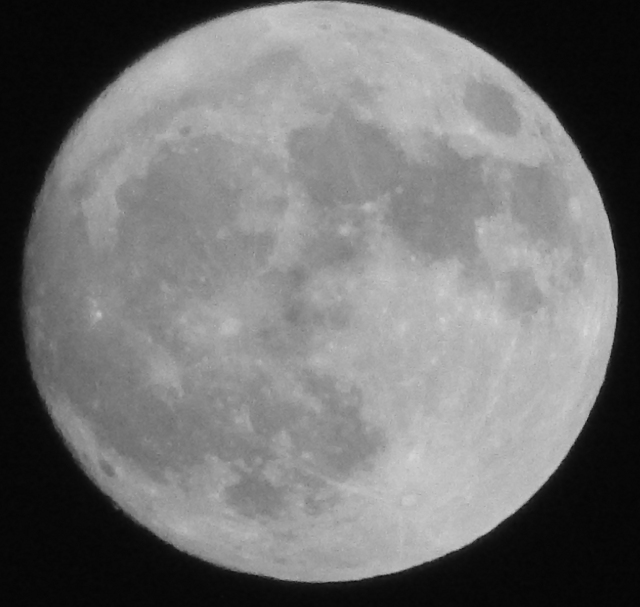
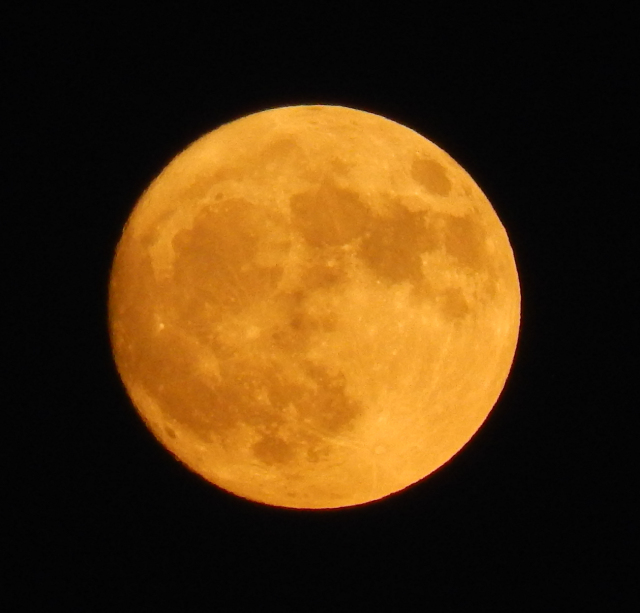
Super Moon: Let the Moon Praise Him

Stephen Nielsen's avatarStudying Bible Prophecy

 The Super moon just coming up through the tree in Minnesota.


Psalm 148:3

Praise Him, sun and moon;

Praise Him, all stars of light!

Zooming in on the super moon.

The moon rising above the trees.

The moon rises while its still light.

The super moon in black and white.

What a a beautiful moon!

View original post

Posted in Reblogs | Leave a comment

The Coming Millennial Kingdom: A Book Summary

Stephen Nielsen's avatarStudying Bible Prophecy

Surprise! Here is another book I just finish. Actually, I wrote it at the same time as I wrote Biblical Evidence of a Pre-Tribulation Rapture. This book is a bit shorter than the other book, consisting of an introduction and nine chapters.

INTRODUCTION

Here I explain that for a proper study of the millennium it is important to use the correct method of study, which is the literal method, as opposed to the allegorical method. I then proceed to give a short history of how the church has viewed the millennium through the centuries: at first they held to a pre-millennial view, using the literal method of study; then, as they began to distrust the literal method, three different views arose: the spiritual view, the post-millennial view, and the a-millennial view. This sadly is the view that is most predominate today—and of course is why this study is so…

View original post 977 more words

Posted in Reblogs | Leave a comment

Faith of Abiding


Faith is that element in abiding that I think is most dominant. Also, it is that element that ties all the other parts of abiding together, for we cannot meditate on the Word, bear fruit, obey God’s commandments, or please Him without faith.

Here are eight things that the abiding Christian does to build his faith in order to keep him abiding:

 1. He makes it his habit to meditate on the Word every day. This daily meditation time helps him to see things from God’s perspective, gives him a desire for God, and helps him to adjust his desires to God’s desires.

 2. He obeys God and keeps himself busy with His work. The abiding believer knows that faith isn’t really faith without obedience and work. In fact, he is convinced that his faith is perfected by obedience (Ja. 2:22).  Therefore, he is always diligent to listen to God as he prays, so that he can do everything He tells him to do.

 3. He commits himself to holiness. He is not one to merely obey God’s commands as an obligation or duty. He seeks, rather, to please Him in everything, working hard to get to know Him and what He desires of him.  He especially tries to keep himself pure and holy, a vessel fit for His use.

 4. He believes and prays without doubting. The abiding Christian is not like the waves of the sea, driven and tossed by the wind. He is strong in faith and prays without doubting.  And as a reward for his faith God grants his request (Ja. 1:6-7; Heb. 11:6).

5. He prays according to God’s will. He always prays according to Bible promises and according to how the Holy Spirit confirms His will to him. Therefore, he prays with a strong will and with great confidence that he will receive God’s answers (Read 1 John 5:14-15).

 6. He prays specifically. The abiding Christian always prays specifically, not generally—because he is always seeking and expecting an answer for a specific need. Therefore, he exercises great faith, and as a reward, God is pleased with him and grants his requests (Heb. 11:6).

 7. He prays earnestly. Earnest prayers are fervent, desperate prayers—prayers that are repeated over and over again. They could possibly be misinterpreted as pagan prayers: those that are made repeatedly with the intention of impressing God or others with mere words (Matt. 6:7).

When the abiding Christian prays repeatedly, however, he is not meaning to impress anyone with his words, nor does he pray out of fear or obligation. His prayers are made with great sincerity and determination, and often with fasting because of some great burden the Holy Spirit has laid upon him.

God is always pleased with the abiding believer’s earnest prayers—so much so that He rewards him by building up his faith so that he can pray with even more intensity, and thereby receive the answers he desires. James 5:16 says, “The effective, fervent prayer of a righteous man avails much.”

 8. He prays together with other believers. A few days before Jesus ascended into heaven, He prayed for all believers that they would be made perfect in one, just as the Father and the Son are one (Jn. 17:22-23). This indicates to me that all those who truly abide in Jesus, also abide in fellowship with other believers.  The abiding Christian, therefore, is not a loner. He is knit together in fellowship with a body of believers who do things together and pray together.  And because they practice praying together in unity and agreement, they experience God’s awesome power and are often delighted by the answers He brings them.

Matthew 18:19-20 says, “Again I say to you that if two of you agree on earth concerning anything that they ask, it will be done for them by My Father in heaven. For where two or three are gathered together in My name, I am there in the midst of them.”


Posted in Answers to Prayer, Prayer A to Z Excerpts | Tagged , , , , , , , , , | 3 Comments

BIBLICAL EVIDENCE OF A PRE-TRIBULATION RAPTURE: A Chapter by Chapter Book Summary

Stephen Nielsen's avatarStudying Bible Prophecy

Here is my self-published book, which just came out a month ago. Anyone can buy it now at Lulu.com, and it will soon be available at Amazon.com and a few other stores.  You will find my description of the book at Lulu.com, but I thought I would give you a little more in this post—a chapter by chapter summary.

INTRODUCTION

In the introduction I spell out the great importance of prophecy—that all scripture, including prophecy, is profitable (2 Tim. 3:16-17). I said that since one-third of the bible is prophecy, at least one-third of our bible reading ought to be on prophecy. Also, for preachers, at least one-third of their sermons ought to be on prophecy. (I didn’t include this in into, but if you read the bible through, omitting nothing, you will accomplish the task; also, if preachers preached through the bible, say every five years, they…

View original post 936 more words

Posted in Reblogs | Leave a comment

Holiness of Abiding


Pleasing God is the element in abiding that we will consider here. I have called it holiness because that is exactly how we please Him—by our holiness.

In 1 John 3:22 we find that the promise of answered prayer comes to us when we keep His commandments and do those things that please Him: “And whatever we ask we receive from Him, because we keep His commandments and do those things that are pleasing in His sight.” Notice that the requirement of pleasing God is not by itself; it is coupled with the requirement of keeping His commandments—the chief of which is to love God and others.  This tells us that the two go together and that they cannot be separated.  We cannot please God without obeying Him and we cannot truly obey Him without pleasing Him.

But the fact that the two requirements are separated tells us also that they are different. Obedience by itself is merely doing what God has told us to do.  But pleasing Him goes beyond just obeying what He has commanded us in His Word.  When we please Him we will do what we know He wants us to do, and we will not do what we know He doesn’t want us to do—regardless of whether we have a Biblical commandment or instructions.

Therefore, the idea of pleasing God is different than obeying Him, because it requires that we know Him on a deeper level. When I obey God I may do it just because it is required of me and because I feel that I love Him.  But to please Him I must really get to know Him and what He desires of me; then I do what He desires of me.  This of course demands my holiness, for He is holy and desires that we be holy.

All these things are true of the abiding Christian. He does more than just obey God; he gets to know Him and what He desires.  He especially puts forth an effort to be holy.  Therefore, he is always on his guard regarding what he does, what he sees, and what he thinks about.  He is constantly asking himself if the activity he is about to do will please God.  For example, he never watches anything on TV or goes to any movies that God would not approve of.

There is so much to consider if you want to please God. It includes everything we do and think about. Here are two reasons why I think pleasing God keeps us abiding, and therefore helps us to pray and find answers to prayer:

1. When we please God we are able to see Him and communicate with Him better. Since pleasing God is in fact being holy, when we please Him He gives us spiritual eyes to see Him and spiritual ears to hear Him in prayer. Matthew 5:8 says, “Blessed are the pure in heart, for they shall see God.”

2. Pleasing God produces a faith in us to pray with confidence. When we please God with the good works we do, especially in our love for others, it will always produce in us a happy assurance that we are truly Christians. This assurance, apparently, has a cleansing effect on our conscience so that we will not feel guilty and condemned. As a result, we will be able to pray with confidence. 1 John 3:21-22 says,

Beloved, if our heart does not condemn us, we have confidence toward God. And whatever we ask we receive from Him, because we keep His commandments and do those things that are pleasing in His sight.

Posted in Answers to Prayer, Prayer A to Z Excerpts | Tagged , , , , | 3 Comments

President Trump Emphasized Mutual Respect in His Speech to APEC Nations

Stephen Nielsen's avatarPrayer for Trump and Country


President Trump addressed the community of nations in APEC on November 10, 2017 from Da Nang Vietnam. It was a great speech!  He began by praising Vietnam as having one of the fasted growing economies on earth.  He also praised other nations for their growing economies.  I would highly recommend watching and listening to the speech. Here are the highlights:

  • Trump emphasized that “your home is your legacy.”
  • He said, “You have forged partnerships based on mutual respect and directed toward mutual gain.”
  • He encouraged nations to “strengthen the bonds of friendship and commerce.”
  • He encouraged nations to treat others fairly.
  • He said, “We [the U.S.] will not be taken advantage of anymore.”
  • The United States will put our country first as all countries should put their country first.
  • An emphasis on mutual respect and mutual benefit.
  • All must play by the rules.

At the end of Trump’s…

View original post 97 more words

Posted in Reblogs | Leave a comment

The Obedience of Abiding


Abiding is not just meditating on His Word and delighting in Him, and not just focusing on trying to bear fruit. It involves the action of complete obedience.  The whole reason why we meditate on His Word is so that we can do everything He wants us to do.

The abiding, obedient Christian embraces the following ideas:

  • That obedience must include Bible study. If we want to obey God we must know what He wants us to do. Therefore, obedience must include Bible study to find out what His will is.  Then the next step of course is to obey that will.
  • That obedience must be your lifestyle. Real obedience, that is, real abiding obedience is not just a once in a while thing. It must be your lifestyle—a continual obedience.

 If you put these two ideas together it will keep you abiding in Him and you will have a good formula to give you answers to prayer. For the apostle John has said, “And whatever we ask we receive from Him, because we keep His commandments and do those things that are pleasing in His sight…Now he who keeps His commandments abides in Him, and He in him…” (1 John 3:22, 24).

I like what R. A. Torrey has said regarding these things. He said that one of the most common reasons why prayers are not answered is because people are neglecting the study of the Word of God. He said,

If we wish God to answer our prayers, we must study God’s Word diligently each day, to find out what the will of God is, and do that will every time we find it.

Again he said,

He demands that we shall listen to His Word before He listens to our prayers.  If we have a sharp ear for God’s commandments, then God will have a sharp ear for our petitions; but if we turn a deaf ear to one of God’s commandments, God will turn a deaf ear to every one of our petitions.

Charles Spurgeon makes similar comments:

He will give us what we ask if we keep His commandments, but if we become disobedient and reject His government, He will reject our prayers and say, ‘And if ye walk contrary unto me, …will I also walk contrary unto you’ (Lev. 26:21, 24).

I will add one more thing about our obedience. Jesus said in Matthew 22:37-40 that the two greatest commandments are to love God and to love one another.  He said, “On these two commandments hang all the Law and the Prophets.”  Based on these verses, I suggest that these are the commandments that we should consider most.  When we obey these commandments all the rest of them will take care of themselves.


Sources:

R. A. Torrey, The Power of Prayer, p. 99

Charles Spurgeon, The Power of Prayer in a Believer’s Life, p. 108.


Posted in Answers to Prayer, Prayer A to Z Excerpts | Tagged , , , , , , | 2 Comments