Jeremiah’s Praise Filled Prayer for Israel at a Time of Calamity—Jeremiah 32:17-25

021


Jeremiah 32:17-25

‘Ah, Lord God! Behold, You have made the heavens and the earth by Your great power and outstretched arm. There is nothing too hard for You. 18 You show lovingkindness to thousands, and repay the iniquity of the fathers into the bosom of their children after them — the Great, the Mighty God, whose name is the Lord of hosts. 19 You are great in counsel and mighty in work, for your eyes are open to all the ways of the sons of men, to give everyone according to his ways and according to the fruit of his doings. 20 You have set signs and wonders in the land of Egypt, to this day, and in Israel and among other men; and You have made Yourself a name, as it is this day. 21 You have brought Your people Israel out of the land of Egypt with signs and wonders, with a strong hand and an outstretched arm, and with great terror; 22 You have given them this land, of which You swore to their fathers to give them — “a land flowing with milk and honey.” 23 And they came in and took possession of it, but they have not obeyed Your voice or walked in Your law. They have done nothing of all that You commanded them to do; therefore You have caused all this calamity to come upon them.

24 ‘Look, the siege mounds! They have come to the city to take it; and the city has been given into the hand of the Chaldeans who fight against it, because of the sword and famine and pestilence. What You have spoken has happened; there You see it! 25 And You have said to me, O Lord God, “Buy the field for money, and take witnesses”! — yet the city has been given into the hand of the Chaldeans.'”


Jeremiah’s prophecies came at the same time and a little later than the prophecies of Habakkuk. Therefore, during the time of this prayer, Babylon was besieging Jerusalem.

While Jerusalem was under siege, the word of the Lord came to Jeremiah, who was imprisoned in the house of the king of Judah (He was imprisoned there for prophesying that the city would be taken by Babylon.). God told him that his cousin Hanamel would come to him and would ask him to buy his field, which was at Anathoth, and that he must buy it to keep it in the family (Jer. 32:7).  Sure enough, Hanamel came and asked him to buy it.  And so, being confident that it was God’s will, he bought the field.

Now why did God want Jeremiah to buy this field at this particular time? It was considered worthless to Jeremiah, because it had already been taken by Babylon.  Well, God wanted Jeremiah to buy the land as a surety that one day his descendants would return to it.  The deed for the land was Israel’s sign from God that He would bring them back into the land—when houses and fields and vineyards would again be bought (32:15, 42-44).

Jeremiah’s prayer praises God for His justice and power, and for all the wonders He has performed for Israel. But it also expresses Jeremiah’s doubts about buying the land (vv. 24, 25).

But God’s answer to Jeremiah’s doubtful heart immediately came to him and gave him new confidence. He said, “Behold, I am the Lord, the God of all flesh.  Is there anything too hard for Me” (v. 27)?  God then explained to Jeremiah how He would give Jerusalem into the hand of the Chaldeans to be punished by them, but later would bring them back to the land and make them dwell in safety (v. 37).




Posted in Part 4, Elijah to Daniel, Prayer A to Z Excerpts, Survey of Prayer | Tagged , , , | Leave a comment

How to Yield your Life to God: 3 Things to Practice

024


Yielding to God isn’t always easy.  It takes discipline and practice.  Here are three things we can practice that will help us yield to Him.


Practice praise and worship. When we yield ourselves to God, one of the parts of our self that we yield to Him is our lips—in order to praise Him. Hebrews 13:15 says, “Through Jesus, therefore, let us continually offer to God a sacrifice of praise—the fruit of lips that confess His name.”  Here we understand that the fruit of our lips is praise to God.

In Isaiah 57:19, God says to us through Isaiah, “I create the fruit of the lips.” Thus, God makes it possible for us and helps us to praise Him.  Even when we’re sad and in mourning, He puts words of praise and thanks on our lips so that we don’t even have to think about what to say to Him—God gives us the words and the songs.

Our part is to offer our praise as part of our humble yielding. We offer it as a peace offering to God for His love and friendship; God creates the fruit of praise in us, but we must pick the fruit and offer it back to Him as a sign of our reciprocal love and friendship.

Our offering of praise doesn’t always come easy.  The term sacrifice (in Heb. 13:15), in fact, indicates that it is hard.  We can’t do it at all in our flesh.  We must ask God to help us.  Actually, we do it “through Jesus” who is our High Priest (Heb. 13:15).  When we trust in Him, we will be made strong to offer up our lips to praise Him (Col. 3:15, 1 Thess. 5:16-18).  And we will find, happily, that the more we are obedient to praise Him, the more He will produce in us the fruit of praise.

But our praises must come to God not only from our lips, in words, but from our entire being. In fact, unless it is from our entire being the praises from our lips are as a hypocrite—one who gives lip service.  Let that never be.  The only acceptable worship to God is to offer ourselves completely to Him.  It is our “reasonable service” offered to God in thanks for all He has given us (Rom. 12:1).


Practice the “prayer of helplessness”. Catherine Marshall, in her book Adventures in Prayer, has a chapter entitled “The Prayer of Helplessness,” and also one entitled “The Prayer of Relinquishment.”  Both of these chapters aided me in writing these last two sections.

Marshall made emphasis in her book that when we pray God insists on our helplessness. She made this emphasis because we in fact are helpless; that is, we can’t do anything for God in our own ability and true prayers must be based on truth.  The Bible says in John 15:5 that “Without Him we can do nothing.”  In Hebrews 1:3 we see that God upholds (or sustains) all things.  Again, in Col. 1:17, it says that in Him all things consist (or literally, “hold together”).  He created us and He sustains us.  Without Him we would literally fall apart.

In John 6:44, Jesus said, “No one can come to Me unless the Father draws him.” We can’t even come to Him in prayer or believe in Him on our own.  We are all, from our birth, enslaved to sin and unable to believe.  But God in His mercy chose some for salvation.  He selected certain ones and empowered them to come to Him.  And so, those who come to salvation come only because they were empowered and drawn by God.  Yes, we are totally helpless without Him.  We are nothing and can do nothing without Him.

But by His strength we can do all things (Phil. 4:13). And His strength comes to me when I admit my weakness and helplessness (2 Cor. 12:9-10).  And why is that?  It is simply because our admission of helplessness is true.  And when we face up to that fact and the fact that He alone can help us and answer our prayers, we glorify God. Then, when God is glorified in us He in turn honors us by giving us His strength and by answering our prayers.

Now the way you practice the prayer of helplessness is simply by reviewing in your prayers the fact of your helplessness—that you can do nothing without Him, not even submit to Him. Here is an example of a prayer of helplessness:

“O God, take my heart, for I cannot keep it; and when Thou hast it, keep it, for I cannot keep it for Thee; and save me in spite of myself.”


Practice the “prayer of relinquishment”. When we relinquish ourselves to God we give up our self-life, which includes the self-will. This self-life is a life of sin. It has nothing to do with our new Christ-like nature, which always seeks to please God.  Rather, the self-life seeks only to please self, which, at its core is evil and destructive.  It is built up or strengthened in us when we feed it and provide for it—when we invite into our mind all kinds of lustful thoughts, when we eat whatever we want and as much as we want, when we watch TV until we fall asleep at night; hence, basically when we indulge ourselves with whatever we desire.

When we practice relinquishment in prayer we give up our self-will, which means that we also give up our self-life. It is saying to God, “I give up everything to You, Father, in order to gain Christ.”

If you have been praying for a husband or a wife and God has not answered your prayer, you may be saying to God, “Father, I desire a mate, but let Your will be done. I want only what You want for me.  If You think it is better for me to be single than that is what I want Too.  I yield my will to Your will.”

Likewise, if you are in need of healing and you have been praying persistently to be healed, even sometimes demanding God, the practice of relinquishment means that you must begin to pray in this way: “Father, I give up my demanding spirit. If it is, for some reason, Your will for me to remain sick I now surrender my will to be healed.  I give my life into Your hands for Your good purpose.  Take my life and use it to please You.  Whether sick or whole, use me for Your service.”

Therefore, the practice of relinquishment in prayer is giving up any demanding spirit, any self-will. It is acknowledging in prayer that all I have is His and that He has a right to take it back.  It is saying to God, “You are Lord, I yield up all my desires to You.  I worship You.  I am at Your service this day and always.  Take my life.  I give it to You.


Posted in Prayer A to Z Excerpts, Yielding in Prayer | Tagged , , , , , , | 4 Comments

The Prayers Of Habakkuk: Habakkuk Questioned God and Waited for His Answer

029 pro Bk


Habakkuk 1:2-4.
O LORD, how long shall I cry,
And You will not hear?
Even cry out to You, “Violence!”
And You will not save.
3 Why do You show me iniquity,
And cause me to see trouble?
For plundering and violence are before me;
There is strife, and contention arises.
(Continue reading from your Bible.)
 
Habakkuk 1:12-17.
Are You not from everlasting,
O LORD my God, my Holy One?
We shall not die.
O LORD, You have appointed them for judgment;
O Rock, You have marked them for correction.
13 You are of purer eyes than to behold evil,
And cannot look on wickedness.
Why do You look on those who deal treacherously,
And hold Your tongue when the wicked devours
A person more rightous than he?
(Continue reading from your Bible.)
 
Habakkuk 3:2-19.
O LORD, I have heard your speech and was afraid;
O LORD, revive Your work in the midst of the years!
In the midst of the years make it known;
In wrath remember mercy.
3 God came from Teman,
The Holy One from Mount Paran.
Selah
His glory covered the heavens,
And the earth was full of His praise.
(Continue reading from your Bible.)


In the Book of Habakkuk the prophet offers two prayers to God, each of which is followed by God’s answer.

In the first prayer (1:2-4), Habakkuk seems upset with God because He had not answered his prayer for justice against the wicked in Judah. He prayed, “The law is ignored and justice is never upheld.”

In verses 5-11 God declared to Habakkuk that He was indeed doing something in answer to his prayers. He told him to observe and be astonished, because He was raising up the Chaldeans to punish them, and that He would hold the Chaldeans guilty (The Chaldeans were a very fierce and impetuous people, a Semitic people who became dominant in the Babylonian Empire.  Their wicked deeds are described in Habakkuk 1:6-11).

Habakkuk, in his second prayer (1:12-17), seemed confused as to why God would use such wicked people to punish Judah. He prayed, “Why does Thou look with favor on those who deal treacherously” (NASB)?

In Habakkuk 2:1 the prophet vowed to himself that he would be on guard and keep watch to see how God would answer his prayer. Here is true vigilance.  Too often we pray and then forget to wait on God’s answer.  But not Habakkuk.  He stationed himself “on the rampart,” in prayer, waiting for God’s answer.

In answer to this second prayer (Hab. 2:2-20), God said that the Judean destruction by the Chaldeans was fixed and near, but that the time was also set for all those who sought to destroy God’s heritage to be destroyed themselves (including the Chaldeans).   Then, eventually, “The earth will be filled with the knowledge of the glory of the Lord, as the waters cover the sea” (v. 14).  This will happen in the millennium.

Let me make just a few comments on the last words of God’s answer—“But the Lord is in his holy temple. Let all the earth keep silence before Him.”  God’s holy temple is not limited to any one space.  God is everywhere and He sees everything.  Thus, when He declared that He was in His holy temple, He was saying that He sees all, including all the wickedness being done; and He will judge it all in due time.  Therefore, God orders the whole world to be quiet and wait on Him for the judgment that is due all of us, whether for good of for bad.

In response to God’s answer, Habakkuk composes a song of praise (Ch. 3:2-19).   Emphasis throughout this song of prayer is on God’s splendor and great power to deliver.  The song comes to a climax as Habakkuk declared that though the Chaldeans invade and strip the land, he would yet exalt in the Lord and would rejoice in Him for His salvation.

It is evident here that though wickedness surrounded Habakkuk and great trouble was imminent, Habakkuk gained a great trust in God. And he gained it in prayer and in listening to God’s answer.  Let us take a lesson from Habakkuk: though trouble surrounds us we can always find peaceful trust in God through prayer.


Posted in Part 4, Elijah to Daniel, Prayer A to Z Excerpts, Survey of Prayer | Tagged , , , , , , | 2 Comments

Peace and Justice in the Millennial Kingdom

Look who I ran into on my walking trail! These wild animal will be quite tame in the millennial kingdom.

Stephen Nielsen's avatarStudying Bible Prophecy

010


012

As with all the wonderful conditions in the millennium, they will flow down from Christ’s throne. This is especially true of peace and justice, which is pictured for us in Isaiah 9:6-7.

Isaiah 9:6-7
For a child will be born to us, a son will be given to us;
And the government will rest on His shoulders;
And His name will be called Wonderful Counselor, Mighty God, Eternal Father, Prince of Peace.
7 There will be no end to the increase of His government or of peace, on the throne of David and over his kingdom,
To establish it and to uphold it with justice and righteousness
From then on and forevermore.
The zeal of the Lord of hosts will accomplish this.


I also like Isaiah 32:16-17.

Isaiah 32:16-17
Then justice will dwell in the wilderness,
And righteousness will abide in the fertile field.
17 And the work…

View original post 363 more words

Posted in Reblogs | Leave a comment

How to Yield Your Life to God — 3 Steps

015


Yielding to someone, even to God is difficult, because we have our sinful flesh that is always telling us to give in to no one except our own desires. But with God’s help in understanding it is easier.  Here are three points of understanding that may help.


1. Understand His Lordship

I think the first thing that needs to happen in order to know how to yield to God is to gain an understanding that God is God. He is our creator. He owns everything, including you.  And He rules over everything, including you.  He is Lord of all, whether we like it or not, or whether we believe it or not.  Thus He requires us to surrender to Him as Lord just as all of nature does.  And if we don’t, we are guilty of sin and rebellion.

This may seem terribly cold and harsh; but we must remember also that God is love—pure love.  He can do no wrong.  He loves you with a pure and infinite love.  But His love won’t come to us unless we receive Him and obey Him as Lord.  And the more we surrender to Him the more we will feel and experience His love and care for us.

And that is the nature of love—the recipient will experience it only when he receives the lover for who he really is.  In other words, if one loves us and we reject that person, we cannot receive their love as they meant to give it.  Accordingly, since God is Lord we can’t really experience His love unless we receive Him as our Lord.

But when you do receive Him as Lord there is no end to the way God will bless you.  And one of the things He will do for you is to help you know how to yield to Him.  He will work in you and give you both the desire and the power to yield to Him in obedience (Phil. 2:13).


 2. Understand the Conflict within Me

All Christians have a Christ-like nature, but they also have an unredeemed body that continues to sin. Before I became a Christian my sinful nature (or the old self) ruled over me and made me its slave (Rom. 3:9-18; 6:6). And my slavery to sin was all I knew.

The moment I asked Christ into my life, to be the Lord of my life, I died to sin and was resurrected with Christ (Rom. 6:2-5).  When I died to sin, what that means is that I died to the reign and rule of sin in my life (because Christ began reigning and ruling in me).  It also means that my old sinful nature (my old way of doing things, or my old character) died. When I was resurrected with Christ, God gave me a new life and a new nature.

This new life and nature that I have is the very life and nature of Christ; it is a nature that wants to please God all the time, and likewise, has as its goal to destroy the sinful desires that still dwell in my flesh (Rom. 6:6, 8:13, Gal. 1:4).

Now, since Christ reigns in me, the sin that resides in my body has no real power; that is, it cannot in itself control me and make me its slave.  God, however, has given me free choice, and so I can choose to yield either to the sinful desires in my flesh and become its slave, or to obey God and the new nature, and become a slave of righteousness (Rom. 6:16).

Hence, there are two forces at war in me: the old desires of the flesh (that are always trying to get me to sin), and the new Christ-like nature (which, in contrast, works to usher me into a life of righteousness).  Since I have the Holy Spirit in me I have the power to choose which path I will yield to.

Accordingly, when we follow our sinful desires, our life will produce these evil results: sexual immorality, impurity and unbridled lust; idolatry and witchcraft; hatred; discord, jealousy, fits of rage, self-ambition, dissension, factions and envy; drunkenness, orgies, and the like (Gal. 5:19-21).  Conversely, when we follow our Christ-like nature, which is also the nature of the Holy Spirit, we will produce these fruits of the Spirit: love, joy, peace, patience, kindness, goodness, faithfulness, gentleness and self-control (Gal. 5:22-23).


 3. Understand How to Conquer My Sinful Desires

The conquering of sinful desires begins with our reckoning. Romans 6:11 says, “…reckon yourselves to be dead indeed to sin, but alive to God in Christ Jesus our Lord.” In my words, we are to know and to think upon the fact that sin doesn’t rule over us anymore, Christ does. Hence, we are to reckon (to know and to think about the fact) that we have a new nature and that we have power over our sinful desires—power to choose righteousness.

This reckoning, we could say, is our act of faith in what God has already done for us on the cross in putting to death the old sinful nature (the old value system and beliefs, Rom. 6:2; 2 Cor. 5:17).

“Our part [says Jessie Penn-Lewis], is to yield our wills and take God’s side against ourselves, while the Holy Spirit applies the death of Christ to all that is contrary to Him.”

I would say that reckoning is a process of thinking things through until we realize the true facts—mainly that sin is not my master, Jesus is.  And that compels me to yield myself to Him as Lord.  And the way we do that is by an act of commitment, committing ourselves to His Lordship and committing ourselves to reject any sinful desires that remain in our unredeemed bodies.  And then we must follow up on our commitment by feeding our new nature and by starving (hence, by putting to death) the sinful flesh.  We feed the new nature by meditating on the Word, and by prayer and fellowship, etc.; and we starve the sinful flesh by giving it no opportunity to grow (Gal. 5:13, Rom. 13:14), that is, by not going to any sinful place, by not looking at sinful things, hence, by not thinking sinful thoughts.  All the while we must pray and keep in fellowship because we can’t do it alone.  We need help from above and from the encouragement of other caring believers.


Posted in Prayer A to Z Excerpts, Yielding in Prayer | Tagged , , , , , , , , , | 14 Comments

Much Prayer Is Needed Regarding Common Core

common core 2


I am a big fan of Olive Tree Ministries, began and led by Jan Markell. She interviews someone once a week and they talk about critical issues of our day. This one on Common Core really got to me. We really need to pray for and do all we can to protect our kids these days. Please read this and also listen to the interview linked below. It will be worth your time.


Common Core and the Christian: A Clash of Worldviews

Jan tackles the issue of Common Core in our public schools. One of Jan’s guests, attorney and spokesperson against Common Core, Marjorie Holsten, calls it “ObamaCore” and says it is worse than ObamaCare. It is indoctrination on steroids and is training kids to be good little global citizens. But it is ruining education. It is huge government overreach. Fifth graders will read a book suggesting Obama is a ‘messiah.’ Our Founding Fathers were supposedly racists. Conservatives are dangerous. Blatant pornography is a part of some curriculum. Then Bryan Fischer from American Family Radio joins Jan to continue the discussion. They consider a Common Core assignment that debunks the Holocaust. Much more info is given out that you need if you have kids in your life you care about who are a victim of this system.

Access Programming Here.

Posted in Understanding the Times, World-Wide Prayer Requests | Tagged , , , , , , , , | Leave a comment

Isaiah’s Miracle Prayer: Did the Sun Go Backward? — 2 Kings 20:11.

013


Isaiah 20:11 

So Isaiah the prophet cried out to the LORD, and He brought the shadow ten degrees backward, by which it had gone down on the sundial of Ahaz.


Isaiah’s prayer recorded here brought about a miracle as a sign to Hezekiah that God would give him fifteen more years to live (2 Kings 20:5-6).  As it happened, Isaiah gave Hezekiah a choice of miracles; to make a shadow on a set of steps to go forward ten steps (this was the normal direction the shadow would go, but speeded up) or backward ten steps.  Well, Hezekiah chose the most impossible miracle—for the shadow to go backward.  And so Isaiah “cried to the Lord” and the shadow went backward—an incredible miracle wrought through one single faith-filled prayer.


But what was the miracle?  Was the miracle brought about by a means of light refraction, or did God actually turn the earth back upon its axis? The following commentaries may give some ideas.


Commentary by Adam Clark, Adam Clark’s Commentary

We cannot suppose that these ten degrees meant ten hours; there were ten divisions of time on this dial: and perhaps it would not be right to suppose that the sun went ten degrees back in the heavens, or that the earth turned back upon its axis from east to west in a contrary direction to its natural course. But the miracle might be effected by means of refraction, for a ray of light we know can be varied or refracted from a right line by passing through a dense medium; and we know also, by means of the refracting power of the atmosphere, the sun, when near rising and setting, seems to be higher above the horizon than he really is, and, by horizontal refraction, we find that the sun appears above the horizon when he is actually below it, and literally out of sight: therefore, by using dense clouds or vapours, the rays of light in that place might be refracted from their direct course ten, or any other number of degrees; so that the miracle might have been wrought by occasioning this extraordinary refraction, rather than by disturbing the course of the earth, or any other of the celestial bodies.

(from Adam Clarke’s Commentary, Electronic Database. Copyright © 1996, 2003, 2005, 2006 by Biblesoft, Inc. All rights reserved.)


Matthew Henry’s Commentary

He cried unto the Lord by special warrant and direction, and God brought the sun back ten degrees, which appeared to Hezekiah (for the sign was intended for him) by the going back of the shadow upon the dial of Ahaz, which, it is likely, he could see through his chamber-window; and the same was observed upon all other dials, even in Babylon, 2 Chron 32:31. Whether this retrograde motion of the sun was gradual or per saltum—suddenly—whether it went back at the same pace that it used to go forward, which would make the day ten hours longer than usualor whether it darted back on a sudden, and, after continuing a little while, was restored again to its usual place, so that no change was made in the state of the heavenly bodies (as the learned bishop Patrick thinks)—we are not told; but this work of wonder shows the power of God in heaven as well as on earth, the great notice he takes of prayer, and the great favour he bears to his chosen. The most plausible idolatry of the heathen was theirs that worshipped the sun; yet that was hereby convicted of the most egregious folly and absurdity, for by this it appeared that their god was under the check of the God of Israel. Dr. Lightfoot suggests that the fifteen songs of degrees (Ps. cxx., &c.) might perhaps be so called because selected by Hezekiah to be sung to his stringed instruments (Isa 38:20) in remembrance of the degrees on the dial which the sun went back and the fifteen years added to his life; and he observes how much of these psalms is applicable to Jerusalem’s distress and deliverance and Hezekiah’s sickness and recovery.

(from Matthew Henry’s Commentary on the Whole Bible, PC Study Bible Formatted Electronic Database Copyright © 2006 by Biblesoft, Inc. All Rights reserved.)

Posted in Part 4, Elijah to Daniel, Prayer A to Z Excerpts, Survey of Prayer | Tagged , , , , , , , , | 1 Comment

The Building of the Temple and the City of Jerusalem in the Millennial Kingdom

Stephen Nielsen's avatarStudying Bible Prophecy

003


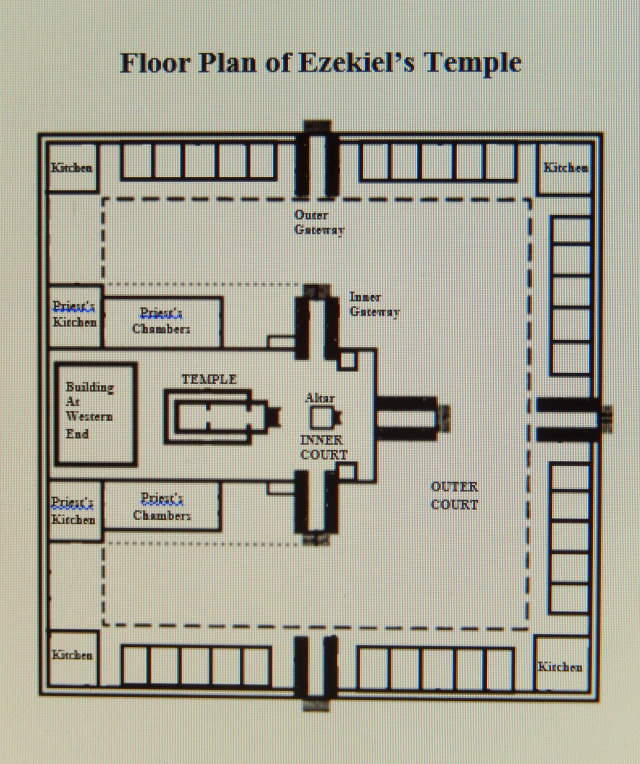
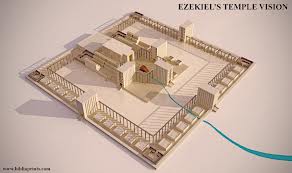
 Ezekiel temple

Click on picture above to see a Video  of the Temple

Since the temple and Jerusalem will be the center of worship and government, it will be important to begin construction of these places as soon as possible when the millennium begins.  We have already mapped out their locations, but were you aware that they will be located on top of a mountain?  Actually, Ezekiel 40:2 tells us that it will be on a “very high mountain”; and in Isaiah 2:2, we read that it will be on “the chief of the mountains.”

As we have previously indicated, most of Palestine will be relatively flat, so I take it that this area where the temple and the city lie, will be raised up high above all else.  I’m sure it will be a beautiful sight.  David describes the sight in this song.

Psalm 48:1-3
Great is the Lord…

View original post 899 more words

Posted in Reblogs | Leave a comment

Choosing Trouble Instead of Comfort

012


Yielding to the way of trouble (when we know it is God’s will) may sound a little odd or even crazy, but God uses trouble for our good.  He uses it to discipline and correct us, to keep us holy and to bless us.

“Trouble [says E. M. Bounds] is God’s servant… [It] comes with [His] permission… [and is] under [His] control… [It] is one of His most efficient agents in fulfilling His purposes and in perfecting His saints.”

Now there are many that would ask, “Why could God be so cruel as to bring us trouble?”  Bounds says this: “God is sufficiently wise and able to lay his hand upon it [trouble] without assuming responsibility for its origin… He works it into his plans and purposes… [He makes it] the disciplinary part of [His] moral government.”

Therefore, we must remind ourselves that if we are truly and fully yielding ourselves to God, we also, at the same time, yield ourselves to trouble, since trouble is a part of His will for us.

But some people believe that we should always choose the way that is more comfortable for us.  This is the belief that no pain or suffering is of any value, that God has come to bring us only peace and comfort and prosperity.  It is the belief that since pain is of the devil it is no good at all; and if we are in God’s will we will be prosperous and comforted always, that no pain of suffering will be allowed to come to us.

The only trouble with this option is that sin sometimes comforts us, and then later brings us pain and suffering.  But God has provided a solution for even this this.  He, in His wisdom uses pain (the pain caused by sin) to discipline us in order to keep us from more sin, so that the pain and suffering from sin is reduced.  Unfortunately for us, discipline is painful; but gladly, the results bring us God’s peace (Heb. 12:11).


Posted in Prayer A to Z Excerpts, Yielding in Prayer | Tagged , , , , , , | 2 Comments

As if you yourselves were suffering

sarsrose's avatarsarsrose

1623617_10152579606750590_2673355775065316097_nThe world has been looking on in horror at the atrocities being committed against Christians in Iraq.

The blatant arrogance of IS has shocked us as they’ve flaunted their brutality through the media.

As Christians we can feel helpless. We want to show our support, but beyond changing our profile pictures to the ‘N’ symbol, or donating money to humanitarian aid, there’s little we can do. Except pray. We can pray.

Times like this remind me of Hebrews 13:3, a verse that never fails to challenge me.

“Continue to remember those in prison [for the sake of Jesus] as if you were together with them in prison, and those who are mistreated as if you yourselves were suffering.”

We should be praying for them, as if it were us suffering along with them. As if we were there. Suddenly my sense of urgency increases.

It can be hard to know…

View original post 81 more words

Posted in Reblogs | Leave a comment