Download a Free Book on Prayer

E-Book (pdf) $0.00

E-Book (pdf) FREE

Description of Basics of Prayer

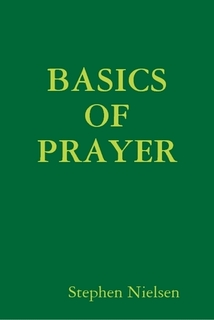
This plain, green covered book has exactly the same content as my paperback version except that it is a pdf eBook.  You can download it on any iPad or on your computer.  Basics of Prayer is Book One of my six book series on prayer.  The other book titles are: Purpose of Prayer, Principles of Prayer, Joy of Prayer, Service of Prayer, and Zenith of Prayer.  As you can see from the outline, Basics of Prayer gives you the very foundational elements of prayer.  If you are looking for a thorough, reflective, yet easy-to-read study of prayer you will enjoy this book.

Outline of Basics of Prayer

1  Definition of Prayer
     The Nature and Meaning of Prayer
     Various Descriptions of Prayer
     The Forms of Prayer
 
2  Praise of Prayer — Part 1
     What is Praise?
     What is Prayer?
     The Origin and Basis of Praise
     Common Praise
     The Difference between Petitionary Prayer and Praise
     The Interdependence of Petitionary Prayer and Praise
     Staying on the Path of Praise
     The Use of Praise in Life
     The Use of Praise in Warfare
     The Use of Praise in Prayer
 
3  Praise of Prayer — Part 2
     Examples of Praise from the Bible
     Examples of Praise from Various Bible Characters
 
4  Intercession — Part 1
     The Father’s Role in Intercession
     The Intercession of Christ
     The Intercession of the Holy Spirit
 
5  Intercession — Part 2
     The Definition of Intercession
 
6  Intercession — Part 3
     Who to Intercede For and What to Pray For Them
     Our Great Responsibility to Intercede
     The Blessings of Intercession
 
7  Forgiveness
     Being Forgiven By God
     Forgiving Yourself
     Forgiving Others
 
8  Fasting
     Jesus Has Taught Us to Fast
     We Have the Examples of Many that Fasted
     Our Neglect of Fasting
     How True Fasting Has Been Described
     Various Types of Fasts
     Five Wrong Reasons to Fast
     Twelve Right Reasons to Fast
     Guidelines For Fasting                                                                                                                        
 
  9  Prayer Posture
     Why Should We Be Concerned about our Prayer Posture?
     Six Prayer Positions and What Each One Symbolizes
     A History of Prayer Posture
 
10  Yielding
     What is Yielding?
     What Do We Yield To?
     How to Yield to God and Not to Satan


A Short Excerpt from Chapter One

Prayer is soul to soul communication with God.  So far we have said that prayer is petition.  And we said that there are basically three types of petitions: (1) invocation, or asking God to be God to us and to help us commune with Him; (2) asking God for the basic things we need; and (3) intercession.

Now we are saying that prayer is not only petition, it is also something more basic—it is soul to soul communication with God.  And this really must come first, before we ask God for anything.  For this is the heart of prayer.  Before we can expect Him to listen to our requests we must have made contact with His soul by our soul.

I got this idea from Jim Downing in his book Meditation, where he suggests that various passages in the Psalms (e.g., Ps. 62:5, 130:6, 25:1) “indicate that coming into contact with God involves the soul.” And he stated that “Theologians in general agree as to the soul’s principle powers…the mind, the affections and the will.”

So I am suggesting that “coming into contact with God” with our souls is really what prayer is.  True prayer, therefore, will involves the mind, the affections (the heart or the emotions), and the will (that part of us that makes choices).

All prayer begins with the exercise of the mind toward God.  We may call it meditation.  And we can meditate on all kinds of good things, but we must make the primary source of our meditation the Word.   “As we meditate on the Word of God [says Jim Downing], the life of Jesus Christ flows out of Him, through the Word, and becomes a part of our spiritual bloodstream.”

Secondly, to engage our soul with the soul of God we must exercise our emotions (or our heart) toward God in communion.  How do we do this?  Well, our meditation on the word is how we start.  It will open the door to heart to heart communion.  When we study and meditate on His Word He speaks to us and then we listen.

Communion is also speaking back to God.  It is talking to God and listening.  But it is even more than that.  It is fellowship on the highest level.  It is the sharing of His holy nature.  According to Downing, “Communing…is engaging our heart with the heart of God.  The result of that communion is that our soul is watered (Jer. 31:12).” Downing goes on: “Communion…is a two-way communication, an alternating impact of two personalities where we listen intently and then share intently with the other person; there is an actual sharing of lives involved.”

The third part of the soul is the will.  With the will we make choices; we choose to obey God or not.  The exercise of this part of the soul is vitally important.  Our listening to God and choosing to obey Him keeps the door of our soul open to His soul; it keeps our soul in contact and communication with Him.  Accordingly, our willful obedience is the key to bringing life to our soul.  For by it we receive His love and power (Jn. 14:21).  Without obedience our prayers drop dead; but with obedience our prayers come alive and are continually energized by His life.

How to Get Basics of Prayer Free

It’s very easy.  Just click on the image of the green book in this blog post.  That will take you to Stephen’s Book Store, and you will see all my books.  Feel free to browse around.  To get this free book just click on “Add to Cart” under the green book (Basics of Prayer) that is listed as $0.00.  Then go through the process of getting the book just as if you were buying it, except it is free.  After you click on “Add to Cart,” next click on “Continue to check out” at the bottom of the page.  After that page comes up, then click on “Place Order.”  You will then see some processing going on, and a sign will come up that says “Download (pdf).”  Click on that sign and it will be downloaded to your computer.  From there I think you know what to do.


Posted in About Basics of Prayer | Tagged , , , , , , , , , | 9 Comments

Learn How to Pray from King Asa: 3 Lessons on Prayer

005


2 Chronicles 14:11 

And Asa cried out to the LORD his God, and said, “LORD, it is nothing for You to help, whether with many or with those who have no power; help us, O LORD our God, for we rest on You, and in Your name we go against this multitude. O LORD, You are our God; do not let man prevail against You!”


Asa was the third king of Judah after Solomon, and was probably the most righteous since David.  For 1 Kings 15:11 says that he did what was right in the sight of the Lord like David his father.

One day, while the kingdom of Judah was resting in peace and trusting in the Lord, an Ethiopian army of a million men and 300 chariots came up against them.  And so Asa and his men of 580,000 went out to meet them.

But before engaging them in battle he called out to the Lord in prayer.  In his prayer he simply said, “Lord, there is no one besides Thee to help in the battle between the powerful and those who have no strength; so help us, O Lord our God, for we trust in Thee, and in Thy name have come against this multitude.  O Lord, Thou art our God; let no man prevail against Thee” (NASB).

So here in this prayer Asa was asking God to fight through them, so that when they battled against them it would actually be God battling against them.  For that is why he prayed “Let no man prevail against Thee.”

What a great prayer of faith!  And as it happened God gave them a great victory.  Verse 13 tells us, “So many Ethiopians fell that they could not recover, for they were shattered before the LORD, and before His army.”

We can learn much about how to pray from Asa:

(1) His prayers matched his life of trust in God.  Thus when he prayed, “We trust in God,” he really meant it.

(2) He humbled himself before God and cried out for help as one who had no strength in himself.  Likewise, when we pray we should tell God how much we really need Him.

(3) Asa was willing to come against the Ethiopians in God’s name.  Thus when we pray and ask God for His strength, we must also be willing to battle against whatever forces come against us.


Posted in Part 3, David to Jehoshaphat, Prayer A to Z Excerpts, Survey of Prayer | Tagged , , , , | 10 Comments

Ducks on a Lake

003

These are the first pictures I took with my new little Nikon Camera.  It’s the first digital camera I’ve ever had.  I took these pictures at a job site where I was working—painting and wallpapering.  That’s what I do for work. This first picture I actually took inside with a window open.  I was surprised how good it came out, considering I was a long way away and was using the zoom.  The other pictures I went down to the lake to get closer.

006

004

005

Looking back, I wish I had gotten more pictures.  There were so many ducks in this spot, and so beautiful looking. God did a good job when He made them.  What a great God we have!

Psalm 50:10-12

10 for every animal of the forest is mine,

and the cattle on a thousand hills.

11 I know every bird in the mountains,

and the creatures of the field are mine.

12 If I were hungry I would not tell you,

for the world is mine, and all that is in it.


Posted in Photography, Poems, Prayers, Ramblings | Tagged , , , | 3 Comments

Five Ways to Pull Down Spiritual Strongholds


strongholdIn 2 Corinthians 10:3-4 (NIV) we read, “For though we walk in the flesh, we do not war according to the flesh. 4 For the weapons of our warfare are not carnal but mighty in God for pulling down strongholds” (NKJV).  Now before we talk about how to pull down strongholds (spiritual strongholds) we need to answer the following questions:

What are the weapons we fight with?  Well, we know they are not of the world, and they are divinely powerful (v. 4).  All those pieces of armor we talked about earlier, though they were discussed as being mainly for defense, can also be used as offensive weapons.  And we have many other weapons too, such as obedience, humility, joy, love, and of course prayer.  And all of these come from God.  In fact, we could say that God is our weapon against sin and all the forces of evil.  For example, if we have love, if we have faith, if we have prayer that we use to battle with, they all are of God.  We have no love in ourselves, no faith in ourselves, and we cannot pray by ourselves.  We can do nothing of ourselves, not even seek God.  He seeks us out and draws us to Him.  Then He puts love and faith and prayer into us.  We battle by the power of God alone.  All the weapons He gives us, we could say, are instruments to channel His power through us.

 What is a spiritual stronghold?  The word “stronghold” (achurooma), in 2 Corinthians 10:4 (as it is translated in the NIV), could also be rendered as a strong fortification.  And from verse 5 we must conclude that “arguments and every pretension that sets itself up against the knowledge of God” (NIV) is what is housed in and really is what makes up this fortification.  Hence, a stronghold (a spiritual stronghold) is a place in the mind where there is an accumulation of thoughts that seem to give a good reason to sin.  It is an accumulation of arguments for evil.  This place in the mind is a place of moral darkness where demons like to go and where they feel comfortable and protected—because wherever sin is harbored that is where demons dwell.

How do we recognize a spiritual stronghold?  That is, how do we know if we have a stronghold?  Is every sin a stronghold?  Well, I would say, to the degree that you harbor sin and habitually sin, to that degree you have a stronghold.  If you are not willing to let go of a sin, then yes, you have a stronghold.  And I am of the opinion that if you have a sinful habit you also have demons in your life—because demons like to go where sin is harbored.

But, basically, you know that a person has a stronghold in his mind when lies become truth to him.  And, when that stronghold is extra strong, that person will profusely argue against the truth.  For instance, when people argue and say there is nothing wrong with abortion, or homosexuality, or adultery, or lust, or the occult, then you know those people have strongholds because we know those things are wrong.  They have believed a lie.  Here then are…


Five Ways to Pull Down Strongholds


1.  Submit to God in humility.  If you are praying for a friend, ask God to humble him.  If you have contact with your friend, counsel him to submit to God.  Humility is the weapon used against pride.  We need to break down pride first because it is the sin that protects and holds together all the strongholds.  Thus, when pride is removed Satan will flee (Ja. 4:7), and the strongholds are weakened.

2.  After pride is removed—which could be considered as a stronghold in itself—ask God to expose all other strongholds.  Make a list of each one as God reveals them to you.

3.  Repent of all sin that makes up each stronghold and determine not to think that way any longer.

4.  Replace every lie with truth; and for every lie memorize a verse of truth.  For example, for the lie, which says, “I am a failure, I can do nothing right”—memorize Philippians 4:13, which says, “I can do all things through Christ which strengthens me.

5.  Build strongholds of truth.  Don’t be satisfied with memorizing just a few verses.  Build huge strongholds of truth by memorizing many verses.  Try to memorize at least three verses for every lie.  The more verses you have committed to memory the better your defense will be against Satan.

This post is from the book Prayer A to Z, and is also in the book Purpose of Prayer.


Posted in Bible Studies, Prayer A to Z Excerpts, Vigilance in Prayer, Prayer Warfare | Tagged , , , , , , , , , | 21 Comments

The Prayer of Jabez: For Those Living with Pain

1 Chronicles 4:10 

And Jabez called on the God of Israel saying, “Oh, that You would bless me indeed, and enlarge my territory, that Your hand would be with me, and that You would keep me from evil, that I may not cause pain!” So God granted him what he requested.


It is likely that Jabez, a descendant of Judah, was born with some kind of disability, for his mother gave birth to him in great pain and called him Jabez, which means distress.  His prayer—that he would be kept from evil (or from harm)—also indicates that he had been living with pain or with some kind of handicap.

Thus Jabez prayed to God that He would be with him, bless him, enlarge his boarders, and keep him from harm so that he would be free of pain.  Whatever Jabez’ condition was, God answered his prayer and delivered him from pain and from inflicting pain on others.

What a wonderful and very personal God we have.  Don’t ever think that God does not care or would not bother with your personal needs.  He cares for you much more that you think He does.  In fact, He loves you and cares about you more than you love yourself.  And He wants you to pray about all your personal needs because he is eager to bless you.


Posted in Part 3, David to Jehoshaphat, Survey of Prayer | Tagged , , , , | 4 Comments

Should you speak to Satan in your prayers? Why or why not

This is a question that will bring different opinions.  Some, in their prayers, speak to Satan all the time.  Others warn against it.  Here is an excerpt from my book, Prayer A to Z, on this subject.  Please tell me what you think.


Now, in the battle, if you are counting on being victorious, especially if you want to pull many souls out of hell, you must increase your prayer efforts.  Plan on spending more time in prayer, and be more serious in your prayers—fast, and cry out to God for all the burdens He puts on your heart.  Likewise, don’t worry about what to pray for.  If you plan the time slot to pray, God will give you more than enough to pray for.  Moreover, He will direct your prayers each step of the way.

And when it happens in your prayers (and in your counseling) that Satan comes against you and tells you lies, don’t be surprised and don’t quit praying.  Also, don’t give into him or run away.  Like David against Goliath, speak back to him and run to the battle line to meet him!

220px-Osmar_Schindler_David_und_GoliathHere is actually what happened as recorded in 1 Samuel 17:42-48.  When Goliath saw David, he disdained him because he was a youth.  And he said to him, “Am I a dog that you come to me with sticks?”  And the Philistine cursed David by his gods, and said to him, “Come to me, and I will give your flesh to the birds of the sky and the beasts of the field.”

And what do you think David did?  Run away?  No no.  He said back to Goliath,

 “You come to me with a sword, a spear, and a javelin, but I come to you in the name of the Lord of hosts, the God of the armies of Israel, whom you have taunted.  This day the Lord will deliver you up into my hands, and I will strike you down and remove your head from you.  And I will give the dead bodies of the army of the Philistines this day to the birds of the sky and the wild beasts of the earth, that all the earth may know that there is a God in Israel, and that all this assembly may know that the Lord does not deliver by sword or by spear; for the battle is the Lord’s and He will give you into our hands.”

Wow!  David certainly wasn’t at a loss for words.  And when Goliath drew near him, verse 48 says, “David ran quickly toward the battle line to meet the Philistine.”  And he stuck him dead with a single stone and cut off his head!

Now, what I am saying here is that when sin and Satan come up against us we should not be at a loss for words, nor should we retreat.  Go after Satan and pray against him.   You can even speak to him and use the Word of God (the sword of the Spirit) against him.  Jesus did it three times in the wilderness and we can do it too.  Say to Satan and the demons, “I am in Christ and I have victory over you.  I now resist you in the name and power of Jesus Christ who conquered you at the cross.”

But don’t speak too much with Satan or his demons.  Don’t argue with them.  They are just swine and don’t deserve your time.  They won’t listen to you much anyway.  Instead let God take care of them.  According to Spurgeon,

 [When Satan attacks us] do nothing but this: cry to his Master against him…set the mighty One upon him.  He who accuses you, refer him to your Advocate.  When he brings your sin before you, throw the blood of atonement in his face…Quit battling with the wily foe.  Do not answer the old deceiver.  If he tells you that you are utterly lost, acknowledge it. Then cast yourself at Jesus’ feet, and he will overcome your foe and set you free.

I would say that the best thing you can do to help you pray against Satan is to study the Word and memorize Scripture, especially those references that tell you who you are in Christ.  They will be your best defense against Satan because he is always accusing you and trying to make you feel guilty.  At those times you can say to him, “Be gone Satan; God’s Word, in Romans 8:1, tells me that I am free forever from condemnation.  In fact, Romans 5:1 tells me that I have been justified in Christ.   And that means I am completely forgiven and made righteous.”


Posted in Prayer A to Z Excerpts, Vigilance in Prayer, Prayer Warfare | Tagged , , , , | Leave a comment

There Is a Time to Rest: Working at Resting

resting people


In my last post I wrote about how I have experienced God’s comfort while being sick.  I’d like to expand on those thoughts.  I think one of the main reasons why I have felt so content and so at peace in my sickness is because I really worked at resting my body and my mind—resting from work and activity and responsibilities, and also resting in the Lord; and really, I think all resting is in the Lord if it is done in obedience.

I know that some people, even though they are sick, find it necessary to force themselves to work and do their usual chores.  They can’t seem to rest. They feel guilty when they rest. They feel that they just have to keep working.  I admit I have done that myself, and what usually happens is that my body becomes overworked and I get sicker.


resting lion


There is a time to rest.  And when we are sick we need more rest than usual.  And that’s hard for us to do because we are just not use to it and we want to go go go.  So we really have to work at it.  We have to discipline ourselves to stop working, to just let someone else do it, or to plan on doing it later. For me, letting the dishes pile up isn’t a big deal (I do that anyway), but not going to work is really hard for me.  I admit I have to work at just calling in sick.

If you are used to getting to bed late and getting up early, if you are sick you really need to work on getting to bed earlier and forcing yourself to sleep later.  Just tell yourself, “I can sleep in.”

Lately, since I’ve been sick I’ve found myself praying and thanking God for the opportunity to rest more.  And I was asking Him to help me to just relax in Him, to be at peace with not have to do my regular chores.  Yes, there is a time to rest.  And if you are anxious about things, pray about them.  This is your opportunity to pray more. You have time now to pray. And as you are committing everything to Him, He will give you His peace. (Phil 4:6-7).

One of the big sins the nation of Israel committed was that they disobeyed the laws of the Sabbath rest—for themselves and for their land.  And for that sin God kept them in captivity for 70 years so their land could rest (read it in Lev. 26:34).  Similarly, farmers need to rotate their crops; and also, every few years to just let their land lie dormant.

People need to rest too.  We need one day a week to rest from work or our body will wear out. I just had a thought (dangerous!).  I wonder if God actually makes us (or allows us to be) sick so we are forced to rest.  Another thought (I’m on a role!): when we eat too much, especially in the evening, our body (especially our digestive system) is over worked.  We rest better and will feel better when we eat less.  And it’s also good to fast once in a while.  That gives the body a good rest.  So you see how resting is working? Because I think fasting is hard work. It’s something we don’t want to do.

God says to us in Psalms 37:7,

Rest in the Lord, and wait patiently for Him.

That’s a command.  Let’s work at it!  And when you do, you will find the sweet peace of His presence.

Posted in Bible Studies, Poems, Prayers, Ramblings | Tagged , , , , , , | 2 Comments

Comfort in Sickness

86660002

I have been sick with a bad cold—sore throat, coughing, runny nose, weakness, the whole thing.  But I am writing to tell you that I am content with it all.  There has been a strange comfort, a sort of peace I have experienced.  Especially in this suffering, I feel His abiding presence comforting me.  In Philippians 3:10-11, Paul writes about “the fellowship of His sufferings.”  We can read also in Hebrews 2:18, how he is able to help us since He has gone through everything we go through.

I was thinking also about the next phrase in Philippians, “being conformed to His death.”  The NLT says, “sharing in is death.”  We believers need not fear death because our death will be like His—ending in resurrection and glory. So there should also be a strange comfort as death approaches. We have this comfort of course because He is in us and always with us.  He is our constant comfort and hope in all things, even death.


Posted in 5 Romans to Philemon, Quiet Time Highlights | Tagged , , , , , , , , | 1 Comment

Solomon’s First Prayer as King Brought an Unexpected Answer

1 Kings 3:6-9 (also 2 Chron. 1:8-10)

And Solomon said: “You have shown great mercy to Your servant David my father, because he walked before You in truth, in righteousness, and in uprightness of heart with You; You have continued this great kindness for him, and You have given him a son to sit on his throne, as it is this day. 7 Now, O Lord my God, You have made Your servant king instead of my father David, but I am a little child; I do not know how to go out or come in. 8 And Your servant is in the midst of Your people whom You have chosen, a great people, too numerous to be numbered or counted. 9 Therefore give to Your servant an understanding heart to judge Your people, that I may discern between good and evil. For who is able to judge this great people of Yours?” NKJV

If there ever was a model king it was Solomon; for he loved the Lord with all his heart and walked in His ways.  One day, to express his great love for God, he went to Gibeon, where the tabernacle was, and he offered up 1,000 burnt offerings on the bronze altar.  And that night God, apparently being so pleased with him, spoke to him in a dream and said, “Ask for whatever you wish, and I will give it to you.”

This story reminds me of the promise of God in John 15:7, which states that if we abide in Him, and His words abide in us, we can ask for whatever we wish, and He will give it to us.  What a promise!  Well, Solomon was abiding in God, and God said that He would give him his wish if he would just ask for it.

So Solomon, still in his dream, offered this prayer.  Notice that he did not immediately start making requests.  Rather, he started his prayer by exalting God for His great kindness—kindness not necessarily shown to him, but to his father David for fulfilling His promise to him that He would give the Kingdom to one of his sons (1 Chron. 17:11).

Next, after extolling God for His great kindness, he confessed his lack of experience in leading and governing.  Thus he prayed, “You have made Your servant king instead of my father David, but I am a little child; I do not know how to go out or come in.”  This term, “go out or come in” is a description of the conduct of men in everyday life, or the way one carries out his duties.  In Solomon’s case, he was saying that he didn’t know much about how to govern and how to carry out his duties as king of Israel.  He felt he needed help.  So he prayed that God would give him wisdom, that is, that he would have the ability to judge the people and to discern between good and evil.

Well, God gave Solomon wisdom, more wisdom in fact than anyone before him and more than anyone who would come after him.  But He also gave him what he didn’t ask for-riches and honor.

The prayer lesson here is that if we abide in Him and seek His kingdom first, just as Solomon did, then He will give us much more than we ask, even beyond what we would think of asking for (Matt. 6:33, Eph. 3:20).


Posted in Part 3, David to Jehoshaphat, Prayer A to Z Excerpts | Tagged , , , , , , , | Leave a comment

About Lincoln the Unknown, by Dale Carnegie

41G8E7EQSNL__AA160_ I haven’t read much about Lincoln.  I’m glad this is the first book about him I chose to read.  It’s a good book—easy to read and yet quite comprehensive in terms of his personal life.  Overall, my impression of Lincoln from this book is that he was a man full of sorrow and sadness.  He never appeared to be happy.  He walked with his head down and mumbled a lot. But there was also another side of him.  He was a story teller, and he drew crowds with his stories.  He was also a lover of humor and jokes and poetry.  I suppose we could say that he used these to help him cope with his great sadness.

Why was he sad?  There were a number of things that brought it on and kept plaguing him throughout his entire life.  When he was just a youngster, life was especially hard.  Both of his parents were illiterate and were quite the hillbillies! His father, I would say, was well intentioned but was ignorant of most things and had no sense of money.  His mother never took too well to pioneer life (in the Kentucky woods) and died at age 35.  I felt especially sorry for the Lincolns when I read how they lived.  Their home made cabins (more like shacks) were of three walls, a dirt floor and no windows or doors (but one wall was missing so that served as the door!) It was more like a temporary shelter to break the wind—and it was cold in the winter.

When Abe grew older his life began to be just like his father’s.  He was sort of a drifter and worked at whatever job he could find.  Though he had some schooling, for the most part he was self-educated—and he loved to read.   He had a good friend in Ann Rutledge, whom he grew to love deeply—but she died of Typhoid.  Lincoln was never the same after that.  He never loved anyone again like he loved Ann.  He married Mary Todd, but I don’t know why, except that at the beginning he had sort of an attraction for her, and because he had foolishly made a promise to her that he would.  And he was a man of his word! Oh was she ever a crazy, kooky woman!  She nagged at him constantly, and yelled at every one else too!  She was quite an embarrassment to him and a constant trial for him.

The only positive thing I saw in Mary Todd was that she made Abe dress better and encouraged him to run for political offices.  But she was not thinking of her husband; she was thinking more of her own standing in life.  Her aim in life was to be married to the president. So, though Mary Todd was a constant thorn in Abe’s side, God used her to bring Lincoln into the presidency and ultimately to save our nation, the United States.

The last sorrow for Lincoln was of course the Civil War.  Oh how many died and how much weight was on his shoulders for their deaths.  But he was use to sorrow and he was God’s chosen instrument for that time.  Yes, now we see Abraham Lincoln as a great man, and a great leader.  A man chosen by God to unite a nation and to free slaves.  Yes this man, like one other, was “a man of sorrows and acquainted with grief.”  A man whom God brought to us for our freedom and blessing.  Thank you Abraham Lincoln!

Posted in Notes on Books I'm Reading | Tagged , , , , , , , | 2 Comments